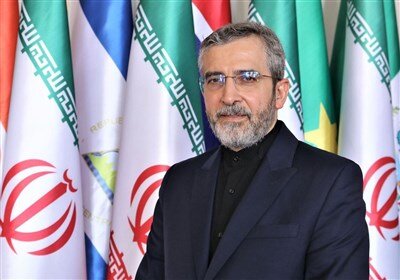
Ali Bagheri Kani, Deputy for Foreign Policy and International Security at the Secretariat of the Supreme National Security Council, described the four-way meeting between Iran, Pakistan, Türkiye and Saudi Arabia in Tehran as the outcome of the Iranian nation’s resistance and the armed forces’ steadfastness in the face of aggression by the United States and the Zionist regime. He stressed that the country’s defense capabilities had been built on indigenous knowledge and the efforts of young scientists.
Bagheri Kani said developments over the past several months had affected regional equations. The resistance of Iran’s armed forces and people, alongside the Leader’s guidance, had prevented the United States from achieving its objectives, while the Zionist regime had also failed to shape the situation following its aggression against the Islamic Republic of Iran in accordance with its plans.
Iranian Weapons Are the Product of Indigenous Knowledge; US Failed to Achieve Its Goals
The deputy at the Secretariat of the Supreme National Security Council emphasized the role of domestic capabilities in countering military threats, saying the Islamic Republic of Iran had stood firm during two phases of aggression by relying on its national capabilities and had succeeded.
Referring to the restrictions imposed on Iran in strategic sectors, particularly the military sphere, he stated, “All our equipment and weapons were the product of the minds and ideas of our own young scientists, as well as the efforts of our country’s industrial workers and technology experts.”
Bagheri Kani added that Iran’s defense capabilities had also proven effective in practice. He said the failure of the United States and the Zionist regime to achieve their objectives was one indication of this.
He also referred to the decades-long sanctions imposed on Iran by Western countries, saying these restrictions had not prevented the country from making significant advances in the military field. The efforts of the armed forces, domestic scientists and specialists had enabled Iran to expand its defense capabilities.
Elsewhere in his remarks, Bagheri Kani said recent developments had made the consequences of US and Zionist regime policies in the region more apparent. He stressed that relying on domestic capabilities could offer a more effective way to counter threats.
Tehran Meeting: Regional Effort to Move Beyond Reliance on he US
The Deputy for Foreign Policy and International Security at the Secretariat of the Supreme National Security Council described the four-way meeting in Tehran as the result of the Iranian nation’s resistance and the armed forces’ courage. He said the participating countries, despite differences in their priorities and political approaches, had reached a shared understanding of the need for regional cooperation.
Referring to the fact that some regional countries had previously believed that closer ties with a power such as the United States could shield them from threats, he said recent developments had shown that this assumption did not necessarily align with the region’s security realities.
Bagheri Kani added that cooperation, engagement and coordination among regional countries could pave the way for lasting security. He said this approach highlighted the need to hold bilateral and multilateral meetings with the Islamic Republic of Iran playing a central role.
He also referred to the policies of the Zionist regime and the so-called “Greater Israel” plan, saying concerns arising from this approach had created conditions for regional countries to bring their positions closer together on the need to counter instability and strengthen indigenous security.
Bagheri Kani went on to emphasize Iran’s position in connecting the countries represented at the meeting. Referring to the geographical distance between Pakistan, Türkiye and Saudi Arabia, he said the Islamic Republic of Iran could play a central role in linking these countries and strengthening regional cooperation.
He stressed that the achievements of the Iranian nation’s resistance and steadfastness had created conditions for expanding regional engagement and moving toward shared security arrangements. He said progress along this path would depend on continued dialogue, cooperation and attention to the shared interests of regional countries.