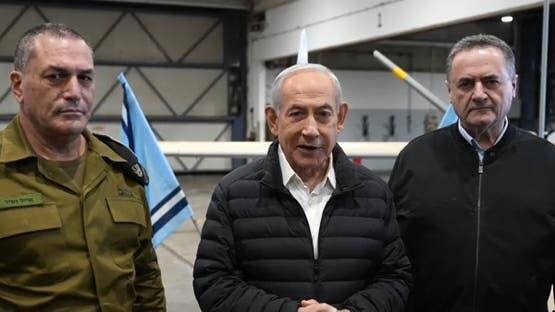
Nournews: Israel’s October 27 Knesset election is taking place amid a deepening crisis, with some observers describing the country as standing on the brink of political and social turmoil. Kan, Israel’s public broadcaster, has reported that tensions between Prime Minister Benjamin Netanyahu and IDF Chief of Staff Eyal Zamir over the war with Iran have reached a peak. Reports say the two exchanged heated words on Sunday at the Palmachim Airbase during a discussion about the possibility of renewed conflict with Iran.
Defense Minister Israel Katz’s efforts to play down the dispute and limit its potential electoral fallout have failed to conceal the depth of the divide in the face of political and military reactions. Avigdor Lieberman, leader of the Yisrael Beiteinu party, has described Netanyahu’s actions as tantamount to a betrayal of Israel’s security and called for a criminal investigation. Yair Golan, leader of the Democrats party, has also warned against any military operation lacking a clear strategic rationale.
Elections in Iran’s Shadow: From the Knesset to Congress
Israel’s Knesset election on October 27 will be followed just days later by the U.S. midterm elections. Both contests share a key factor that could shape their political outcomes: Iran and how to confront it.
This common thread highlights the gap between Trump and Netanyahu’s claims about destroying Iran’s capabilities and the realities on the ground. On one side are Trump and Netanyahu, who have made fear of Iran and the projection of strength central to their election campaigns, prioritizing personal and partisan interests. They claim that only their continued leadership can prevent the loss of past gains and avert a devastating Iranian attack.
Trump, too, has backed Netanyahu while touting what he describes as major actions against Iran. He has portrayed a vote for Netanyahu as a way to ensure continued U.S. support for Israel.
The Strait of Hormuz: A Test of Victory Claims
Confronting Iran’s nuclear capabilities and taking preemptive action to prevent it from acquiring nuclear weapons have been central to this political messaging. At the same time, promises of victory continue to be promoted.
Trump’s claims that the Strait of Hormuz remains open, that billions of barrels of oil will pass through it, and that prices will fall after the elections are part of the same psychological campaign. The narrative seeks to project an image of success without addressing the actual constraints on the ground.
In contrast, technical assessments by U.S. and Israeli military personnel and experts portray the Ramadan War not as a victory for Washington and Tel Aviv, but as a failed undertaking. According to these assessments, the conflict has strengthened Iran’s control over the Strait of Hormuz and enhanced its military capacity to respond to threats.
CENTCOM commanders and U.S. military leadership have repeatedly stated that military action against Iran would yield no meaningful gains for the United States, arguing that no unused options remain capable of achieving the objectives being claimed. The sharp depletion of weapons stockpiles and the destruction of U.S. bases in the region are also among the realities underscoring the limitations on conducting an effective operation against Iran.
Military Warnings: Iran Is Better Prepared Than Before
The heavy costs and damage caused by the Ramadan War, the inability of the United States and Israel to adequately replenish weapons and personnel, the extensive capabilities of the resistance front, and Israel’s failure to secure victory even in Gaza are among the realities informing military warnings to politicians such as Netanyahu—leaders who view war as a means of political survival.
Avner Vilan, an Iran affairs expert and former Israeli military official, has also acknowledged that Iran is better prepared than before for another round of war, both defensively and offensively.
Raz Zimmt, head of the Iran Research Program at Israel’s Institute for National Security Studies, has likewise argued that military operations cannot bring about a change in Iran’s political system. Writing about the lessons of the previous two wars, he said the experience had shown that the United States and Israel had failed to achieve objectives such as regime change or the elimination of Iran’s nuclear and missile capabilities and the threats they are perceived to pose.
Zamir vs. Netanyahu: Responsibility for War or Political Survival?
Reports in Hebrew-language media, including Channels 12 and 13, indicate that the military establishment is insisting that any potential action be considered in consultation with the United States and only after the elections. Some reports have even suggested that Eyal Zamir has called on political leaders to provide written commitments accepting responsibility for military actions undertaken at this sensitive juncture.
These positions not only reveal the Israeli military’s operational constraints but also amount to a significant acknowledgment of the gap between claims that Iran can be destroyed and the realities on the battlefield. Military experts do not simply reject those claims; they also assess Iran as stronger than before and capable of delivering even more devastating blows.
Against this backdrop, the upcoming Knesset election and U.S. midterms are about more than forming a government or determining the composition of a legislature. They represent a clash between two approaches: the wishful thinking of Trump and Netanyahu, who sacrifice security for personal and partisan interests, and the realism of battle-tested military leaders who understand the limits of warfare.
From this perspective, the dispute between Zamir and Netanyahu goes far beyond a personal altercation. It reflects a fundamental divide over the relationship between military realities and electoral calculations—a divide whose consequences could shape both leaders’ political futures and the course of the confrontation with Iran. Ultimately, the outcome of that confrontation will be determined not by campaign rhetoric, but by realities on the ground and the capabilities of Iran and the resistance front.