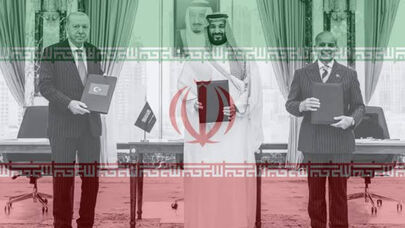
Nournews: A quadrilateral meeting in Tehran involving senior officials from Iran, Saudi Arabia, Pakistan, and Turkey could mark a turning point in regional cooperation and the development of an indigenous framework for collective security in West Asia. Ali Bagheri, deputy secretary of Iran’s Supreme National Security Council, has announced that senior officials from the three countries will visit Tehran. According to Bagheri, Saudi Defense Minister Khalid bin Salman, Pakistan’s army chief General Asim Munir, and Turkish intelligence chief Ibrahim Kalin will hold talks with Major General Mohsen Rezaei on regional security.
Given the sensitive circumstances in West Asia, the meeting should be viewed as more than a routine diplomatic gathering. It builds on Iran’s policy of regional engagement with its neighbors and could provide an opportunity for countries in the region to draw on Iran’s security experience during the Ramadan War. By advancing the concept of endogenous security, Tehran is opening a new path for regional actors to take greater responsibility for their own security—a path that could develop into a broader, more balanced framework suited to the realities of the region.
Iran: At the Forefront of Regional Cooperation and Security Diplomacy
In recent years, the Islamic Republic of Iran has consistently emphasized the importance of strengthening political, economic, cultural, and security ties with neighboring countries, viewing regional cooperation as a key pillar of lasting security in West Asia. Security agreements with neighboring states, including Iraq and Pakistan, as well as the proposal to hold a meeting of Persian Gulf littoral states in Oman, can be understood within this broader framework. This approach emphasizes the shared responsibility of regional countries for maintaining stability and countering threats originating outside the region.
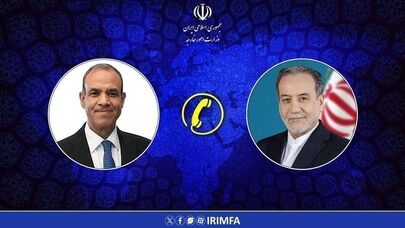
In this context, Iranian Foreign Ministry spokesman Esmaeil Baghaei has said that the initiative for the Tehran meeting was proposed by Pakistan’s army chief, Asim Munir, and that Iran agreed to the visit after reviewing the proposal. Stressing that security engagement among regional countries based on cooperation and endogenous security is both positive and necessary, Baghaei noted that Iran has regarded regional cooperation as essential to lasting security for decades.
According to Baghaei, meetings between senior officials from Saudi Arabia, Pakistan, and Turkey and Iran’s president and secretary of the Supreme National Security Council will address a range of major security issues affecting West Asia, including Israeli expansionism and developments in the occupied Palestinian territories and Lebanon. He also stressed that such a meeting could not take place without addressing what Tehran describes as US and Israeli aggression against Iran.
The meeting comes at a time when recent developments have underscored the need to reassess West Asia’s security arrangements and strengthen independent regional mechanisms. The experience of the Ramadan War demonstrated that reliance on the security umbrella of extra-regional powers does not guarantee peace and stability. On the contrary, it can expose countries in the region to the direct and indirect consequences of military confrontations.
From this perspective, the Tehran talks could provide an opportunity to bring positions closer together, strengthen mutual trust, and move toward a security order in which regional countries assume primary responsibility for their own security.
The Foreign Security Umbrella: A Blow to Regional Stability
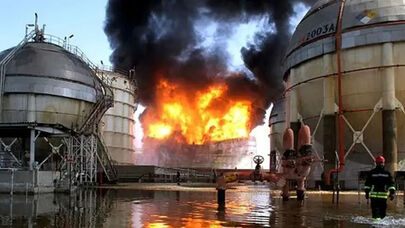
The Ramadan War delivered an important lesson to countries across the region and to extra-regional actors: the US security umbrella, despite Washington’s claims, is not necessarily a guarantee of peace and stability. Instead, it can become a source of insecurity for the region and even for America’s own allies. Under the stated rationale of supporting Israel, the United States launched a war against Iran, a conflict that inflicted extensive damage on countries across the region.
Invoking the principles of good-neighborliness and regional solidarity, Iran targeted US bases, interests, and objectives. Nevertheless, the economic, political, and security consequences of what Tehran describes as US-Israeli aggression spread across the region. Iran’s ability to withstand US military pressure also challenged key claims about American power, potentially encouraging some countries to reconsider security arrangements dependent on Washington and explore new forms of regional cooperation.
Today, the Iranian position that the United States and Israel pose threats to collective regional security has gained greater prominence, according to Tehran’s assessment. The experience of the Ramadan War has reinforced the argument that unilateral reliance on foreign powers is no substitute for sustainable security. Accordingly, moving toward independent security arrangements involving regional countries has become a strategic priority from Iran’s perspective.
Sharing Iran’s Experience: From National Deterrence to Collective Security
Drawing on its experience combating terrorism and confronting what it describes as the 12-day and 40-day wars waged by US-Israeli forces, Iran has considerable experience that it could share with other countries in the region. The Islamic Republic’s defense model is based on domestic capabilities and self-reliance, which Tehran regards as an effective foundation for safeguarding national security. At the same time, Iran’s strategic policy emphasizes regional security managed by regional countries themselves and opposition to foreign intervention and influence, particularly that of the United States and Israel.
Iran’s resistance during the Ramadan War and its actions concerning the Strait of Hormuz can also be understood within this broader approach, which treats national security and regional security as inseparable. Had the United States and Israel succeeded in overcoming Iran’s resistance, other countries in the region could also have faced broader security threats.
The Tehran meeting presents an important opportunity for Saudi Arabia, Pakistan, and Turkey to work alongside Iran, draw on its experience in strengthening national security, and take steps toward establishing a joint mechanism for regional security. Such cooperation, beyond serving the interests of the participating countries, could also strengthen West Asia’s role in shaping a more multilateral world order.
Endogenous Security: The Foundation of a Future Regional Order
The Tehran meeting could help lay the groundwork for a balanced and inclusive model of endogenous security by examining major regional developments, the consequences of US-Israeli military aggression, continued attacks against Iran, and support for the people of Palestine, Lebanon, and Yemen. At its core, the initiative is based on closer cooperation to strengthen deterrence and address shared security threats. It does not, in Iran’s framing, represent a departure from the country’s efforts to defend regional security.
The concept is rooted in the sacrifices of Iran’s armed forces and people. Tehran argues that, with the participation of other regional countries, this experience could help create a more stable and peaceful environment conducive to development across the region.
Iran’s position is clear: it regards the United States and Israel as the greatest threats to collective regional security. Tehran also frames its approach to managing the Strait of Hormuz not as an effort to restrict neighboring countries, but as part of its response to what it characterizes as the aggressive and criminal conduct of these two actors.
Support from regional countries for this approach could help establish a locally driven security framework based on self-reliance, a rejection of what Tehran considers the illusory protection of the US security umbrella, and stronger cooperation across security, economic, political, cultural, and environmental fields.
The willingness of participants at the Tehran meeting to translate these principles into practical action could strengthen regional security while contributing to a more multilateral global order. Under such an arrangement, West Asia would be positioned not merely as an arena for foreign intervention, but as an influential actor capable of shaping its own future and determining its own security.