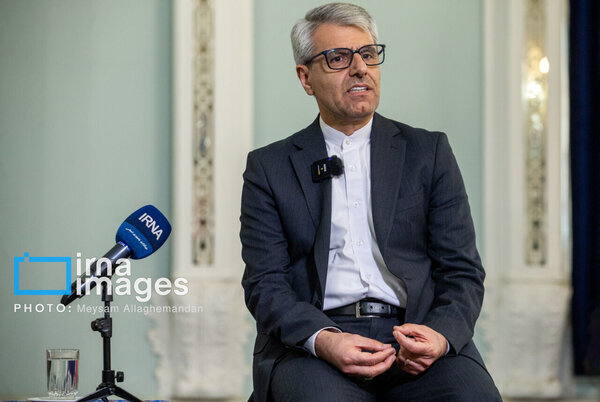
In an interview with German broadcaster ARD on Sunday, Baqaei said Iran has learned that Washington and its leadership cannot be trusted, as their strategy “is not diplomacy, but attacking the Islamic Republic.”
Responding to President Donald Trump’s rhetoric that the US will not attack Iran before the midterm elections, he emphasized that regardless of what the US president says or does not say, Iranians remain prepared, given American attacks even while diplomatic processes were underway.
He recalled a statement by Omani Foreign Minister Badr bin Hamad Al Busaidi that Iran and the US had made significant progress, yet Washington still chose to attack Iran—a reference to the American war amid talks with Oman acting as an intermediary. “The US has not shown the least bit of goodwill and will for a diplomatic approach,” Baqaei noted.
In response to a question regarding Europe’s approach toward Iran, Baqaei said it was regrettable to see the Europeans appeasing the United States rather than adopting an independent stance. The international community expects the European Union to act maturely in global politics, he added.
Consequently, the Europeans, instead of playing a constructive role regarding the nuclear issue, chose to side with the United States—despite knowing the illegality of the war launched against Iran, the US breach of the nuclear deal, JCPOA, in 2018, or following Washington in misusing the UN Security Council to re-impose sanctions.
Responding to developments around the Strait of Hormuz, the Iranian Foreign Ministry spokesperson said the strategic waterway “was not secure,” because the United States and Israel had exploited it to launch attacks on Iran—utilizing not only the Strait itself but also the territory and military infrastructure of several Persian Gulf states located on the opposite shore.
He emphasized that Iran has served as the guardian of this waterway for centuries but was compelled to take serious measures to safeguard its national security and territorial integrity—actions he said are lawful under international law.
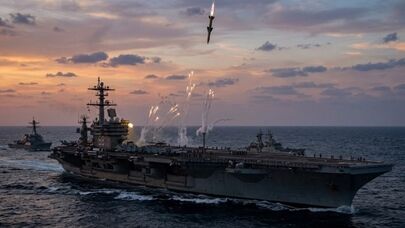
Baqaei also referred to continued US intervention in the regional waters, saying CENTCOM—with the cooperation of certain regional states—has been pressuring vessels to use routes other than those specified by Iran, resulting in explosions and other incidents.
Stating that the Americans were exploiting the “southern route” to transport military equipment, he said any littoral state has the right to take necessary measures to prevent the aggressors from utilizing these waterways for military purposes.
Regarding Iran-Germany relations, Baqaei noted that Berlin must decide whether it wants to change its approach or simply appease the United States.
Germans once enjoyed a strong reputation in Iran, he said, but that standing has been tarnished since they failed to provide a convincing explanation as to why they provided the former Iraqi dictator Saddam Hussein with chemical agents when he attacked Iran in the 1980s.
Baqaei also said that Germany’s support for the US-Israeli war over the past two years, 2025 and 2026, and other anti-Iran measures have impacted the good relations Tehran and Berlin enjoyed in the past.