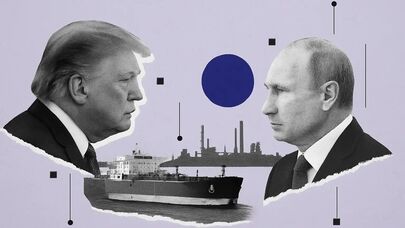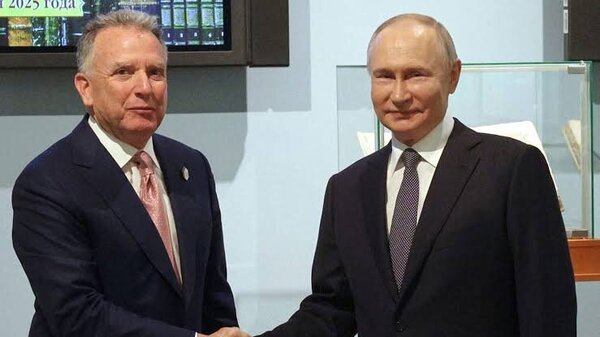
Russian President Vladimir Putin’s meeting with Steve Witkoff, the US president’s special envoy, took place as Moscow announced its readiness to revive economic cooperation with Washington, increase supplies of diesel fuel and fertilizer, and resume trilateral talks on Ukraine starting November 10. Earlier, reports had also emerged that Putin had agreed to a trilateral summit involving the leaders of Russia, China and the US. At the same time, Russian Deputy Prime Minister Alexander Novak announced that the first Russian tanker carrying 40,000 tons of diesel fuel would depart for the US on Thursday.
Some have interpreted these developments as signs of a shift in Russia’s policy toward the West and of Putin’s disregard for his allies’ interests. Yet the timing of Moscow’s moves alongside Witkoff’s visit conveys a different message: Russia is seeking to capitalize on America’s needs and its current predicament to secure significant concessions, including the lifting of sanctions, without abandoning its relations with Tehran and Beijing or retreating from its broader policy principles. Moscow’s efforts to compel Washington to lift sanctions complement the strategic measures taken by independent countries. Iran, for instance, has also declared the effective lifting of sanctions to be one of its conditions for reopening the Strait of Hormuz.
Moscow: Turning Battlefield Strength into Diplomatic Leverage
Russia’s conduct toward the US reflects its simultaneous use of diplomatic channels and leverage on the ground. Putin has publicly reaffirmed the continuation of military operations in Ukraine while pursuing negotiations with the US on Moscow’s terms, rather than Washington’s demands. By taking advantage of Trump’s electoral needs, Russia is seeking to secure the lifting of sanctions and an end to US aid to Ukraine in exchange for limited diesel fuel exports.
Along the same lines, Washington has effectively sidelined Zelensky and moved toward cutting off Starlink services and reducing military aid, steps that are deepening distrust among US allies. In other words, Moscow is converting its battlefield gains, along with its economic and national resilience, into diplomatic concessions. This process underscores the effectiveness of resisting US pressure and threats.
How Did Putin Counter Trump’s Claims About Iran?
Before Witkoff’s trip to Moscow, Trump claimed that Washington was in a strong position and that Russia, as far as the US could tell, had taken no action to support Iran. The claim was intended to portray the US as building a consensus and suggest that the strategic relationship between Tehran and Moscow had fractured. Putin’s position during his meeting with Witkoff, however, presented a different picture.
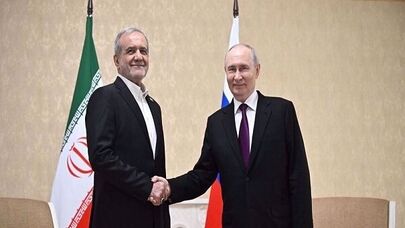
He emphasized: “You know that we have special relations with Iran, with our partners and friends in that country, based on trust, because these relations have taken shape and grown stronger over several decades. If we can take even the smallest step toward resolving the current conflict surrounding Iran, we will gladly do so.”
Russian Foreign Minister Sergey Lavrov had also previously stressed the expansion of strategic cooperation between Iran and Russia, saying that Moscow was fully committed to the two countries’ joint strategic agreement and would never abandon cooperation with Iran. Iranian Foreign Minister Abbas Araghchi, following his meeting with Lavrov, likewise described relations between Tehran and Moscow as closer than ever.
Putin’s decision to receive Witkoff was therefore not a move against Tehran. Rather, it conveyed a message to Washington that mediation does not mean distancing Russia from Iran, and that Trump’s claims remain political rhetoric without practical evidence to support them.
Beijing: A Partner Moscow Will Not Distance Itself From
At the same time as Putin was meeting with Witkoff, Russian Prime Minister Mikhail Mishustin met with his Chinese counterpart, Li Qiang, and announced Moscow’s readiness to expand comprehensive cooperation in the energy sector and ensure stable oil and gas supplies to China. Putin, meanwhile, described relations between Moscow and Beijing as successful and dynamic. The timing sends a clear message: no concession from the US can drive Russia away from China.
Washington’s strategy of separating Moscow from allies such as Iran and China, as well as groupings such as the Shanghai Cooperation Organisation and BRICS, has therefore failed. The US is prepared to ease sanctions on Russia to obtain a limited shipment of diesel fuel, yet it has been unable to alter Moscow’s strategic course toward greater alignment with independent countries that play an influential role in the emerging world order.
Europe’s Exclusion from the Equation: A Sign of Continued Confrontation With West
Putin has spoken of readiness for trilateral talks involving the US, Ukraine and Russia. At the same time, European security and the continent’s place in global affairs remain points of contention. Russian Foreign Ministry spokesperson Maria Zakharova has stated that Moscow is continuously monitoring NATO’s military activities and capabilities near the borders of Russia and Belarus and has been examining the necessary options for countering potential threats.
Russian Deputy Foreign Minister Alexander Grushko has also made the normalization of relations with the US and Western Europe conditional on the complete and unconditional lifting of all sanctions. From the Kremlin’s perspective, developing relations without meeting this condition would amount to “walking through a minefield,” he said.
Taken together, these positions show that Moscow is unwilling to abandon its demands in its dealings with the West. Describing Putin’s approach as a pivot toward the US or as selling out Iran and China therefore overlooks the simultaneous diplomatic, economic and military realities shaping Russia’s policy. It is a propaganda narrative aimed at driving a wedge between supporters of the emerging world order and preventing the accelerating decline of the unipolar order.