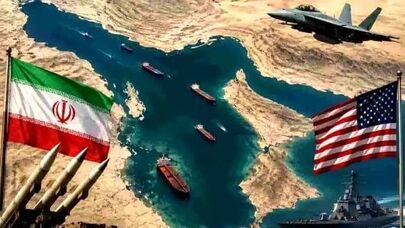
Oil prices have surged above $115 a barrel amid increasingly threatening rhetoric from the United States and the Israeli regime against Iran, as reports emerge that new military strikes are under consideration. These developments have once again brought the prospect of a renewed military confrontation in the region into sharp focus. As energy markets grow increasingly concerned about the security of supplies and gold prices come under pressure, a key question arises: Are markets pricing in the possibility of a new war, or is Washington once again using the threat of military action to force Tehran to accept its demands?
Oil: A Key Indicator of Rising War Fears
The oil market is among the first to react to changes in the security calculations surrounding the Middle East. The reason is clear: any escalation of conflict in the region could affect the security of energy infrastructure, oil transit routes and export flows from producing countries. From this perspective, the surge in oil prices above $115 a barrel should be seen as a sign that traders are increasingly concerned about the stability of supplies in the coming days and weeks.
The price increase comes amid reports of escalating tensions on the Saudi-Yemeni front, concerns over the security of energy facilities, and the possibility of renewed hostilities between Iran, the United States and the Israeli regime. However, rising oil prices do not necessarily mean that exports have been widely disrupted or that a military attack is inevitable. Rather, markets are factoring in the risk of potential disruptions before they occur.
This trend is particularly significant given the oil market's rapid response to military developments during previous crises. The 12-day war in May 2025 showed that oil prices rise as the prospect of escalation grows and concerns mount over the Strait of Hormuz. Conversely, when threats subside and a ceasefire takes hold, some of those price gains are reversed. Oil, therefore, serves both as an indicator of market anxiety over war and as a measure of expectations regarding whether a crisis will end or persist.
From the 12-Day War to the 40-Day War: Have the Calculations Changed?
What distinguishes the current situation from previous periods is not merely the rise in oil prices, but the renewed prospect of military confrontation following two rounds of hostilities, alongside continued economic and maritime pressure on Iran. Under these circumstances, markets face a critical question: Will the latest threats culminate in a limited operation, or could they mark the beginning of a new phase of confrontation?
Recent remarks by Donald Trump threatening to inflict heavy blows on Iran, suggesting that attacks could continue, and claiming that the war should have begun long ago, together with media reports that operations lasting several days are under consideration, indicate that the military option remains on Washington's agenda. Remarks by a US official at the United Nations about preparations for a prolonged confrontation, as well as the continuation of the naval blockade, have added to these concerns.
However, a distinction must be made between considering military action and making a definitive decision to launch it. Reports that strikes lasting several days are under consideration do not, by themselves, mean that an order to begin an operation has been issued. At the same time, the convergence of these reports with surging oil prices and escalating political threats has made the prospect of further tensions a more serious factor in market calculations.
Gold's Decline: A Sign of Lower Risk or a Shift in Investor Behavior?
The fall in gold prices alongside rising oil prices may initially appear contradictory, as gold is generally regarded as a safe-haven asset during periods of uncertainty. However, gold's performance depends on a range of factors, including the value of the dollar, interest rates, investors' liquidity needs and profit-taking in financial markets.
Gold's decline, therefore, cannot in itself be interpreted as a sign that the risk of war is receding. Oil prices may rise on fears of supply disruptions while gold falls because of a stronger dollar or asset sales to raise cash. These two trends can occur simultaneously. A more accurate interpretation of this divergence requires examining movements in the dollar, bond yields and capital flows across global markets.
Washington's Calculations and Tehran's Deterrent Message
Recent statements by US and Israeli officials indicate that pressure on Iran is still intended to alter Tehran's strategic calculations. Remarks about maintaining the naval blockade, requiring Iran to make significant concessions and removing highly enriched uranium underscore the fact that fundamental strategic disagreements remain unresolved. Netanyahu's threat of a forceful response against Iran has further heightened tensions.
In response, Iranian officials, particularly Parliament Speaker Mohammad Bagher Ghalibaf in his recent remarks, have emphasized the far-reaching costs that any military adventurism could impose on the United States. Tehran's message is that resorting to military force again would not necessarily achieve Washington's objectives. Instead, it could extend the consequences of a confrontation to financial markets, energy prices, inflation and the security of US forces.
From this perspective, Washington's central challenge is not simply whether it can launch an attack, but whether it can achieve its intended outcome and what costs a potential Iranian response would impose on the United States and the global economy. Previous confrontations have also shown that military operations cannot change Iran's political resolve to resist. Instead, they risk increasing the aggressor's costs without delivering the expected results.
Outlook: Between Limited Strikes and a Wider Escalation
Given the current developments, three possible paths lie ahead.
The first is the continuation of the naval blockade, economic pressure and military threats in an effort to extract concessions, without immediately entering a full-scale war.
The second is the launch of limited strikes lasting several days, based on the calculation that intensified military pressure could force Tehran to change its position.
The third is a renewed expansion of hostilities if the strategy of limited pressure fails and both sides become locked in a cycle of attacks and retaliation.
Under the third scenario, the risk of energy supply disruptions and a further rise in oil prices would become more acute, particularly given Iran's stated intention to target oil infrastructure, strategic shipping routes and communications infrastructure in the event of a new round of hostilities. Such a scenario could substantially increase the economic costs of the crisis for the United States, other major energy-consuming countries and the Persian Gulf states.
The surge in oil prices above $115 a barrel, alongside escalating political and military threats, signals growing concern over a possible resumption of hostilities. However, it is still too early to draw firm conclusions about when an attack might occur.
Although Iran's armed forces, as repeatedly stated by Iranian officials, remain at the highest levels of operational readiness and vigilance, the decisive indicators in the coming days will not simply be further increases in oil prices or the intensity of political rhetoric. Rather, they will be the extent to which the threats are accompanied by operational movements and concrete signs of preparations for an attack.
If such indicators emerge alongside a narrowing of diplomatic channels, the likelihood of confrontation will increase. Otherwise, the possibility remains that the military threat is part of Washington's broader strategy of pressure and bargaining.