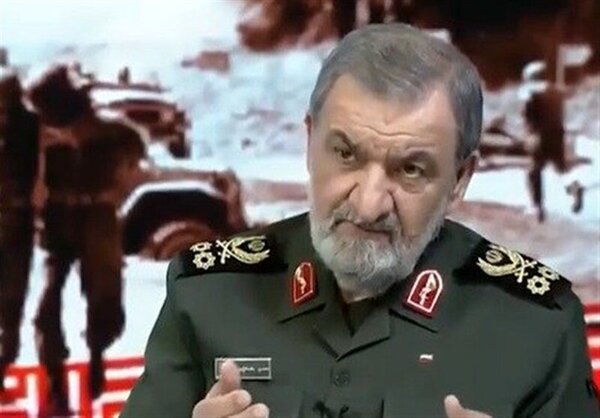
Major General Mohsen Rezaei, Iran’s secretary of the Supreme National Security Council, discussed the possibility of a renewed war, Iran’s defense strategy, the course of negotiations and the importance of the Strait of Hormuz in an interview with Drop Site News. Emphasizing that Iran prefers diplomacy to war, he said Tehran would retain its ability to respond if hostilities continued.
Referring to the experience of previous negotiations, Rezaei also stressed the need for both sides to honor their commitments and for Iran to preserve its leverage. He warned of the consequences of a prolonged war for energy markets and the regional economy.
Any Action Against Iran Comes at a Cost; We Are Ready for the Next Phase
In the interview, Iran’s secretary of the Supreme National Security Council stressed that military action against Iran would not be without consequences. If diplomacy could make this reality clear to the other side, Tehran would prefer that course.
On Iran’s defensive capabilities, Rezaei said, “If the question is whether Iran still has the ability to continue missile and drone operations, the answer is yes.”
Referring to US assets in the region, he added that if the war resumed, the range of potential Iranian targets could expand, with infrastructure such as data centers and facilities related to artificial intelligence also entering military calculations.
Rezaei said Iran had not deployed all its capabilities in previous phases of the conflict. As the intensity of the fighting increased, more capabilities had been brought into operation, and Iran was also prepared for subsequent phases. In the event of an attack, Iran would retain the ability to launch missiles and drones against various US assets across the region in retaliation, while expanding the range of its targets.
Rezaei went on to say that an assessment of Iran’s defensive capabilities should extend beyond the number of missiles it possesses. He emphasized the importance of maintaining the cycle of production, deployment and response throughout a prolonged war.
He also warned of the strategic consequences of continued hostilities, saying, “The continuation of the current situation will have strategic consequences, including that energy markets will not return to stability for the next three years.”
Strait of Hormuz and Iran’s Conditions for Continuing Negotiations
Another major part of Rezaei’s interview focused on the Strait of Hormuz and the course of negotiations. He described the importance of managing this strategic passage as extending beyond its economic revenues and stressed the strait’s role in regional calculations and negotiations.
Referring to the experience of the Islamabad memorandum of understanding, Rezaei said the agreement had failed because the commitments were implemented in the wrong sequence. According to him, the strait was reopened and maritime traffic resumed before the other side had fully fulfilled its political and economic commitments. As a result, the balance of leverage shifted.
On Tehran’s approach to negotiations, Iran’s secretary of the Supreme National Security Council said, “We will not return to our previous approach to diplomacy, but neither will we abandon diplomacy.”
He announced that Iran had conveyed seven new conditions through mediators, saying that Tehran would not reopen the strait or return to negotiations until those conditions were met. Rezaei nevertheless stressed that if Washington honored its commitments, the Strait of Hormuz could be reopened and the diplomatic process could continue.
On Iran’s ultimate objective in pursuing this course, he said, “Our goal is not to hold out until 2029, but to end the war on terms that reduce the likelihood of another conflict.”
Warning About the Future of Energy Markets and Changing Regional Relations
In another part of the interview, Rezaei described the continuation of the war as a factor reshaping regional dynamics, saying that Gulf states were reassessing their relations with Iran.
Referring to doubts raised about the United States’ ability to protect its bases in the region, he said recent developments had affected regional countries’ assessments of their security relationships.
Iran’s secretary of the Supreme National Security Council also warned that the conflict could spread to energy infrastructure. He said that if the US strategy focused on prolonging the war and using infrastructure in neighboring countries to ease the economic pressure caused by the situation in the Strait of Hormuz, those countries could also face security and economic consequences.
Rezaei stressed, however, that Iran’s message was not that the Gulf’s energy system should be destroyed. Rather, Iran’s economic infrastructure could not be targeted while the economic structures supporting such actions were expected to remain immune to the consequences of war.
Referring to the economic pressure caused by the blockade and continued hostilities, he said Iran would also suffer from these conditions, with families, investment and activity in some sectors of the economy facing difficulties. However, he argued, economic pressure should not be equated with strategic collapse.
Concluding this part of the interview, Rezaei stressed that, from Tehran’s perspective, a war of attrition could impose mounting costs on the United States and the region, and that the conflict must be brought to an end in a way that reduces the likelihood of its recurrence.