One statement by Abbas Araghchi may explain the current state of the conflict involving Iran, the US and Israel better than any other report: “We have not reached a state of peace, and we are far from it; the country is genuinely in a state of war.” Iran’s foreign minister made these remarks on Wednesday as reports emerged of stalled negotiations, increased US and Israeli military activity, the continued closure of the Strait of Hormuz, security incidents involving vessels in the Persian Gulf, and mediation efforts by Pakistan and Qatar.
The picture in Washington is not much different. US Secretary of State Marco Rubio has described reaching a peace agreement with Tehran as “very difficult” and said economic pressure would continue until Iran stops attacking commercial vessels in the Strait of Hormuz. In Tehran, senior officials, including the secretary of the Supreme National Security Council, the parliament speaker and the foreign minister, have said the Strait of Hormuz will not be fully reopened until the US accepts Iran’s conditions. At the same time, Iran maintains that it remains in favor of negotiations if its conditions are met. These developments occurring simultaneously are significant. They mean diplomacy is not dead, but it is no longer the main engine driving events. For now, the primary drivers on both sides of the conflict are pressure, threats and military deterrence.
Signs That the Balance Is Shifting Toward War
The most important indicator is the US military posture in the region. Washington has sent additional forces to the Middle East in recent weeks, and reports indicate that a third US aircraft carrier strike group is being deployed to the region. According to Al Jazeera, by the end of November, three aircraft carriers and two amphibious ready groups will be stationed around Iran, with thousands more troops also heading to the region.
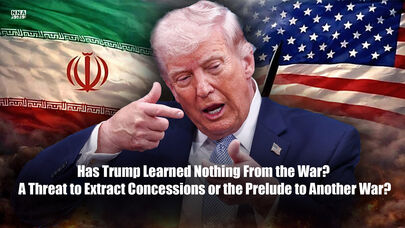
This scale of military deployment cannot be dismissed as mere posturing. Of course, deploying forces does not mean an attack is inevitable. However, it increases the capacity to launch an attack and turns the military option from a verbal threat into a more operationally viable possibility. There is also evidence, however, that Trump would prefer to postpone military action until after the midterm elections.
Meanwhile, the Zionist regime is entering another phase in which Iran remains at the center of its security calculations. A recent Reuters report says that next week’s Israeli election is unlikely to bring a fundamental change in the country’s policy toward Iran, even if the prime minister changes. According to regional analysts, the three main pillars of Israel’s security policy remain weakening Iran, establishing buffer zones and relying on military deterrence.
Even more importantly, the Financial Times has reported that Benjamin Netanyahu ordered the military earlier this month to prepare for a major operation against Iran. The operation was reportedly intended to target nuclear facilities and civilian infrastructure but was ultimately shelved following opposition from Donald Trump and as the US midterm elections approached. Nevertheless, according to the same report, information on Iranian targets has been exchanged between the US and Israeli sides, and the possibility of a joint operation if negotiations fail has not been ruled out.
Unlike Washington, the hawkish right wing in Tel Aviv appears to have a pressing need to carry out a military action against Iran before next week’s election. In this sense, the evidence suggests that the Zionist regime is seriously pursuing an operation that could be described as an “October Surprise.” Netanyahu’s government appears to need such a surprise urgently, whether to win the election or to postpone it.
Tehran, for its part, is signaling that it is fully prepared for the possibility of renewed attacks. In a post on X, President Masoud Pezeshkian wrote that Iran would “eat dirt, but not surrender its land.” In a speech, he also said that Iran was not avoiding negotiations, but asked how negotiations could take place when all avenues had been closed.
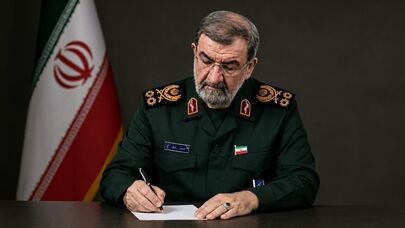
Major General Mohsen Rezaei, in his recent meetings with Russian Foreign Minister Sergey Lavrov and Pakistan’s army chief, Asim Munir, also stated firmly that not even the slightest amount of enriched material would be taken out of Iran. The clear implication is that Tehran is no longer prepared to make any concessions at this juncture, even if the risk of war is imminent.
Araghchi also stated explicitly that every possibility remains on the table, including the start of a new US-Israeli war against Iran. At the same time, Tehran has emphasized that it will not return to direct negotiations without the lifting of the blockade on its ports, an end to hostilities and acceptance of its conditions. Therefore, if we look only at the military and security indicators, the balance currently tilts more heavily toward war.
But why can we still not speak of an “inevitable war”? Because alongside all these warning signs, one important fact remains: none of the parties has completely closed the door to diplomacy. Pakistan continues to act as an intermediary between Tehran and Washington, while Qatar relays messages between the two sides. Even as Tehran says it will not enter negotiations unless its conditions are met, indirect communications continue. This indicates that the two sides have not yet reached the point of considering negotiations entirely futile.
More importantly, the experience of recent months has shown that war and negotiations in this crisis are not two opposing and independent tracks. They have repeatedly advanced simultaneously. From the start of the war on February 28 to the Islamabad understanding and its subsequent erosion, whenever military pressure has increased, political channels have also become active. Conversely, whenever negotiations have reached an impasse, military tensions have intensified. In its recent assessments, the US Council on Foreign Relations has also emphasized that the war has reached a stalemate and that no clear political solution to the two sides’ main objectives has yet emerged.
From this perspective, the phrase “peace or war” may be somewhat misleading. The current situation more closely resembles mutual deterrence accompanied by negotiations under pressure, with each side seeking to raise the cost for the other and secure greater concessions before returning to the negotiating table.
What Is the Region Saying?
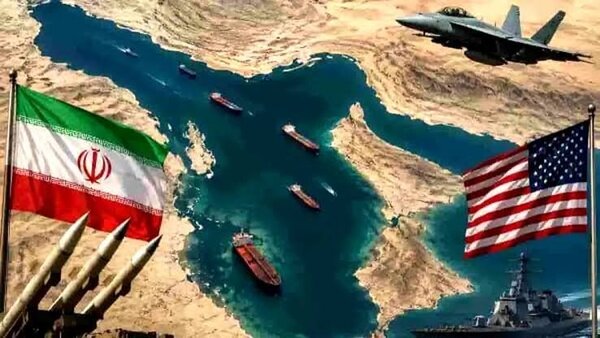
Perhaps the most important indicators of the current situation should be sought not only in Tehran and Washington, but also in the countries surrounding them. The Strait of Hormuz has effectively become one of the most important levers in this crisis. Data from Kpler show that vessel traffic has fallen sharply in recent days. During one weekend, only five ships passed through the strait, compared with 31 the previous weekend. At the same time, attacks on oil tankers have increased, and an oil tanker was struck by an unidentified projectile near the coast of Oman today.
The oil market is also taking the situation seriously. Brent crude rose by more than 2% today to around $110.85 a barrel. Energy market analysts said neither of the two major geopolitical crises, the war in the Middle East and the Russia-Ukraine war, has yet shown clear signs of de-escalation.
A new front is also taking shape in the south of the region. Yemen’s attacks on targets in Saudi Arabia have increased, while Tehran has simultaneously sought to prevent the conflict from spreading through political means. Araghchi has proposed that Iran mediate between Saudi Arabia and the Houthis, but has yet to receive a clear response from either side. Egypt is also considering its options regarding the possibility of becoming more directly involved in the crisis.
These developments convey an important message: this is no longer merely a bilateral dispute between Iran and the US. The Strait of Hormuz, the Gulf of Oman, Saudi Arabia, Yemen, Israel and even the global energy market are now part of the same chain of crisis. Any new attack could escalate into a regional crisis much more rapidly than in the past.
Against this backdrop, warnings from analytical institutions have also grown more serious. In its October 20 assessment, the Soufan Center wrote that, as the prospects for a diplomatic solution diminish, countries across the region are preparing for a resumption of war. The same report, however, stressed that the US has not yet made a final decision to escalate the conflict and that diplomatic channels remain active.
Are We Closer to War or Peace?
If we are to offer a cautious assessment based on today’s information, the answer is that we have moved further away from peace, but have not yet reached an inevitable war.
In the short term, particularly before the November 3 US midterm elections, the likelihood of a major US attack appears more limited, given Trump’s public statement that he will not launch an attack before the election. Yet this creates another warning sign: a significant part of the military calculations has now been shifted to the period “after the election.”
Trump has ruled out an attack before the election, while previously stating that the war should end after the election. Many calculations in both Washington and Tehran are now tied to this same timeline. For this reason, November 3 may mark the end of a period of waiting, not necessarily the end of the crisis. Israel’s calculations, however, appear different. As noted above, Netanyahu has an urgent need for an “October Surprise.”
Nevertheless, one very important factor remains: the cost of war has risen for all sides. Iran is facing economic pressure and a naval blockade; the US is dealing with rising energy costs and the risk of becoming embroiled in a war of attrition; Israel faces the prospect of a prolonged confrontation; and the Arab states of the Persian Gulf face direct threats to their energy infrastructure and economies. This very increase in the cost of war could be the factor that reactivates diplomacy.
Araghchi’s remarks should therefore not be interpreted simply as an announcement that war is imminent. They are better understood as a description of the reality of a situation in which the war has not truly ended and peace has not taken shape. The previous war has not been brought to a lasting conclusion, the June agreement has eroded, negotiations have reached an impasse, and both sides are simultaneously preparing for a military scenario while keeping political channels open.
Under these circumstances, perhaps the more precise question is not “Will there be war or peace?” but rather: which side will be the first to conclude that the cost of maintaining the status quo exceeds the cost of an acceptable agreement?
For now, military indicators point to the danger of war. However, mediation by Pakistan and Qatar, opposition from some regional countries to an expansion of the conflict, pressure from energy markets and, above all, the enormous cost of another round of war have left a window open for an agreement.
That window has narrowed considerably, but it has not yet closed.