In his final formal address as US president on January 15, 2025, Joe Biden made a statement that may not have received much attention amid the noise surrounding the end of his presidency: “Today, an oligarchy of extreme wealth, power and influence is taking shape in America that threatens our entire democracy, our basic rights and our freedoms.” In Biden’s view, this emerging oligarchy consists of wealth, power, and technological and media influence. In the same speech, Biden also warned of the danger posed by the rise of a “tech-industrial complex,” a structure that, he argued, could influence American political life through the concentration of economic and technological power and the spread of disinformation.
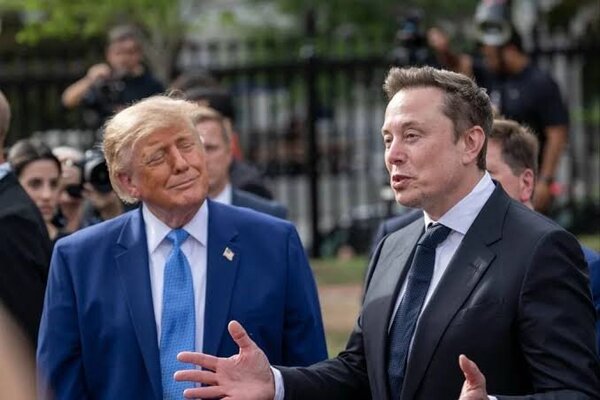
Now, less than two years later, the significance of that warning may be easier to see. Elon Musk, one of the world’s richest men and the owner of companies of strategic importance in the automotive, space and communications sectors, as well as the social media platform X, spent more than $277 million supporting Donald Trump and other Republican candidates in the 2024 presidential election. He became the largest individual financial backer of that election cycle.
That, however, was not the end of the story. In the 2026 midterm elections, Musk has once again entered the political arena with enormous financial resources. A Reuters report shows that since July this year alone, he has spent approximately $276 million supporting Republicans, bringing his total political spending in the 2026 election cycle to around $366 million. More recent reports have even indicated that PAC networks backed by him have directed more than $400 million toward Republican campaign advertising.
When the financial power of one individual becomes so disproportionate to that of millions of ordinary citizens that a single person can spend hundreds of millions of dollars to shape the electoral environment, can political equality among citizens still be understood in its traditional sense? This is precisely where Biden’s warning becomes significant.
From “People’s Vote” to a “Marketplace of Promises”
Democracy does not simply mean that citizens go to the polls every two or four years and select a name. Democracy has meaning when, before reaching the ballot box, citizens have access to a relatively level playing field in terms of information, advertising, political competition and the opportunity to be heard. If a candidate can draw on hundreds of millions of dollars in financial support, deploy thousands of field and campaign workers, and simultaneously access a vast communications platform, the issue is no longer simply a “campaign contribution.” It is a change in the scale of political power.
Musk is not merely a political donor. He also owns one of the world’s most important communications platforms. In the 2024 election, this combination of wealth and media ownership allowed him not only to provide extensive financial support but also to use the social media platform X to promote Trump politically. The Washington Post wrote at the time that the platform had effectively become a massive campaign megaphone for Trump.
This is where the concept of a “tech-industrial oligarchy” moves beyond political rhetoric and becomes a tangible issue: economic power, media power and political power are converging in one place. The danger does not necessarily lie in a billionaire supporting a candidate. It lies in the possibility that wealth, platform ownership, access to data, advertising capacity and political influence can become part of a single chain of power. Under such circumstances, ordinary citizens are no longer competing against a candidate alone; they are confronting an ecosystem of money, technology, media and power.
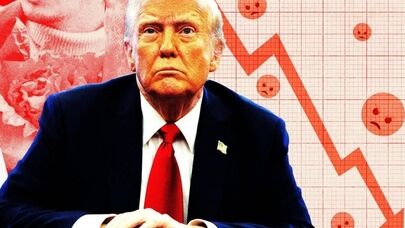
Against this backdrop, Trump’s recent campaign promise also merits scrutiny. He has announced that if Republicans retain control of both the House of Representatives and the Senate in the November 3 midterm elections, he will pay $5,000 to every American adult, calling the proposal the “Trump Dividend.” At least in political terms, this promise represents a notable shift in the relationship between politicians and voters. Trump is effectively promising that a party’s political victory will be accompanied by direct cash payments to citizens.
Legally, of course, this promise does not in itself amount to vote-buying, since the payments are supposed to be made regardless of whom an individual voted for, or whether they voted at all, and implementation would require congressional approval. But a different question arises from a political perspective: when electoral competition becomes tied to promises of direct cash payments, is public policy turning into a kind of marketplace in which political power and voters trade benefits?
This question becomes more serious when considered alongside the growing role of wealthy technology entrepreneurs. On one side, a technology billionaire enters the election with hundreds of millions of dollars to strengthen the political outcome he favors. On the other, the president promises voters thousands of dollars to secure his party’s victory. In both cases, money enters a political relationship in a way that should not displace citizens’ judgment of policies, performance and the country’s future.
The distinction, however, is important. Musk’s money is private capital spent to influence political competition; Trump’s promise involves the use of public resources and would require a legal process to implement. The two should therefore not be treated as identical. At a deeper level, however, both developments raise the same question: what happens to the quality of democratic choice when money becomes one of the most important languages of communication between politicians and citizens? This is the question that brings Biden’s warning back into focus.
Elections Held Hostage by Wealthy Donors and Lobbying
The US has long grappled with the influence of wealthy individuals over politics. The new issue is not simply the amount of money involved, but the speed, scale and combination of power. Today, a billionaire can simultaneously command enormous financial resources, strategically important technology companies, a communications platform, millions of followers and a network of electoral organizations. This concentration of power goes beyond the traditional practice of wealthy individuals lobbying political leaders.
For this reason, Biden’s warning about a “tech-industrial complex” cannot be dismissed as merely a political phrase uttered in the final days of his presidency. It was a warning about a future in which technology would become not only a tool for communication among people but also a means of organizing political power. Today, a real-world example of that future is unfolding before the American public.
Trump relies on enormous financial resources to preserve the Republican majority in Congress, while Elon Musk is spending hundreds of millions of dollars toward the same goal. At the same time, Trump is seeking to turn the midterm elections into a referendum on himself, linking his $5,000 financial promise to a Republican victory. Reuters has also emphasized that, in the final weeks of the campaign, Trump has positioned himself at the center of efforts to mobilize Republican voters.
The central issue, therefore, is neither Musk himself nor Trump personally. It is a system that allows private wealth to be converted into political power on a massive scale, while political power, in turn, can move closer to preserving and expanding the interests of those who own that wealth. This is precisely the point at which democracy must remain vigilant.
Does democracy weaken when the people’s vote becomes meaningless? Not necessarily. Sometimes democracy is gradually weakened while the vote itself remains intact, but the environment in which voters form their choices becomes excessively influenced by those who possess wealth and power. The ballot box may remain intact, but if the playing field on which political choices are formed becomes unequal, the health of democracy cannot be measured solely by the integrity of the ballot box.
From this perspective, what is happening in the US today cannot be understood simply as cooperation between Trump and Musk or as competition between Republicans and Democrats. It is a much broader test for the American political system: will technology and wealth expand the power of citizens, or the power of those who own the technology? If the answer is the latter, Biden’s warning takes on even greater significance. An oligarchy does not necessarily begin with the abolition of elections. It may begin when money, platforms and political power become so closely intertwined that ordinary citizens no longer have an equal vote in practice, but one with diminished influence.
This may be one of the greatest contradictions facing America today: a country that considers itself one of the world’s oldest modern democracies must now answer a fundamental question. In the age of technology billionaires, what will prevent wealth from turning into political power, and political power from becoming an economic privilege?
That was precisely the question Biden raised on the eve of his departure from the presidency. The answer, however, can no longer be found in farewell speeches. It is taking shape in the elections themselves and in the relationship between money, technology and the people’s vote.