Energy prices, from gasoline and diesel to other fuels, are no longer merely an economic issue. They have become a decisive factor in the politics and security of countries from Europe to the United States. As the US approaches the midterm congressional elections, Trump has mobilized the full weight of American domestic and foreign policy to demonstrate that energy prices are falling. However, French President Emmanuel Macron’s remarks on the diesel deal between Washington and Moscow reveal a deeper reality: energy prices are determined not by Trump’s political promises, but by geopolitical calculations in which Iran and the Strait of Hormuz occupy a central position.
Europe: Heavy Cost of Aligning With Washington
Since World War II, Europeans have surrendered a significant measure of their political and economic independence under the shadow of their security dependence on the United States, hoping that this dependence would at least guarantee a stable flow of energy. For some European governments, support for the Zionist regime has also served as a means of advancing their own goals and interests in West Asia and securing access to energy supplies from Arab countries. Yet for months, the outcome of these efforts to curry favor with Washington has run counter to expectations, to Europe’s detriment.
According to NATO Secretary General Mark Rutte, Europeans have played a role in the US and Zionist regime’s military aggression against Iran. This alignment has brought them no greater benefits; instead, it has imposed a deepening energy crisis on Europe’s economy and security. Spanish Prime Minister Pedro Sánchez has put the cost of the war against Iran to Europeans at more than 100 billion euros so far. European Commission President Ursula von der Leyen has also reported that the war’s outbreak has imposed an additional 106 billion euros in costs through fossil fuel imports. These figures represent only part of the price of aligning with Washington, an alignment that has also left Europe facing greater international isolation and public protests against its participation in the actions of the United States and the Zionist regime.
Trump’s Diesel Deal: A Promise With Little Impact on the Energy Market
The central point in Macron’s remarks is his acknowledgment of the limited impact of the US-Russia diesel deal. He stressed that the volume of Russian diesel exports in question had already been available, that countries had been buying it, and that shipments had been entering the global market. The deal, therefore, could not resolve the problems facing the global market. Macron also questioned the impact of the agreement on Trump’s political standing.
These remarks come as Trump has spent months repeatedly promising lower energy prices. At one point, he has spoken of releasing energy reserves; at another, extracting oil from Greenland, striking an energy deal with Taiwan, or increasing Venezuelan production. He is now also promising lower prices after the elections and a swift resolution of the Iran issue. Yet such promises-based remedies are losing credibility in the face of market realities. Estimates regarding the adequacy of Russian diesel shipments also point to a limited impact, depending on the transportation process and the volume supplied. Such an effect cannot replace a fundamental solution to the energy crisis.
Strait of Hormuz: Real Center of Energy Price Determination
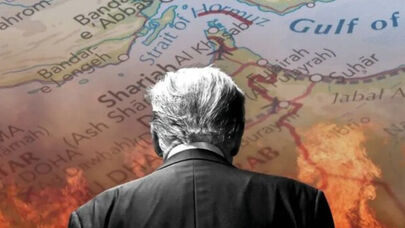
Macron’s remarks raise a fundamental question: if financial markets and Trump’s agreements with energy producers cannot guarantee lower prices, where is the fate of those prices actually decided? The answer lies in the geopolitical significance of the Strait of Hormuz and Iran’s decisive role in energy calculations, a reality that has previously been reflected in the statements of several political and economic leaders around the world.
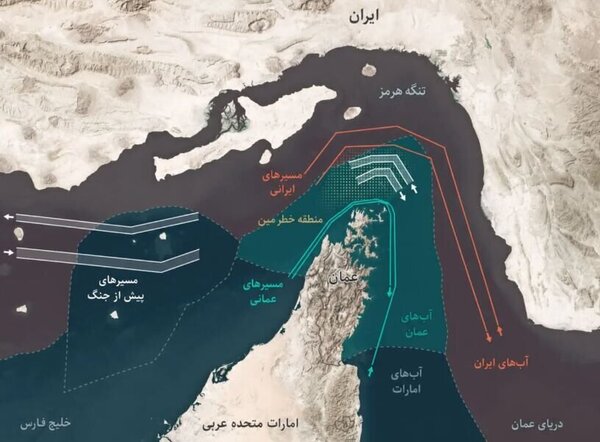
Today, geopolitics has become an instrument of power. Iran’s position in the Strait of Hormuz, alongside its indigenous capabilities, economic and social resilience, and ability to deal with vessels that violate regulations, influences energy market calculations. From this perspective, the Strait of Hormuz is one component of Iran’s deterrence, one whose consequences even Washington cannot ignore. The continued pressure on fuel prices, despite Trump’s promises and media campaign, shows that political will alone cannot contain geopolitical realities.
Iran’s Strength: An Answer to Prescriptions for Compromise and Surrender
The reality is that lasting security cannot be achieved by relinquishing the instruments of power and repeating bitter historical experiences such as the Treaty of Turkmenchay. The way out of the crisis lies in relying on national strength, self-confidence, indigenous capabilities, and the intelligent use of leverage on the ground, at the negotiating table, and through deterrence.
For Iran, the Strait of Hormuz is not merely a maritime passage. It is a strategic asset in global calculations, and maintaining control over its management can help safeguard national interests and contribute to shaping a more balanced order. Outdated prescriptions for compromise and surrender cannot replace such a strategy.