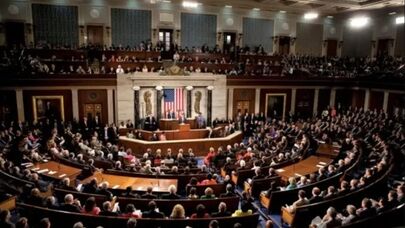
Under the US political system, the president serves as commander-in-chief of the armed forces, but his authority to continue a costly war is not independent of the country’s financial capacity. The longer military operations continue, the more apparent the gap becomes between the White House’s political decisions and Congress’s responsibility for funding them. That gap could become the focal point of a new confrontation between the two institutions, with consequences for the future of the war with Iran.
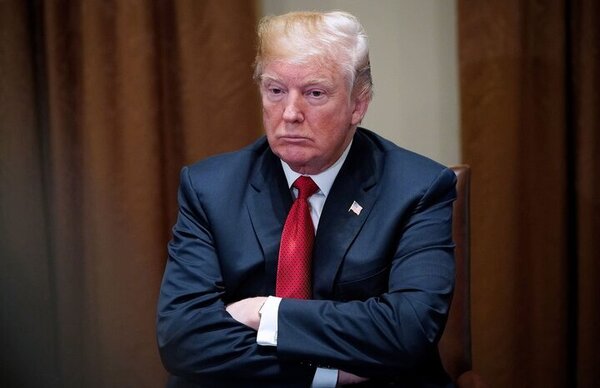
Donald Trump needs resources beyond existing appropriations to carry out his military agenda. His proposed $1.5 trillion defense budget and request for $67 billion in emergency funding, combined with the mounting costs of military operations, pose a fundamental question for lawmakers: Will increased appropriations help achieve specific military objectives, or will they simply channel more resources into a war with no clear end in sight?
This question takes on greater significance ahead of the midterm elections. Lawmakers must strike a balance between supporting the armed forces, answering for public spending and protecting the country’s long-term interests. Meeting soldiers’ immediate needs does not necessarily mean endorsing every presidential decision. Congress can distinguish between essential operational support and unlimited funding for a military campaign.
From this perspective, the budget is more than a set of figures; it is a means of measuring the government’s accountability for its costly decisions. As it becomes harder to justify continuing the war, approving additional appropriations will also shift from an administrative process to a political dispute.
Iran and the Erosion of US Military Advantage
One significant consequence of the war is the strain it places on the US military’s weapons stockpiles and supply chains. Estimates cited by the Congressional Budget Office put the cost of the war at $38 billion, with spending rising by at least $2 billion a month if operations continue. These figures show how quickly Washington’s financial commitment expands as the conflict persists. Yet the central issue is not simply how much money is being spent; more importantly, it is how these costs affect future military readiness.
Military power cannot be measured solely by the size of a budget or the number of weapons and other equipment. Access to munitions, the ability to replace expended weapons, fleet readiness and the capacity to sustain deployed forces are complementary components of operational power. If a prolonged war consumes resources in these areas, even a military backed by an enormous budget may face constraints in meeting several strategic priorities simultaneously.
In this context, the war with Iran is a test for Washington that extends well beyond the battlefield. According to information cited in defense reports, the redeployment of warships from the Pacific to the Middle East, along with the movement of munitions and critical components, illustrates how concentrating military assets in one theater can affect readiness in another.
This does not mean the collapse of US military capabilities, but it highlights the opportunity costs of military decisions. Any system committed to one mission may be unavailable for another at a different point in time. Washington’s strategic challenge, therefore, is how to distribute limited resources among multiple commitments, not simply how to increase appropriations to cover ongoing expenses.
Beijing: Missing Actor in the War’s Calculations
Competition with China is one of the main benchmarks for assessing the war with Iran’s long-term consequences for the US. If Washington expends a substantial share of its munitions, naval capacity and support resources in West Asia, maintaining readiness in the Pacific will require more careful planning and potentially greater compensatory spending.
Marco Rubio’s remarks about prioritizing America’s immediate needs over delays in arms sales to Taiwan illustrate this conflict of priorities. When the administration must readjust its arms commitments to meet its own operational requirements, regional partners may also begin questioning the timing of US support and the reliability of their defense plans.
Meanwhile, emergency sales of munitions and components for air defense systems to Saudi Arabia, Qatar and the United Arab Emirates add to the complexity of managing stockpiles. These developments must be assessed alongside the operational needs of US forces and Washington’s commitments in East Asia. Defense resources are neither unlimited nor can all equipment that has been expended be replaced immediately.
As a result, continuing the war could impose a strategic cost that is not fully reflected in daily financial statements. If competition with China requires sustained readiness and adequate stockpiles, the depletion of these capabilities could narrow the range of options available to the US in the future. This is where the decision over the war with Iran becomes an issue extending far beyond the Middle East.
Congress: War Watchdog or Partner in the Costs?
Congress does not necessarily have to halt funding altogether to influence the course of the war. Lawmakers can distinguish between the essential costs of protecting US forces and broader appropriations for continuing operations. They can also tie approval of new funding to clear reports on objectives, mission duration and plans for disengagement.
Such an approach would preserve the ability to meet US forces’ immediate needs while compelling the administration to explain the war’s measurable achievements. Setting priorities for munitions stockpiles, examining the consequences of transferring equipment and assessing the impact of operations on commitments in the Pacific could also form part of effective congressional oversight.
Budgetary control alone, however, does not guarantee that Trump will abandon continued operations. The president may apply political pressure to secure resources or seek to reallocate existing appropriations. Congress’s influence will depend on lawmakers’ unity, the legal rules governing military funding and their ability to agree on specific conditions.
Nevertheless, rising costs and concerns about defense priorities could make political support for unlimited war funding harder to sustain. Ultimately, Washington’s main test is whether it can reconcile its short-term military objectives with the demands of maintaining its position as a global power.
If the administration cannot establish a clear relationship between the war’s cost, objectives and outcomes, Congress will have greater room to exercise oversight. Under these circumstances, the budget is not a button that can bring the war to an immediate end, but a lever for limiting commitments, strengthening accountability and compelling the White House to explain the operation’s ultimate objective.