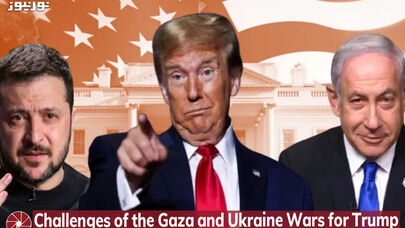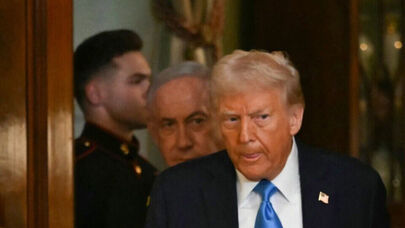
Trump presents himself as a president who has ended eight wars and deserves the Nobel Peace Prize. Yet the continuation of conflicts in Ukraine, Gaza and Iran, coupled with the White House’s reliance on negotiators operating outside the conventional diplomatic establishment, raises a fundamental question: Is ending wars a strategic priority for Trump, or has peace itself become a tool for securing political prestige, advancing personal interests and projecting victory?
Trump has repeatedly claimed that he has ended eight wars since returning to the White House. On October 7, 2026, he once again touted his record as a peacemaker, emphasizing his worthiness for the Nobel Peace Prize. However, developments on the ground present a different picture. Fighting has resumed in all the conflicts Trump claims to have resolved, while Washington’s decisive role in their resolution remains disputed. Meanwhile, the war in Ukraine has yet to produce a final agreement. At the same time, the military confrontation between the United States and Israel and Iran has plunged the region and global energy markets into crisis.
The gap between claims of peacemaking and the reality of events is more than a contradiction in political messaging. It may point to a deeper problem in the way US foreign policy decisions are made: the prioritization of the president’s personal and political calculations over the requirements of lasting peace.
Peace: A Strategic Objective or Political Capital?
Under the traditional model of foreign policy, ending a war should reduce security threats, stabilize the regional order and establish mechanisms to prevent renewed conflict. Under Trump’s personalized approach to politics, however, an agreement carries greater political value when it can be recorded as a historic achievement bearing the president’s name.
Trump’s insistence on ending wars and his repeated emphasis on winning the Nobel Peace Prize demonstrate the importance he attaches to personal prestige and his political legacy. The problem begins when the appearance of success replaces a genuine assessment of results: a temporary ceasefire is presented as the end of a war, or the opening of negotiations is marketed as a diplomatic victory before a lasting agreement has been reached.
Under such circumstances, ending a war may not be an independent objective but rather one option for managing a political crisis. Its value may depend on the publicity it generates and the concessions that can be presented to the domestic US audience.
The evidence so far indicates that Trump deliberately seeks to prolong wars and that his political and economic calculations, along with those of his associates and partners, conflict with the imperative of ending hostilities.
Witkoff and Kushner: Diplomacy Within the President’s Inner Circle
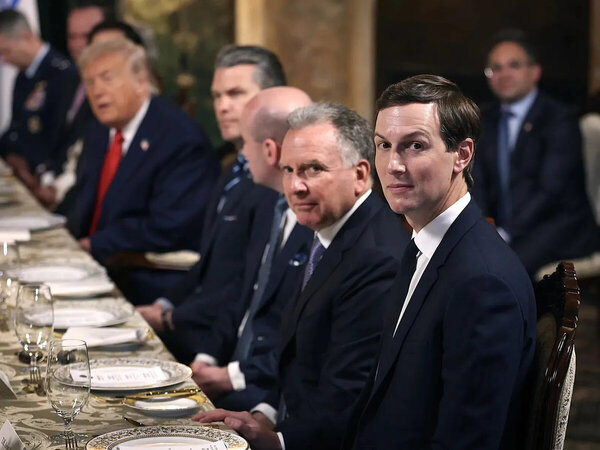
Against this backdrop, the roles of Steve Witkoff and Jared Kushner take on particular significance. Rather than relying exclusively on the State Department’s professional diplomatic corps and conventional policymaking mechanisms, Trump has entrusted complex dossiers to individuals who enjoy his personal confidence and whose primary backgrounds are in business and investment.
This choice cannot be explained simply as the use of negotiators from outside the government bureaucracy. The central question is whether this approach strengthens US diplomacy or, by limiting the role of specialized institutions, makes decision-making even more dependent on the president’s personal will and calculations.
Aaron David Miller and Daniel Kurtzer, two veteran US diplomats, criticized Witkoff and Kushner’s handling of Iran, Ukraine and the Israeli-Palestinian conflict in an analysis published by Foreign Policy in March 2026. They identified the absence of a coherent strategy, poor coordination and the negotiators’ limited diplomatic experience as factors that have made lasting agreements more difficult to achieve.
The question of these two men’s real mission, therefore, extends beyond their professional qualifications. It is necessary to establish whether their task is to resolve disputes at their roots or to advance agreements that primarily serve the political and economic priorities of Trump and his two profit-driven business associates.
Blurred Boundary Between Public and Private Interests
Another dimension of this issue is the relationship between diplomacy and economic interests. Trump’s business activities and those of his inner circle, as well as the potential overlap between public and private interests, have been subjects of political and media debate in the United States.
On October 12, 2026, Max Boot, writing in The Washington Post, examined economic dealings connected to negotiations between Ukraine and Russia, including a proposed sale of the international assets of Russian oil company Lukoil to a group of investors. He warned of the blurred boundary between public and private interests in the Trump administration’s foreign policy. The analysis is particularly significant because some individuals connected to the negotiations are also active in investment. Such connections, in themselves, provide substantial grounds for concern about the personalization of US foreign policy, especially in processes of such importance.
The strategic significance of this issue lies in the fact that when political and security agreements become intertwined with economic opportunities, the need for transparency and institutional oversight increases. Otherwise, there is a risk that America’s long-term interests will be subordinated to individuals’ short-term political or economic calculations.
Three Dossiers, One Strategic Question
In Ukraine, no final agreement to end the war has yet been reached. In Gaza, securing a ceasefire or presenting a reconstruction plan cannot, on its own, resolve the fundamental issues of governance, security and Palestinian rights. The situation remains deadlocked, which is still the most accurate way to describe the current state of affairs. In the case of Iran, the continuation of military confrontation has demonstrated that pressure and threats do not necessarily lead to a lasting agreement without addressing strategic disagreements and establishing credible guarantees.
What these cases have in common is that lasting peace requires an understanding of the parties’ red lines, coordination within decision-making structures and a willingness to accept reciprocal commitments. None of these requirements can be replaced or justified merely by Trump’s personal trust in his negotiators or promises of a swift agreement.
Is Diplomacy Failing, or Has Its Meaning Changed?
The central question about Trump’s handling of major foreign policy dossiers is no longer how many wars he has declared over in his speeches, but the extent to which his policies have produced lasting and reliable peace.
If agreements are designed less to resolve conflicts at their roots than to serve as instruments for projecting political victory and securing personal economic gains, the gap between claims of peacemaking and the reality of ongoing wars will widen.
It is at this point that the question of Witkoff and Kushner’s mission becomes meaningful: Are they tasked with ending wars, or with managing negotiations according to the political and economic calculations of a president who wants to secure income for himself and his family while also claiming victory in his own name?