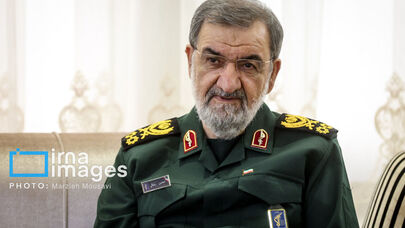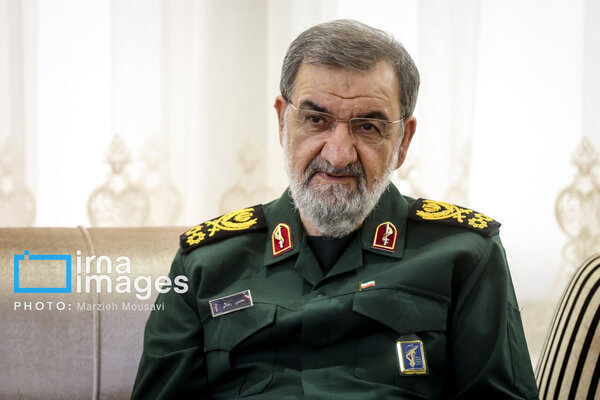
Nournews: Recent remarks by Mohsen Rezaei, Secretary of Iran’s Supreme National Security Council, in an interview with Press TV about the confrontation between Iran and the United States and the consideration of establishing an “Economic War Council” go beyond an organizational proposal. They offer a picture of Tehran’s assessment of the current situation and the scenarios ahead. The political track has encountered a relative deadlock, the use of military force by the United States faces growing constraints and costs, and the prospect of intensified economic pressure through sanctions and a naval blockade is increasing. Under these circumstances, Iran’s central challenge appears to be how to preserve its resilience in a confrontation that may continue even if military hostilities cease.
Political Deadlock: When Proposals Fail to Produce an Agreement
In recent weeks, much of the interaction between Iran and the United States has centered on the exchange of proposals and the possibility of reaching an agreement. However, Donald Trump explicitly stated that he would not accept Iran’s proposal, while Mohsen Rezaei, on October 11, described Washington’s response to Tehran’s seven-point proposal as inadequate. He said the United States had accepted some of Iran’s conditions, but uncertainties remained over other elements, adding that Tehran was no longer responding to the Americans.
This situation suggests that the exchange of proposals has so far failed to resolve the two sides’ fundamental differences. A relative deadlock in the political process does not necessarily mean the end of diplomacy, but it increases the possibility that the confrontation will continue, particularly if both sides insist on conditions whose acceptance would carry significant political and strategic costs for the other.
From Tehran’s perspective, the question is no longer simply whether an agreement will be reached, but also how the confrontation will unfold if no agreement is achieved and how the country should prepare for that possibility. Rezaei’s remarks can be assessed within this framework as an attempt to outline the current situation and explain the tools available to address the scenarios ahead.
The Military Paradox: Power Must Be Translated into Political Gains
On the military front, one of the fundamental questions surrounding US strategy is what new gains Washington expects to achieve by continuing or escalating its military operations. If the objective of the attacks was to force Iran to accept Washington’s terms or alter Tehran’s strategic calculations, it is worth asking what battlefield objectives remain unfulfilled that the United States hopes to achieve by repeating or expanding its operations.
If military force has failed to deliver the expected political outcome despite its substantial costs, two possibilities arise: Washington has so far been unable to use its military capabilities to achieve that objective, or the military gains already secured have been insufficient to change the political balance. In either case, continuing military operations alone does not guarantee the desired outcome. It also raises the question of what different results additional costs would produce.
This issue becomes more significant as the consequences of the war extend beyond the battlefield and spill over into the global economy, particularly energy markets. Disruptions to maritime traffic through the Strait of Hormuz, rising shipping and tanker insurance costs, and concerns over supplies of crude oil and petroleum products have placed mounting pressure on energy markets. As one of the world’s key routes for oil and gas shipments, any disruption to the Strait of Hormuz has extended the economic costs of the war to countries far removed from the conflict zone.
For the United States, these costs are not confined to global markets. Rising gasoline and diesel prices have increased transportation and goods costs, intensified inflationary pressures, and fueled social and political discontent. This is particularly significant for the Trump administration ahead of the midterm elections, as the economic costs of the war have become a domestic concern and a source of pressure to limit or end the conflict.
This is where the paradox of military force emerges: an instrument intended to impose costs on Iran and compel it to change its behavior has simultaneously generated substantial economic and political costs for the United States and the global economy. This does not mean Washington is categorically incapable of continuing military operations. Rather, it highlights the distinction between the ability to conduct military operations and the ability to translate them into the desired political outcome.
The central question, therefore, is whether continuing the war can shift the balance sufficiently to justify its costs for the United States, or whether sustained operations without a decisive political achievement will simply increase the burden on both sides and the global economy.
From the Military Battlefield to the Economic Front: The Prospect of Prolonged Pressure
Alongside the constraints on military action, developments suggest that economic pressure has become a major component of Washington’s policy. In recent months, the US administration has discussed tightening sanctions, restricting Iran’s oil revenues, and cutting off the country’s financial and trade channels. Treasury Secretary Scott Bessent has also emphasized expanding economic pressure. On October 9, Washington announced new sanctions targeting companies, individuals, and vessels linked to Iran’s oil trade.
Under these circumstances, the United States may place greater emphasis on economic tools while maintaining the military threat. The objective would be to reduce Iran’s revenues, increase the costs of governing the country, and pressure Tehran to reconsider its political calculations. This assessment does not mean Washington has definitively abandoned the military option; rather, it points to the possibility of combining sustained economic pressure with a continuing military threat.
Iran, meanwhile, has signaled through strategies such as “blockading the blockade” and its emphasis on managing maritime transit through the Strait of Hormuz under its own proposed framework that a naval blockade against Tehran would not come without reciprocal costs. Prolonged disruption to energy routes under such circumstances could inflict serious damage on the global economy, particularly that of the United States.
The current confrontation should therefore be understood as a set of interconnected developments. A relative political deadlock could increase the likelihood of sustained pressure; the limitations of military force could alter Washington’s calculations; and economic pressure could become one of the principal instruments for continuing the confrontation. These are three dimensions of a single situation, rather than three independent developments.
The Economic War Council: Revisiting the Experience of the Iran-Iraq War
Against this backdrop, Mohsen Rezaei’s proposal to establish an “Economic War Council” takes on particular significance. If the scenario ahead involves continued economic pressure and a blockade alongside a sustained military threat, Iran’s response cannot be limited to scattered reactions and ad hoc decisions. Such circumstances make coordination among the country’s economic, commercial, financial, and executive capacities a strategic necessity.
The eight-year Iran-Iraq War offers a relevant historical experience. During the war, the establishment of a War Support Headquarters to coordinate national resources and capabilities and meet the needs of the front helped create an effective organizational structure that addressed many of the challenges encountered in the preceding period. Rezaei, who served as commander of the Islamic Revolutionary Guard Corps at the time, had direct experience managing the war and organizing the country’s defense capabilities.
This historical experience could inform consideration of the proposed Economic War Council—not by replicating military structures wholesale in the economic sphere, but by recognizing the need for centralized resource allocation and coordination among government institutions under sustained pressure.
Such a structure would need to balance the requirements of countering external pressure with the need to maintain the country’s economic and social stability. Resilience is meaningful only if economic pressure does not erode productive capacity, undermine people’s livelihoods, or weaken the country’s ability to make decisions.
A War of Resilience: The Challenge Goes Beyond Enduring Pressure
The confrontation between Iran and the United States can now be viewed, alongside its political and military dimensions, as a kind of “war of resilience”—a contest in which each side’s ability to sustain its course, manage costs, and preserve vital capabilities becomes critical.
In such a confrontation, victory or defeat cannot be measured solely by the number of attacks, the scale of destruction, or the severity of sanctions. The key question is how effectively each side can manage the costs of confrontation and prevent external pressure from becoming a decisive instrument in shaping its political decisions.
From this perspective, the Economic War Council could represent an effort to adapt the experience of organizing national capabilities during the Iran-Iraq War to present-day conditions. The significance of the proposal will depend not on its title, but on its ability to coordinate economic policies, reduce vulnerabilities, and preserve the country’s capacity to withstand prolonged pressure.
Rezaei’s remarks can be interpreted as a sign that Tehran is preparing for the possibility of a prolonged, multidimensional confrontation—a scenario in which the conflict between Iran and the United States would not necessarily be confined to continued military hostilities. Alongside military threats and competition over regional power dynamics, the confrontation could continue through political pressure, sanctions, and economic blockades.
From this perspective, Rezaei’s statements should be examined through the interaction of three dimensions: preserving the possibility of diplomacy while preparing for continued disagreements; managing the costs and consequences of military confrontation; and organizing the country’s capabilities, particularly in the economic sphere, to counter economic pressure and maintain and strengthen national resilience.