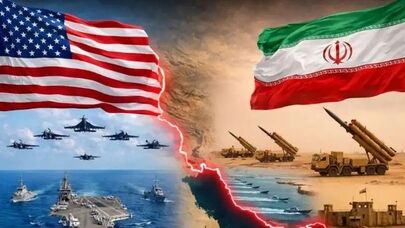
An assessment of US strategic publications indicates that many research centers and strategic thinkers have criticized President Donald Trump’s military policies toward Iran, warning that an escalation of tensions between Tehran and Washington could expose US armed forces to more extensive tactical damage. Trump, however, has consistently rejected this approach and instead pursued a strategy of escalating tensions, security surprises, and shifting tactical paradigms in dealing with Iran.
At a press conference and in an interview on October 5, Trump said the United States would not take military action against Iran before the November 3, 2026, congressional elections. Such a statement, however, signals a security threat based on ambiguity. It is worth recalling that the United States and Israel have launched military attacks on Iranian facilities and institutions on three occasions in the past while Iranian foreign policy officials were engaged in diplomatic negotiations aimed at resolving disputes.
A relatively low-cost way to overcome national security threats is possible only when there is a comprehensive tactical, operational, and strategic understanding of Trump’s aggressive policies. Tactical preparedness is one of the mechanisms that can reduce the likelihood of US aggression. Realists generally emphasize the importance of a balance of power and advise states to prepare for war if they wish to preserve peace.
This approach is an unavoidable necessity for Iran, given that the United States and Israel, as two aggressive nuclear-armed actors, possess the capabilities needed to confront Iran. The threat can be neutralized only through a “balance of power” and the “capacity for reciprocal action.” Washington is likely to minimize the possibility of military and security action against Iran only when Tehran has the operational strength and tactical capabilities to respond within the framework of retaliatory action.
The history of international relations shows that diplomacy, without tactical and operational backing, cannot establish peace for Iran or any other country amid international politics and regional competition.
Iran is situated in a region marked by widespread crisis and instability. The intervention of major powers and the gradual expansion of Israel’s power as a proxy for the United States and the Western world will further intensify regional crises. In the years following World War I, Britain and the United States helped dismantle the concentration of power among Islamic countries, paving the way for the partition of the Ottoman Empire.
Today, Western countries are seeking to establish mechanisms to support Israel and alter the regional balance of power. Within this framework, they aim to reshape regional political and security relations in ways that could control or escalate crises by significantly changing the balance of power. Under these circumstances, regional countries will need multilateral cooperation. Any confrontation, rivalry, or conflict could substantially increase the scale and scope of US and Israeli military operations against Muslim-majority countries.
1. Scenario One: High-Intensity US and Israeli Aggression Against Iran
A high-intensity offensive scenario involves high-risk military actions and operations. During the wars of June 2025 and February 2026, the United States and Israel employed coordinated tactical operations against Iran. Many US air defense units, particularly advanced THAAD missile systems, were deployed in Israeli territory. To counter Iran’s missile capabilities, the two countries relied on joint tactical measures in both defensive and offensive operations.
The division of tactical responsibilities can be considered a key element of US-Israeli operational policy toward Iran. During the wars of June 2025 and February 2026, the two countries leveraged their relative tactical and operational advantages against Iran. As a result, a significant portion of Iran’s defensive and operational capabilities was exposed to attacks by the United States and its strategic ally, Israel.
The experience of previous wars shows that these countries have used intelligent tracking systems and precision-guided tactical equipment, giving them a considerable comparative advantage over Iran. This model of joint US-Israeli operations has two main characteristics. First, it involves intelligence, security, and tactical coordination. Second, the two countries integrate their respective capabilities and, as in previous conflicts, seek to threaten Iran’s strategic power infrastructure.
US and Israeli military operations targeting fuel tankers led to air pollution in Tehran severe enough to cause toxic conditions. The destruction of steel facilities has not only undermined Iran’s military capabilities but also placed Iranian society’s social and economic life—particularly housing prices—under considerable strain.
If the United States and Israel organize their offensive campaign around high-intensity operations, the consequences could pose serious security and economic challenges for Iran’s political and social future.
A high-intensity war scenario would have three principal features: first, joint US-Israeli military action; second, attacks on Iran’s defense command-and-control centers; and third, measures designed to undermine public resolve and social cohesion by threatening the everyday lives of ordinary Iranians.
Some of Trump’s political and tactical rhetoric has explicitly targeted Iranian society, its social structure, culture, and civilization. This has created the possibility of high-intensity operations involving violence, the destruction of infrastructure, and even mass killings. Similar patterns of behavior have been employed by the US military in various countries that fought against the United States and pursued policies of resistance and national and structural defense.
2. Scenario Two: Tactical Engagement and Phased Operations
Tactical action becomes relevant when an aggressor is prepared to pursue large-scale warfare and violence. Given its extensive military capabilities, the United States has acquired substantial tactical superiority, allowing Washington and Israel considerable freedom of action against regional countries, including Iraq, Syria, Libya, and Yemen.
Since high-intensity warfare and military action are an established feature of US military policy, the possibility of applying the same approach against Iran cannot be ruled out.
Offensive realism scholar John Mearsheimer argues that major powers, particularly the United States, generally adopt aggressive policies toward other actors. The history of US military action against Iran suggests that Washington has used diplomacy as a means of creating “tactical ambiguity” and enabling “operational surprise.”
This approach indicates that the United States or Israel could launch another surprise operation against Iran, as in previous periods, relying on deceptive diplomacy and tactical surprise.
Ignoring the fundamental assumptions underlying US strategic policy would be a major mistake for Iran’s defense planners and policymakers. Some social groups argue that Iran has adopted a position of ideological and tactical certainty during negotiations, complicating the diplomatic process.
The reality, however, is that the more Iran has pursued flexibility in negotiations to reach an agreement, the more vulnerable the Islamic Republic has become following the Muscat, Geneva, and Islamabad talks.
The United States and Israel have security-oriented social structures. When these countries are engaged in war, their social groups and media organizations tend to rally behind the state. It is therefore conceivable that Washington or Tel Aviv could resort to tactical surprise ahead of elections.
The economic, social, and military policies of Israeli Prime Minister Benjamin Netanyahu and US President Donald Trump will face public scrutiny on October 27 and November 3, 2026, respectively. These elections represent a new turning point in the political futures of the US president and the Israeli prime minister.
3. Scenario Three: Diplomacy and Conflict Resolution
Although diplomacy is a fundamental instrument of foreign policy, the United States and Israel remain in a state of “unfinished war.” Any scenario aimed at peacefully resolving the existing security tensions between Iran and the United States would require the involvement of major powers, particularly China and Russia.
The history of international relations shows that major powers are often in a position to establish a new balance of power. Many regional wars have been resolved through diplomatic mechanisms. Ignoring these possibilities and circumstances would make it more difficult to reduce countries’ security challenges.
The central question is whether the United States is prepared to accept a “war without victory.” A second consideration is that leaving the military and security dimensions of the US-Israeli war against Iran unresolved would weaken Netanyahu’s and Trump’s positions within their respective political and social systems.
Under these circumstances, any diplomatic initiative would depend on strategic coordination and linkages.
Conclusion
Continuing the war and gradually eroding Iran’s tactical capabilities appears to be the most realistic security and strategic option for the United States and Israel. Both countries are prepared to launch offensive operations against Iran.
Although diplomacy can be a key instrument in relations between states, Washington combines its diplomatic policy with military pressure. Under these circumstances, Iran’s political structure, protective measures, and social order must adapt to emerging realities, while defensive mechanisms should be strengthened and employed to counter potential threats.
Although Trump’s strategy of pursuing diplomacy in parallel with military pressure creates security ambiguity, Iranian political leaders and military and security officials must consider all tactical options and strategic contingencies for countering his aggressive policies. Overcoming these threats will be possible only if Iran maintains the tactical readiness needed to confront and respond to any scenario.