Marco Rubio’s remarks in Athens went beyond recalling an ancient war. They represented an attempt to redraw the West’s identity boundaries and define a historical enemy in the service of present-day US policy. References to Xerxes’ campaign in 480 BC, the burning of the Acropolis and the destruction of Greek cities take on political significance when Iranian history is reduced to a narrow image of conquest, while the historical record of Western powers is exempted from scrutiny.
This is precisely the double standard that must be challenged. If the campaign of an Iranian king remains grounds for condemnation centuries later, why should the devastating wars waged by modern Western powers not be examined with the same degree of scrutiny? Why should history serve as an indictment against Iran while, in the case of the US, it becomes a collection of narratives that can be justified in the name of security, freedom and the world order?
Iran is not estranged from its own history, nor does it shy away from criticism of its kings’ conduct. But no nation can be reduced to the wars waged by its rulers in the distant past. Above all, Iranian civilization is the legacy of a people’s language, wisdom, art, knowledge and historical experience, a people that has endured through the ups and downs of history for centuries. Reducing this heritage to an image of plunder is not a fair reassessment of history, but a distortion of a nation’s identity.
US: From the Massacre of Indigenous Peoples to Atomic Bombings
If history is to serve as a standard for judging civilizations, the United States must also be measured against that standard in light of its entire record, from the seizure of Indigenous lands and the killing and displacement of Native American communities to slavery, wars of expansion and military interventions in other countries.
In August 1945, the US dropped atomic bombs on Hiroshima and Nagasaki. The attacks killed vast numbers of civilians and subjected subsequent generations to horrific human and physical consequences. In Vietnam, Iraq, Afghanistan and other theaters of war, ordinary people also paid the price for the military and political decisions of the US and its Western allies. These wars and interventions form part of a record against which every moral claim made by Washington must be judged.
The contradiction lies here: a government that turns Iran’s ancient heritage into an instrument of historical condemnation cannot conceal its own bloody past behind words such as freedom, security and democracy. The US has the right to speak about Greek history, but it cannot grant itself moral immunity while judging other nations by one-sided standards.
Minab: A US Crime and the True Face of Warmongering
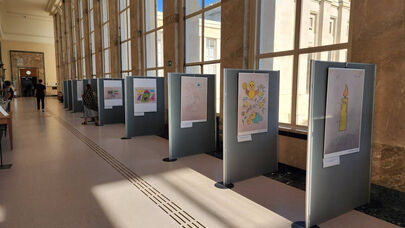
The Minab school tragedy connects this contradiction, previously confined to the pages of history, to the lives of children today. The US attack on the Shajareh Tayyebeh elementary school on February 28, 2026, killed numerous students and staff members. These were children who had gone to school to learn but instead became victims of a military attack. Amnesty International’s investigation reported that 156 people were killed, including 120 children.
This crime is an indelible stain on America’s record of war. Schools, classrooms and students’ desks symbolize life and the future. Targeting such a place calls into question Washington’s claims that it is defending freedom and human values. No military justification can render the lives of schoolchildren insignificant or erase from Iran’s historical memory the suffering of families who have lost their loved ones.
Minab is not merely the name of a city; it is a symbol of the vulnerability of children who fell victim to US warmongering. The blood of Minab’s schoolchildren stands as a truth that confronts Washington’s political propaganda. How can a government that describes the destruction of cities in ancient history as evidence of barbarism justify the destruction of a school in Iran and the killing of children by its own child-killing military, while continuing to portray itself as a champion of civilization and human rights?
This crime must remain alive in Iran’s historical memory and the world’s collective conscience, not to fuel hatred between peoples, but to expose the responsibility of the US government and prevent the killing of civilians from being normalized. No speech about civilization can cover up the blood of Minab’s children.
Iran: Civilizational Grandeur, National Strength and Historical Endurance
Iran is the land of Ferdowsi, Hafez and Saadi, the birthplace of profound ideas, great scholars, magnificent architecture and a culture that has crossed geographical boundaries for centuries and left its mark on the world’s civilizational memory. Iran’s greatness cannot be measured through the selective narratives of American politicians, but through a heritage that has emerged from the upheavals of history and remains alive to this day.
Contrary to the disparaging portrayals of figures such as Rubio, Iranian civilization is not merely a story of kings and battlefields. It is the story of the Persian language, wisdom, poetry, knowledge, art, architecture and the ability to rebuild a culture after the most severe crises. Ferdowsi, through the Shahnameh; Hafez, through his profound worldview; and Saadi, through his humanistic teachings, stand as enduring witnesses to Iran’s cultural capacity. This is a legacy that Rubio’s speeches cannot diminish, nor can Washington’s political propaganda erase it from the world’s memory.
Iran is a nation with deep roots, whose identity has been shaped by successive generations, historical memory and its own cultural wealth. The answer to historical distortion is to stand firmly by the truth about Iran and reaffirm this land’s contribution to human civilization. Washington cannot use the ancient wars of Iran to shield its own bloody record of warfare from historical judgment.
Iran must be understood through its living civilization, enduring culture and steadfast identity, not through the selective narratives of politicians who turn history into an instrument of power. With thousands of years of historical experience and a rich heritage of literature, thought and knowledge behind it, Iranian civilization needs no endorsement from Washington. Iran has endured the test of centuries through its resilient identity and flourishing culture, and remains one of the influential wellsprings of human civilization.