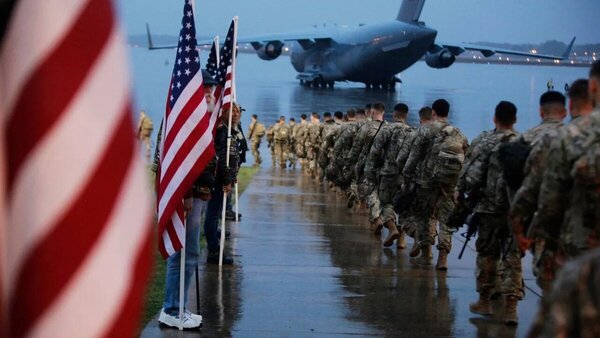
Nournews: Finally, after months of speculation, the official withdrawal of U.S. forces and some allied countries from Iraq was carried out on September 30. Washington has sought to portray the withdrawal as a sign of strength, responsibility, and an agreement with Baghdad, but the reality on the ground tells a different story. The withdrawal is less the result of a U.S. decision than the outcome of mounting domestic crises, a series of setbacks in Iraq and the region, and the rising costs of the occupation. Iraq now stands at a point where completing its political and economic independence requires, more than ever, the preservation of its indigenous power capabilities and resistance capacity.
Changing the Name Does Not Cleanse the Occupation
By using the term “coalition withdrawal from Iraq,” Washington is seeking to close the chapter on its military presence with language that portrays it as lawful and humanitarian. But changing the terminology does not alter the reality of 23 years of occupation and its bloody consequences. Western media outlets, too, by emphasizing the concept of the “international coalition’s withdrawal,” have sought to legitimize a presence that was initially established through the unilateral invasion of Iraq without a mandate from the United Nations, with only a limited number of countries, including Britain, taking part.
The question remains: On what grounds did the United States invade Iraq, and on the basis of what credible evidence did it launch a war whose primary justification was the alleged existence of weapons of mass destruction? The claim was later proven unfounded. The Abu Ghraib prison scandal, the killing of civilians, the destruction of Iraq’s infrastructure, and the conditions that facilitated the growth of terrorist groups and the emergence of ISIS are among the issues that cannot simply be dismissed with a political term such as “withdrawal.” The end of the military presence does not replace historical and legal accountability.
Washington Pulled Back; Resistance Imposed a Cost
Trump once described the Biden administration’s withdrawal from Afghanistan as a disgrace. Now, however, the United States is facing a similar reality in Iraq. Washington has left Iraq after incurring enormous costs and suffering human losses, without achieving the main objectives of the occupation, including establishing a government fully aligned with U.S. interests and turning Iraq into a model for other countries in the region.
Iraq not only failed to become a U.S.-aligned state, but popular resistance and anti-occupation forces also became influential elements in its political and security equations. The high costs of the military presence, Iraqi public pressure, and resistance made the continuation of the U.S. presence increasingly difficult. The Ramadan War further exposed the confrontation between the United States and Israel and the resistance camp to the Iraqi public.
At the same time, Washington is facing a range of regional and domestic crises, and the U.S. administration, seeking to demonstrate achievements in foreign policy, is under pressure to present any development that can be portrayed as a success. The withdrawal from Iraq, in this context, can be framed as part of an effort to recast a costly retreat as an innovative and voluntary decision. But changing the narrative does not change the realities of the costs of the occupation or the pressures that led to the withdrawal.
The Embassy: A New Cover for Old Influence
At the same time as the military withdrawal, reports emerged that some U.S. intelligence and surveillance capabilities, along with a number of Marines, would remain in Iraq to protect U.S. diplomatic missions. On the surface, this presence is described in security and diplomatic terms, but the main issue is the actual scope and function of these forces.
Iraq has confronted terrorism and security threats over the years and demonstrated its indigenous capabilities on the battlefield. Therefore, the continued presence of U.S. forces under the pretext of protecting diplomatic missions could, if it preserves military and intelligence capabilities, become a means of maintaining Washington’s influence — particularly in a country that is now emphasizing national sovereignty and independent decision-making more than ever.
Qasim al-Araji, Iraq’s national security adviser, has described the withdrawal of foreign forces as a day marking the consolidation of national sovereignty and independent decision-making. However, security independence cannot be complete without an integrated power structure and the elimination of proxy threats. The open and covert ties between some Peshmerga forces and the United States highlight the need to strengthen the presence of the Iraqi army across the country. At the same time, the activities of terrorist and separatist groups — from the PKK to Iranian and Turkish Kurdish separatist groups — require serious action by Baghdad and the effective implementation of the security agreement between Tehran and Baghdad.
Iraq Cannot Achieve Full Independence Without Economic Independence
The withdrawal of U.S. forces could mark an important step toward Iraq’s security independence, but genuine independence will only be achieved when Baghdad is also freed from Washington’s economic and financial leverage. Iraq is speaking of expanding energy ties and tapping its vast economic potential, while the United States continues to retain significant leverage over the country’s economy through financial mechanisms linked to Iraq’s oil revenues.
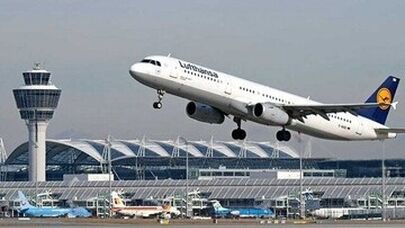
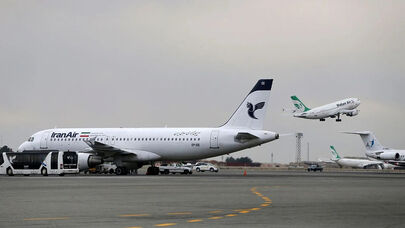
The consequences of such dependence can be seen in Baghdad’s recent decision to suspend flights to Iran — a move that imposed economic and political costs on Iraq and revealed only one aspect of the consequences of dependence. The example demonstrates how economic dependence can constrain Baghdad’s ability to make independent decisions and affect Iraq’s relations with its neighbors.
Washington, meanwhile, is seeking to weaken Iraq’s resistance through economic incentives and remove one of Baghdad’s key deterrent capabilities. The objective is not merely to disarm one faction; the broader issue is the weakening of a power structure capable of resisting external pressure. Therefore, preserving the resistance component alongside strengthening the state’s official institutions will remain part of the equation of Iraq’s independence.
The Ramadan War has also left modern Iraq with a defining lesson: security that depends on the presence of a foreign power is not sustainable, and independence constrained by foreign economic leverage is not complete independence.
The experience of resistance in the region has shown that reliance on domestic capabilities and national resilience can simultaneously strengthen security, political independence, and economic bargaining power. Iraq is now entering a new phase following the U.S. withdrawal — one in which the completion of its independence will depend on Baghdad’s ability to maintain security cohesion, reduce economic dependence, and safeguard its indigenous sources of power.