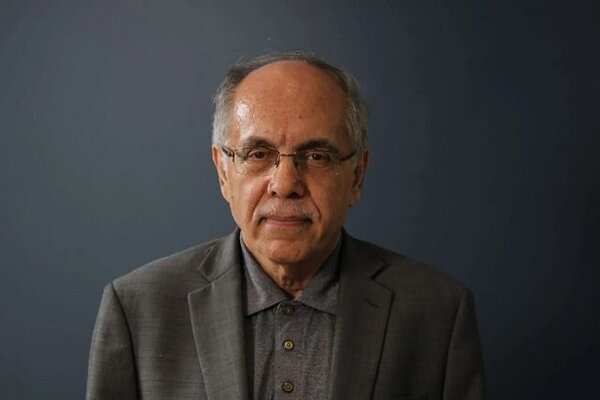
Nournews: He said Iran had become convinced of the need to change its strategy toward Washington following the US withdrawal from the memorandum of understanding. It now appears that, following Trump’s announcement last Saturday that “they made an offer, but I rejected it,” this window has been closed for the time being. However, Foreign Minister Abbas Araqchi said Iran was still awaiting a response through mediators. The contents of Iran’s proposal have not been officially announced, but remarks by some Iranian officials suggest that the proposal was not different in substance from the Islamabad memorandum of understanding.
The change in strategy outlined by Dr. Rezaei appeared to manifest itself in two areas. First, Iran deemed negotiations over the proposal unnecessary and said it would only negotiate over its nuclear program if Iran’s conditions were implemented. Some of the conditions announced by Iranian officials included an end to the war on all fronts, including in Lebanon, an end to the naval blockade, the lifting of oil sanctions, and the release of Iran’s frozen funds. Under the proposal, if the United States implemented these conditions, Iran would reopen the Strait of Hormuz within seven days. It was also important, however, to clarify whether reopening the strait meant returning it to its pre-war status or something else. These conditions were not new and had previously formed the basis of the Islamabad memorandum of understanding. In his interview, Dr. Rezaei said that, given the United States’ repeated failure to honor its commitments, Iran had decided that this time its conditions must first be fulfilled before it would take action to reopen the Strait of Hormuz.
The second difference between the new proposal and the Islamabad understanding was its timeline. The proposal compressed the 60-day timeline of the memorandum of understanding into a period of one or two weeks. Apparently, several factors led Trump to reject the idea of using a significant portion of his negotiating leverage merely to secure the reopening of the Strait of Hormuz.
First, the current circumstances are very different from those in late June. Trump now appears to believe that the United States can somehow keep the strait at least partially open. In recent days, Axios and Kpler have claimed that 10 million and 13.5 million barrels of oil per day, respectively, are leaving the strait through the “dark route.” US officials have also claimed that more oil is being transported out of the strait. Trump hopes that this will prevent the oil market from spiraling out of control. He probably believes that an oil price of around $100 a barrel, while wars are underway in the region and two major straits are under pressure, is not an unacceptable price and that the United States can live with it for some time.
Second, following the signing of the memorandum of understanding, not only Democrats but also some Republicans close to Trump, such as Tom Cotton and Ted Cruz, criticized it. Third, Trump’s remarks suggest that he is counting on the naval blockade and economic pressure on Iran and believes that such pressure will have an impact on Iran. Fourth, Trump appears to be considering two other options these days: limited and temporary military action as a complement to efforts to reopen the Strait of Hormuz, while continuing economic pressure on Iran; and the possibility of limiting or banning US exports of oil products in order to reduce fuel prices in the United States.
Fifth, Trump is approaching an election. Although high fuel prices in the United States have hurt the Republicans’ position, Trump presumably believes that while accepting Iran’s proposal would certainly have lowered fuel prices, it would also have handed Democrats and the media a powerful weapon to portray him as the loser. Using his major levers of pressure to reopen the Strait of Hormuz—which was not even an issue before his attack on Iran—would, in the eyes of his opponents, have amounted to nothing short of a complete defeat.
Given what happened to Iran’s proposal, it is now not unlikely that Trump’s main focus will be on pursuing the naval blockade and increasing economic pressure on Iran. Trump once tried an all-out war under the influence of Netanyahu and the Mossad, and failed to achieve his objectives through it. Launching another full-scale war in the future, whether before or after the election, would certainly not produce a different result, and for this reason it is unlikely that Trump is seriously considering such an option. Nevertheless, the possibility remains that he could once again resort to war, but mainly in a limited and temporary manner.
Another important point is the lesson Iranian officials should draw from this experience. This experience should once again remind them that diplomacy is an arena of give-and-take, and that insisting on leaving almost no concessions for the other side cannot be expected to produce progress along this path.