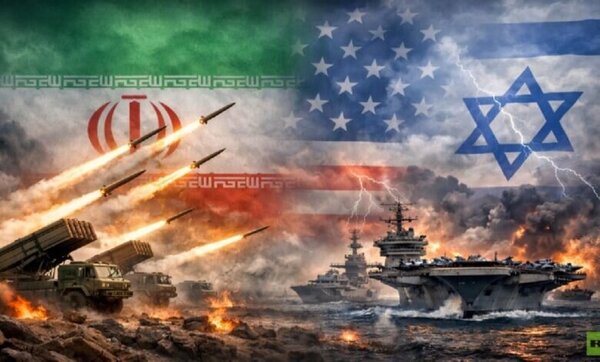
Nournews: Following the end of the annual UN General Assembly, the Iran war dossier has entered an even more ambiguous phase. There are no signs of a final agreement, but neither can a definitive return to the battlefield be spoken of. On the one hand, Trump has rejected Iran’s seven conditions for reopening the Strait of Hormuz, while at the same time speaking of the possibility of continuing negotiations this week. Tehran, too, has stressed that it remains committed to the diplomatic path, but has not changed its conditions. In such circumstances, the main question is not simply which of “Washington or Tel Aviv” will launch the next war; the key issue is whether the United States and Israel can be certain that the next war will unfold according to their timetable and calculations.
The experience of the 40-day war provides a clear answer to this uncertainty: Iran demonstrated in that conflict that it is not an actor whose behavior can be calculated solely according to the classic “attack-response-end” pattern.
A War That Escaped Initial Calculations
The 40-day war began at a time when the perceived military superiority of the United States and Israel could have created the expectation that the timing and scope of the conflict would remain controllable. But the course of the war showed that the issue was not merely the number of missiles, aircraft or military targets; a party’s ability to change the battlefield and impose new costs on its opponent is also an important component of power.
During the war, the conflict went beyond Iran, the United States and Israel and turned into a regional crisis. Multiple fronts became active, US bases and interests in the region came under attack, attacks in the surrounding areas increased, and most importantly, the Strait of Hormuz evolved from a geopolitical issue into a direct variable in the equation of war.
This development is highly significant. Had the war remained confined to Iran and Israel, Washington could have calculated its costs within a more limited framework. But once a war becomes linked to energy, shipping, US bases, regional allies and oil markets, every military decision can trigger a chain of consequences whose endpoint is not clear from the outset.
This experience explains the concept of an “unpredictable Iran” — not in the sense of acting without rules, but as an actor whose scope, timing and level of response the other side cannot predict with certainty.
Hormuz: The Variable That Changed the Equation
The Strait of Hormuz is a clear example of this. During the war, the sharp decline in vessel traffic through the waterway showed that energy security and global trade can be directly affected by developments on the battlefield. The issue of Hormuz has now also become one of the main focal points of indirect negotiations between Iran and the United States.
Reuters reported on September 24 that Tehran and Washington had discussed a phased path toward ending the war and reopening the Strait of Hormuz. Several days later, Trump said he had rejected Iran’s proposal, which, according to Reuters, sought to reopen the strait and end the hostilities within a seven-day timeframe. At the same time, however, Trump spoke of continuing talks in the days ahead.
This apparent contradiction has created the ambiguous environment following the General Assembly: negotiations are continuing, but the main differences remain; military threats are still on the table, but the cost of carrying them out has also increased.
Tel Aviv’s Clock: October 27
In Israel, an important political clock is counting down: the October 27 election.
A poll conducted on September 23 and 24 and published by The Times of Israel showed the two main blocs each holding 53 seats, eight short of the 61 seats needed for a majority. The poll, however, provides only a snapshot of the electoral landscape and should not be regarded as a prediction of the election outcome.
In such circumstances, the war is not merely a security decision for Tel Aviv. Any new military action could simultaneously affect the electoral environment, Israeli public assessments of security, and the costs of the war.
More importantly, however, the experience of the 40-day war showed that launching an operation does not necessarily mean controlling its political and security consequences. If a new war once again becomes regional or if its costs increase, the initial calculation could diverge significantly from the final outcome.
Washington’s Clock: November 3
In Washington, another clock is also ticking: the November 3 midterm elections.
A Reuters/Ipsos poll conducted on September 21 put approval of Trump’s performance at 32 percent, while only 34 percent said they approved of the way he had handled the attacks on Iran. The same poll showed that the issue of war is linked in the minds of the American public to the cost of living and energy prices.
Therefore, the Iran war is not merely a military or foreign-policy issue for Washington. Oil prices, fuel costs, inflation, transportation costs, the Treasury market and their implications for the US economy are also part of the war calculation.
This is where “resilience” becomes important. In this context, resilience does not simply mean withstanding pressure; it means the ability to turn time into costs for the other side. The longer a war continues, the more its military, economic, energy and political costs can accumulate, making the initial calculation increasingly difficult.
The Third Variable: Iran
It is now clear that the timeline of a war cannot be sought solely in Washington or Tel Aviv.
The 40-day war showed that Iran can alter the level of its response, regionalize the battlefield, affect the equation surrounding the Strait of Hormuz and impose new costs, turning the other side’s calculation from that of a limited operation into a multilayered crisis.
For this reason, even if Tel Aviv sets a specific date for an operation, and even if Washington decides on the interests and costs involved, one variable will remain beyond their full control: Iran’s response.
That response cannot necessarily be predicted according to a fixed pattern. The 40-day war showed that Tehran can link the military battlefield, the region, energy, the Strait of Hormuz and diplomacy, thereby pushing the costs of war beyond the level initially calculated.
For this reason, the main issue for the United States and Israel is no longer simply when they can start a war; it is whether they can also calculate its ending and its costs.
Israel’s calendar points to October 27, while the US calendar points to November 3. But the experience of the 40-day war has shown that the political calendar alone is not decisive. Tel Aviv can consider the timing of an operation, and Washington can assess the costs of entering it, but Iran can alter the scope, duration and cost of the war through the nature of its response.
Therefore, if a future war occurs, it will not necessarily be a war with a predetermined timetable. Rather, it will be a war in which each side’s ability to impose costs and alter the calculations of the other side will matter more than the date on which it begins.