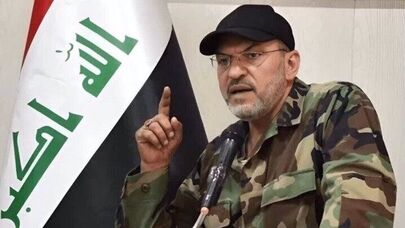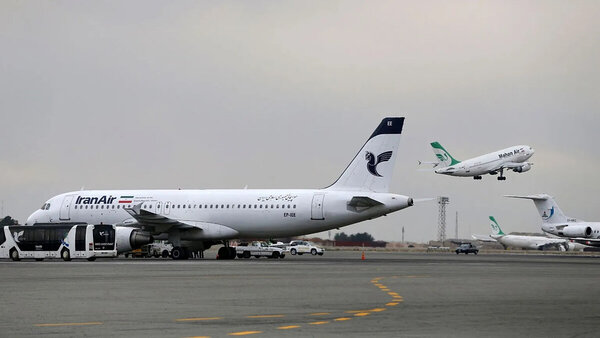
Nournews: The Iraqi government’s decision to suspend flights from Iran to airports across the country, from Baghdad and Najaf to other airports, amounts to a move that plays into Washington’s hands and runs counter to Iraq’s independence and strategic principles of cooperation with its neighbors and playing a constructive role in regional affairs. The decision has also faced widespread public and political opposition inside Iraq.
While the move may bring Baghdad certain economic and security benefits in the short term, it could ultimately undermine Iraq’s independence, challenge domestic cohesion and constrain the country’s regional and international role. Moreover, it stands in clear contradiction to the slogans and ambitions put forward by al-Zubaidi at the United Nations and could even undermine them.
UN Charter: A Test of the Gap Between Rhetoric and Action
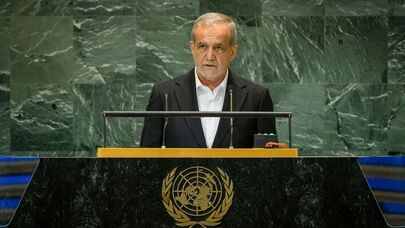
One of the key themes of al-Zubaidi’s speech at the United Nations was Iraq’s commitment to the UN Charter and its principles. He stressed that, under the UN Charter, ensuring the security of countries and preserving peace is a shared responsibility.
These remarks come as unilateral U.S. sanctions against various countries, including the air and maritime blockade of Iran, are described as contrary to the principles of the UN Charter. UN Special Rapporteur on the negative impact of the unilateral coercive measures, Alena Douhan, has also warned about the effects and consequences of such sanctions.
Against this backdrop, Iraq’s suspension of Iranian flights, particularly within the framework of U.S. pressure, carries implications far beyond an administrative decision. In practice, it conflicts with the very principles that al-Zubaidi emphasized from the highest international platform.
How can one speak of the shared responsibility of states to preserve security and peace while simultaneously taking steps to implement a policy of blockade and pressure against a neighboring country? This contradiction puts Baghdad’s international rhetoric and commitments to the test more than anything else.
Terrorism: Who Stood by Iraq?
Victory over terrorism is among the achievements al-Zubaidi highlighted at the United Nations. But the fundamental question is how that victory was achieved and who stood alongside Iraq during the most difficult days of its fight against terrorism.
Terrorism was the product of the U.S.-imposed war on Iraq, while its defeat was not solely the result of the U.S.-led coalition. The religious authorities’ fatwa, the resistance and sacrifices of Iraqi forces, and the support of countries such as Iran, as well as figures such as the late General Qassem Soleimani, played a decisive role in that victory.
Some Iraqi officials have acknowledged that the United States even provided areas for ISIS to operate and, under the cover of the coalition, established Israeli intelligence centers in Iraq.
If Baghdad now forgets this history in pursuit of short-term objectives and joins the camp of a supporter of terrorism — namely the United States — against a country that stood alongside Iraq in its fight against terrorism, such an approach would be at odds with the principles of ethics, gratitude and the historical memory of the Iraqi people.
The consequences of such an approach would be nothing but a weakening of trust in Iraq’s central government and damage to the country’s social and regional capital.
National Unity and Development: Casualties of Dependence on Washington
Al-Zubaidi has linked Iraq’s national interests to its relationship with the United States while speaking at the United Nations of national will and unity as the means of restoring Iraq’s authority.
Within this framework, Iraq’s national will is defined by political and economic independence, brotherly relations with regional countries, and stronger religious and cultural ties with countries such as Iran — rather than Baghdad aligning itself with Washington’s policies against its neighbor.
Playing into Washington’s hands against Iran may provide Baghdad with short-term benefits, but it is certain to face waves of public and political opposition. Some Iraqi groups have already spoken of setting a deadline for the government to end its participation in the blockade of Iran.
At the same time, cooperation with the United States reinforces the perception among Iraqi political currents that Washington is seeking to return to Iraq through another route following its military withdrawal — entering through the window after leaving through the door.
Such a situation could negatively affect Baghdad’s decision-making and its efforts to consolidate sovereignty and ensure that state institutions retain exclusive authority.
Iraq’s Geopolitics: Development Runs Through Its Neighbors
One of the prominent points in al-Zubaidi’s UN speech was his emphasis on developing strategic economic and development ties and strengthening Iraq’s role in the global economy.
Increasing crude oil production, developing gas fields and petrochemical industries, and expanding energy pipelines and transit routes between Iraq and Turkey, Jordan and Syria are part of this vision. But achieving such goals requires political and economic independence as well as a clear understanding of Iraq’s geopolitical capabilities and constraints.
Playing into the hands of the United States — a country whose reliability and commitments in the region have repeatedly been called into question and which, even during the Ramadan War, remained silent in the face of violations of Iraqi airspace and Israeli aggression despite the commitments set out in the Baghdad-Washington security agreement — would pose a serious obstacle to Baghdad’s economic ambitions.
Under the principle of “Israel First,” such projects would face restrictions whenever they conflict with Israeli interests, and the United States would ultimately prevent them from being realized.
At the same time, Iraq’s geopolitics impose specific constraints while offering specific opportunities, and part of the way to overcoming those constraints is tied to Iran, including the Strait of Hormuz.
Iran has so far acted toward Iraq in good faith and within the framework of brotherly relations, with the passage of Iraqi ships through the Strait of Hormuz being one manifestation of this approach.
Therefore, Iraq’s participation in actions that threaten Iran’s national security cannot be without consequences, particularly as Iranian political and military officials have stressed that responses to such actions and to countries involved in them will be carried out without conditions and wherever necessary.
Before making any decision, Iraq must take its geopolitical constraints into account. Participating in the blockade of Iran effectively means closing routes for which there are no easy alternatives. The United States could also exploit Iraq’s vulnerabilities to intensify pressure on the country and perpetuate its economic and political influence even after the withdrawal of its troops.
In recent years, Iraq has sought to become an active regional player. But regional influence cannot be achieved without engagement and convergence with neighboring countries.
Relying on foreign powers cannot bring Iraq to the position it seeks. The Ramadan War also demonstrated that regional security cannot be sustained without engagement among neighboring countries, the withdrawal of the United States from the region, and confronting Israeli aggression.
For this reason, turning Iraq into an economic and transit corridor and allowing it to play a mediating and dialogue-oriented role is incompatible with playing into Washington’s hands.
Such an approach could leave Iraq facing regional and international isolation while simultaneously advancing the objectives of the United States and Israel — objectives whose consequences have already affected some Arab countries during the Ramadan War.
As Iranian President Masoud Pezeshkian emphasized at the United Nations, security will either be achieved for everyone, or everyone will pay the price of insecurity. And as Major General Mohsen Rezaei has also stressed, either flights will be available to everyone, or the countries of the region will have no flights either.
The reality is that regional countries need to understand that it is Iran, rather than the United States, that is now shaping the region’s equations.
Choosing the right course could consolidate Iraq’s position in the future regional order. But playing into Washington’s hands could impose a heavy cost for a strategic miscalculation.