Developments over the past 12 hours point to several significant trends converging: mounting pressure on energy markets, intensified political and security activity by the US and its allies, internal divisions within the Zionist regime and, in response, Iran's emphasis on military readiness and a reassessment of its defense strategy. At the same time, American public opinion is showing clear signs of opposition to the continuation of the war.
Iran war pushes Persian Gulf economies towards recession
The International Monetary Fund has said that, as a result of the war with Iran and disruptions to energy production and exports, maritime traffic, trade and tourism, the economies of [Persian] Gulf Cooperation Council (GCC) countries are expected to contract by 4.8% in 2026. Kuwait, Qatar and Bahrain are projected to suffer the steepest declines, at 16.7%, 15.6% and 11.3%, respectively. Oman is the only country expected to record positive growth, at 4.1%.
Oil tops $94 as UAE restricts tanker movements
Bloomberg reported that the Abu Dhabi National Oil Company's (ADNOC) Petroleum Ports Authority has imposed restrictions on the entry and departure of tankers carrying crude oil and petroleum products near some of the UAE's major energy export hubs. At the same time, Brent crude prices rose above $94 a barrel.
Most Americans want the Iran war to end
A poll conducted by the University of Maryland in cooperation with Ipsos shows that 55% of Americans want the war to end under any circumstances. The figure stands at 80% among Democrats, 59% among independents and 25% among Republicans. Only 18% support a military escalation.
Iran announces a change in its military and defense strategy
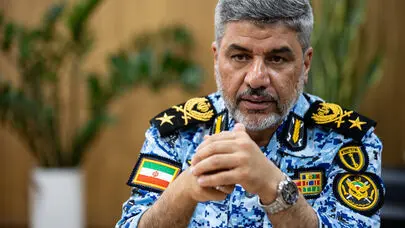
The spokesperson for the General Staff of the Armed Forces announced that Iran's defense methods and strategy would be different in the next phase and had been designed in light of regional developments and the possibility of taking the enemy by surprise. He stressed that details of the strategy would not be disclosed in order to maintain confidentiality.
Mohebi: Enemy cannot sustain its blockade of Iran
The IRGC spokesperson, Brigadier General Hossein Mohebi stressed that the Armed Forces were fully prepared and said the exhaustion of enemy forces, the heavy costs involved and the inability of deployed forces to carry on had made it difficult for the enemy to maintain the blockade. He described the Iranian people's resistance as the factor behind the enemy's failure.
Araghchi: Israel is trying to drag the US into another war
Iran's foreign minister condemned Israeli allegations concerning the country's pharmaceutical industry, stressing that the aim of this campaign was to deceive the US into entering another war in pursuit of Israeli interests while also putting the safety of Iranian patients at risk.
Iran warns against silence from international organizations
Reza Najafi, Iran's ambassador and permanent representative to international organizations in Vienna, condemned the silence of bodies responsible for disarmament and non-proliferation in the face of military aggression by the US and Israel. He said this approach had called their credibility and effectiveness into question.
Baqaei: Grossi's remarks concerned North Korea, not Iran
Iranian Foreign Ministry spokesperson Esmaeil Baqaei, responding to a US senator's claim about Iran's nuclear program, stressed that remarks made by Rafael Grossi on November 18 concerning the development of uranium enrichment facilities at Yongbyon were about North Korea, not Iran.
Kushner: All options regarding Iran are on the table
Jared Kushner, Trump's adviser and son-in-law, said the US president was focused on Iran and that all options for dealing with Tehran remained on the table. He also announced that a team had been formed to address the issue.
Pezeshkian: Neither war nor peace makes planning difficult
President Masoud Pezeshkian described the country's circumstances as a state of "neither war nor peace", noting that this situation made decision-making and planning for the future difficult. He also stressed the need for public participation in addressing social issues.
Trump blames election results for fall in US stock market
Donald Trump attributed the sharp decline in US stock market indices to the results of the November 3 elections. He claimed that if his preferred candidate had been on the ballot, the stock market and retirement investments would have performed better.
Pompeo: Iranians are prepared to do whatever it takes to defend their homeland
Former US Secretary of State Mike Pompeo said that Iranians were aware of the economic pressure imposed by the Trump administration and were prepared to do whatever it takes to defend their homeland. He also referred to concerns expressed by Israel's defense minister about the possibility of a preemptive Iranian attack.
Divisions within Israel over Iran intensify
Israel's public broadcaster reported that Thursday's meeting of the regime's security cabinet on Iran had been cancelled. The development comes amid growing internal disagreements over how to deal with Tehran.
US thanks Syria for security cooperation against Iran and Hezbollah
US Central Command (CENTCOM) announced that Syrian forces had intercepted and stopped shipments of weapons which, according to the command, had been sent from Iran to Lebanon. CENTCOM thanked the Syrian forces for the operation.
Washington holds talks with Arab countries on regional security
Allison Hooker, US under secretary of state for political affairs, said she had held discussions with officials from the [Persian] Gulf Cooperation Council and Jordan on regional developments and security, describing the talks as constructive.
NATO says Kushner and Witkoff are working to advance negotiations
NATO Secretary General Mark Rutte said Jared Kushner and Steve Witkoff, under Trump's direction, were spending long hours trying to bring negotiations to a successful conclusion. He made the remarks in response to a question about possible security guarantees for Russia.
Nouri Ghezeljeh: Country did not face widespread food shortages
Agriculture Minister Gholamreza Nouri Ghezeljeh said that, contrary to the enemy's predictions that a food crisis would emerge around 20 days after the start of the war, the country had not experienced widespread food shortages at any point and essential goods remained available to the public.
Turkish analyst: US has failed to reopen the Strait of Hormuz
Sami Hamdi, a political and geopolitical analyst for TRT, said the US failure to reopen the Strait of Hormuz after months of war with Iran was a sign of Washington's declining power and a consequence of its aggressive policies.
Taeb: We will not abandon efforts to avenge the blood of the war's martyrs
The head of the Basij Organization, Brigadier General Hossein Taeb stressed that resistance and steadfastness would continue until the blood of the martyred Leader and those killed in the Minab school attack, as well as scientists, nurses, workers, women, men and children, had been avenged.