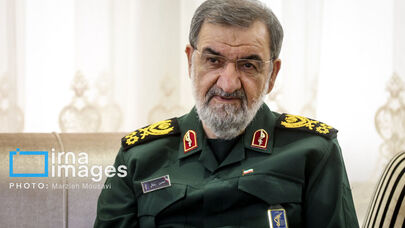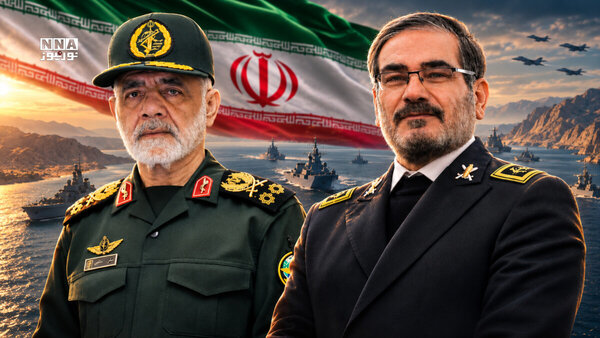
The latest message from Major General Ali Abdollahi, chief of staff of the Armed Forces, reaffirms an important principle in Iran’s defense decision-making doctrine. Yesterday, he announced that the Armed Forces, while monitoring enemy movements and preparations and updating their target database, would not wait for the enemy to launch an attack before deciding when and how to respond once “indications of hostile action by the enemy have been established”. Instead, they would respond immediately and effectively. If this position becomes firmly embedded in defense policy and operational decision-making mechanisms, it carries a key message: defense does not necessarily mean waiting to be hit first. In today’s security environment, anticipating and identifying threats and taking appropriate measures before they reach the operational stage are among the requirements of effective defense.
The significance of Abdollahi’s remarks becomes clearer when viewed alongside the January 6, 2026 statement issued by the Secretariat of the Islamic Republic of Iran’s Defense Council. The statement was conceived and drafted at the initiative and through the efforts of the late Rear Admiral Ali Shamkhani, who was then secretary of the Defense Council. In it, Iran declared that, within the framework of legitimate self-defense, it did not consider itself “limited to responding after an action” and regarded “objective indications of a threat” as part of the security equation.
This declaration should be seen as an indication of recognition that the nature of threats is changing and that the starting point for security calculations needs to be reconsidered. Under the classical logic of deterrence, an adversary must understand that an attack will carry a cost. Under a more recent approach, however, the message must also be conveyed that even overt preparations for an attack may factor into the other side’s defense calculations. In other words, “action” no longer necessarily means the launch of the first missile. A range of credible intelligence indicators, troop movements, operational preparations and objective evidence can also play a role in assessing a threat and moving to the stage of making a defense decision.
From this perspective, the chief of staff’s latest message should be viewed as an extension of the logic set out in last year’s Defense Council statement. What the two positions have in common is their emphasis on preserving the initiative and not allowing the enemy to dictate the timing and arena of decision-making. The fact that these two positions have now coincided also provides an opportunity to explore a strategic question in greater depth: how can it be ensured that security assessments and timely warnings are translated into appropriate decisions and effective action in the shortest possible time?
This issue relates to one of the key requirements of strategic decision-making at the national level. Statements of this kind are most effective when, alongside declaring a position, their place and function in the decision-making process are also clearly defined. If the strategy announced by the chief of staff is underpinned by precise intelligence and defense assessments, the mechanism for translating those assessments into operational decisions becomes particularly important. In fact, strengthening the link between “threat identification” and “implementation of decisions” is one of the key issues in the development of the country’s defense system.
In matters of national security, time itself is a defensive asset. A defense decision taken six months earlier may serve as a deterrent, while the same decision taken six months later may become merely a tool for responding to an attack and managing its consequences. Similarly, intelligence that makes it possible to neutralize a threat at one point may, after an enemy operation has begun, offer no more than the means to manage the situation. The gap between “prevention” and “response” is therefore not merely a conceptual distinction; it is one of the determining factors in the effectiveness of defense policy and the preservation of the country’s strategic capabilities.
From this perspective, the experience of the past year could provide an institutional lesson for the country’s decision-making system. Examining how threats were identified, how intelligence warnings were assessed and how they were translated into appropriate decisions can provide a clearer understanding of the strengths of decision-making processes and the areas that could be improved. The purpose of such a review is to strengthen institutional learning and enhance the country’s strategic preparedness for complex future circumstances.
A distinction must, of course, also be made between a “pre-emptive attack” and a “preventive response”. Taking the initiative cannot mean acting on the basis of conjecture, speculation or purely political assessments. Major General Abdollahi himself has specified an important condition: that indications of hostile action must be “established”. This qualification is the decisive point. If the response is to come before the first shot is fired, the quality of intelligence, confidence in the assessment, verification procedures and the level of responsibility borne by decision-makers all become doubly important. For this reason, any expansion of preventive defense capabilities must go hand in hand with improvements in intelligence accuracy, clear criteria for establishing a threat and transparency regarding levels of responsibility in decision-making.
Accordingly, the issue today is not simply to announce or reiterate a strategy. It is to establish a mechanism that translates accurate threat identification into timely decisions. The experience of last January and the developments that followed have made the importance of this connection clearer than ever. Undoubtedly, the greater the coordination between intelligence assessments, strategic decision-making and operational preparedness, the greater the ability to manage threats effectively and strengthen deterrence.
The January 6, 2026 statement can be revisited from this perspective. At least in its publicly available text, it moved away from limiting defense to action taken “after an attack”. Today, the chief of staff of the Armed Forces is articulating that same principle more explicitly. This convergence should be seen as an opportunity to draw a strategic lesson: how can it be ensured that defense approaches suited to the nature of emerging threats are incorporated into the country’s decision-making and defense operations structures in a timely manner? Answering this question can help enhance strategic capabilities and strengthen coherence in the country’s defense policy.
A country facing complex, multilayered threats cannot afford a breakdown in the decision-making process between its security institutions, intelligence agencies, political institutions, diplomatic apparatus and military structure. An intelligence warning must be translated into a political decision at the appropriate time; that political decision must lead to a clear defense directive; and military commanders must know at what level of verified threat they are authorized to act. Coordination across these levels is essential to turning disparate capabilities into coherent national power. It can also pave the way for faster, more accurate and more proportionate decision-making in response to developments in the security environment.
From this perspective, Abdollahi’s latest remarks carry an important message not only as a deterrent to the enemy, but also for the country’s internal institutional structures. In modern warfare, having early intelligence is not enough. The real value of this advantage becomes apparent only when it leads to the right decision and timely action. The central question, therefore, is how to minimize the gap between “warning” and “decision” without compromising rigorous standards for establishing a threat. This is the link that can turn the country’s intelligence capabilities into an operational and defensive advantage.
Perhaps one of the most important lessons of the January 6, 2026 statement is precisely this: strategic opportunities do not always recur in the same form, and the value of a sound decision depends to a great extent on when it is made. Sometimes, a timely decision can influence the course of events before a crisis takes shape. Now that the same logic has been articulated more explicitly by the chief of staff of the Armed Forces, the most important task is to turn this experience into a lasting principle within the country’s decision-making and defense system.
Providing a precise answer to the question of how timely threat identification can be translated into timely decisions is part of the very deterrence the country needs for the future. Deterrence is not built through missiles and military strength alone. Before anything else, it is the product of strategic thinking, timely threat identification, timely decision-making, institutional coordination and the ability of the decision-making system to learn from past experience and continuously improve its defense preparedness so that it can act effectively and in a timely manner.