At a time when Trump’s economic promises and what has been described as “promise-based policymaking,” including his deferral of lower fuel prices until after the elections, have failed to improve the Republicans’ standing in public opinion, a series of security and military moves are taking shape in Washington and London. These measures are publicly framed as responses to external threats, but amid the United States’ political and military developments, they raise serious questions about their actual objectives.
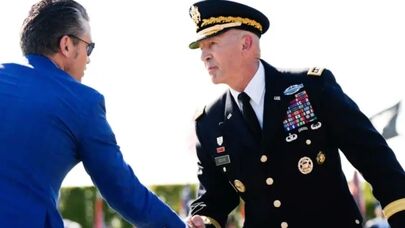
US Secretary of War Pete Hegseth unexpectedly issued a letter ordering his department’s forces to maintain full readiness to counter what he called “threats from foreign actors.” Axios claimed that Hegseth had ordered Pentagon forces to use advanced intelligence and cyber capabilities to identify, disrupt and neutralize foreign interference in the upcoming elections.
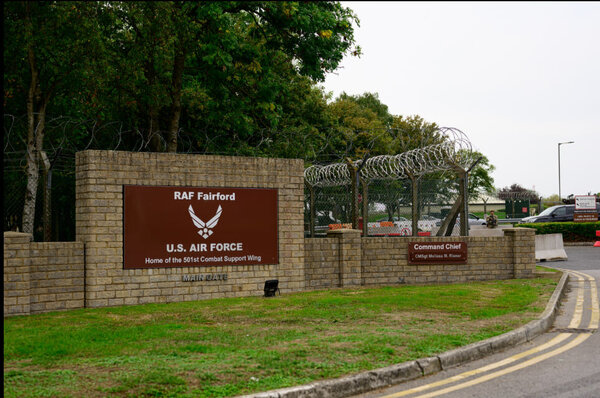
At the same time, Trump administration Secretary of State Marco Rubio accused Iran, without providing evidence, of involvement in an attack by five unidentified assailants on Fairford air base in Britain, which is used by US forces. In an interview with Fox News, Rubio described the incident as “very serious” and claimed that “clearly a foreign actor” was involved. Trump also claimed of the base: “We had them under surveillance. They intended to do major damage to our base.”
Taken together, these statements appear to indicate intelligence preparedness and a preemptive response to security threats. However, amid the United States’ domestic circumstances and its military stalemate with Iran, they can also be viewed as part of an effort to manufacture limited gains, manage public opinion and justify the continuation of militarism — an approach that could even pave the way for drawing other countries, including Britain, into the confrontation.
Security Scandal Under the Shadow of Foreign-Threat Rhetoric
Hegseth’s and Rubio’s security-related claims have been highlighted at a time when a major security scandal has raised questions about the Pentagon’s claims regarding its ability to protect its own sensitive infrastructure. ABC News reported that a security breach had occurred in the US Department of War’s extensive database, exposing sensitive information relating to around three million military personnel and employees of the department.
The significance of the incident lies not only in the volume of information exposed. More importantly, the Pentagon under Hegseth is talking about identifying and neutralizing foreign threats while facing a data-exposure scandal within one of its most important security structures.
Under these circumstances, highlighting security measures, making vague claims about Fairford and attributing the incident to a foreign actor could raise the question of whether public attention is being diverted from this scandal, as well as from the consequences of the disclosure of figures showing heavy US casualties in the Ramadan war. This is particularly relevant as congressional midterm elections approach and Republicans do not want these issues to become decisive factors in the electoral environment.
Securitizing the Political Environment: A Way to Conceal Economic Failures
The congressional midterm elections are approaching at a time when Trump’s economic promises have also lost some of their previous effectiveness. Promises of lower prices after the elections, claims by the US Treasury and Energy departments about millions of barrels of oil passing through the Strait of Hormuz each day and US control over the waterway, as well as CENTCOM’s claim that its economic blockade of Iran has been effective and that maritime security has been established in Hormuz, have failed to induce the market to change its behavior.
The rise in oil prices above $107 and increases in gasoline and diesel prices present a different picture from Washington’s official narrative — one suggesting that economic “promise-based policymaking” is no longer capable of concealing the existing pressures. At the same time, Trump’s approval rating falling to its lowest levels could impose a heavy political cost on Republicans ahead of the elections.
In such an environment, securitizing the political landscape and projecting a “superhero” image of the White House could become a tool for rebuilding political capital — a pattern that had previously been used in the assassination attempt against Trump during the election campaign. Now, the same recurring pattern appears to be taking shape again, this time through a new framing of “foreign threats” and “national security.”
From the Dream of Erasing Iran to Protecting a Military Base
Perhaps the most important aspect of the issue is the gap between the United States’ declared objectives and where it now finds itself. Seven months ago, Trump, Hegseth and Rubio stood together as they renamed the Department of Defense the Department of War, staging an extensive show of force and speaking of erasing Iran. Today, however, not only has that objective not been achieved, but according to US intelligence agencies and the course of current developments, Washington has become caught in a situation in which continuing along the same path could lead to a more serious defeat, while trying to exit it could result in an even greater scandal.
Today, as Iran has set out conditions for negotiations to reopen the Strait of Hormuz without addressing nuclear, missile or regional issues, Tehran’s initiative in Hormuz has become one of the most important variables affecting the global economy.
Within this framework, the United States’ war objectives have also been reduced from claims of destroying Iran to countering nuclear weapons, even though a year ago, during the 12-day war, Washington claimed to have destroyed all of Iran’s nuclear capabilities. Rubio has now also claimed that if Iran had nuclear weapons, it could take control of the Strait.
From this perspective, highlighting the attack on Fairford and emphasizing US intelligence awareness of the attackers paints a different picture from Washington’s initial displays of power: a power that once spoke of erasing Iran and is now directing a significant part of its security posture toward protecting a military base outside the main theater of conflict and countering potential domestic threats.
Fairford: A Pretext for Remaining in the Quagmire
Rubio’s and Hegseth’s vague claims, coupled with ambiguous statements by British officials about Fairford and efforts by Western media to link the attack to Iran and Russia, are notable alongside recent remarks by British Foreign Secretary David Lammy. At the Labour Party’s annual conference, he claimed that London would stand against a nuclear-armed Iran and would continue isolating Iran until the Strait of Hormuz is reopened.
Taken together, these developments could indicate Washington’s and some British circles’ insistence on preserving the military option against Iran, particularly as they have so far failed to prevail against Iran’s power and regard Tehran’s seven-point initiative as yet another setback for themselves.
Under such circumstances, it would not be far-fetched for the military option, together with an atmosphere of unrest and social destabilization that the US Treasury secretary has officially spoken about, to be pursued as a means of compensating for past failures. However, such a calculation could amount to the very strategic mistake that Iranian military commanders and political officials have warned against — warnings pointing to Iran’s readiness for a different kind of war, accompanied by the unveiling of surprising weapons and full preparedness for an all-out confrontation.