November 28, Navy Day, is not merely a reminder of the heroism of the Islamic Republic of Iran Navy during Operation Morvarid and the resistance of the Peykan missile boat. It is also an opportunity to reflect on the path through which Iran’s naval power evolved from a limited defensive capability into one of the key pillars of national security and regional deterrence.
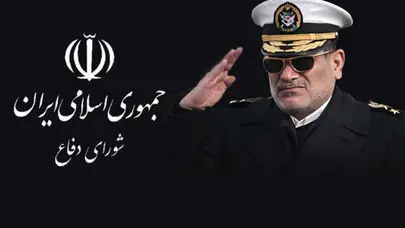
In this process, the martyred Admiral Ali Shamkhani holds a prominent place. His understanding of Iran’s maritime geography, his wartime command experience, and his forward-looking approach to military developments all contributed to shaping a new approach to the country’s naval power.
Shamkhani was among the commanders who, during the Sacred Defense, gained firsthand experience of the need to combine operational capabilities, knowledge of regional geography, and battlefield innovation. His command of the IRGC forces in Khuzestan province, followed by his role in the naval command structure, enabled him to assess Iran’s defense challenges not simply from the perspective of a military force, but within a broader framework shaped by the country’s geopolitical position.
Joint Command: Moving Beyond Organizational Boundaries
One of the most significant milestones in the military career of the martyred Admiral Shamkhani was his simultaneous command of the Iranian Army Navy and the IRGC Navy, an unprecedented responsibility entrusted to him by the Commander-in-Chief.
This appointment went beyond an organizational decision. It reflected a strategic necessity: coordinating two naval forces with different structures, missions, and operational approaches to ensure the integrated security of Iran’s maritime borders and national interests.
Iran’s maritime geography connects the Persian Gulf, the Strait of Hormuz, and the Sea of Oman. Maritime threats, meanwhile, are not confined by the organizational boundaries of the armed forces. From this perspective, Shamkhani’s joint command can be seen as an effort to strengthen synergy, improve operational coordination, and build a complementary system of naval capabilities between the Army and the IRGC.
The Strait of Hormuz: Turning Geography into Deterrence
One of the most prominent aspects of Shamkhani’s naval strategy was his recognition of the Strait of Hormuz as a key factor in global security and economic calculations. Iran is located next to one of the world's most important energy transit routes. This strategic position places responsibilities on the country's naval forces that go beyond the conventional protection of territorial waters.
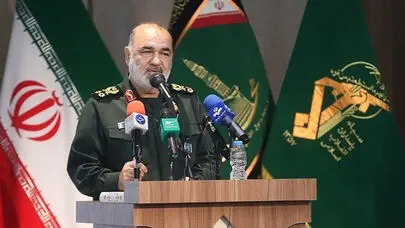
According to Rear Admiral Hossein Alaei, former commander of the IRGC Navy, Shamkhani’s tenure was marked by the establishment of effective and firm Iranian control over the Strait of Hormuz.
This assessment highlights the operational dimension of his understanding of maritime geography. In this approach, geographical location is not merely a natural advantage; it is a strategic asset that can be used to protect national interests, strengthen deterrence, and manage threats.
Within this framework, naval power is not measured solely by the number of vessels or military equipment. Knowledge of the operational environment, intelligence capabilities, combat readiness, decision-making capacity, and the ability to respond appropriately to threats are equally essential components.
From Naval Doctrine to Support for Defense Capabilities
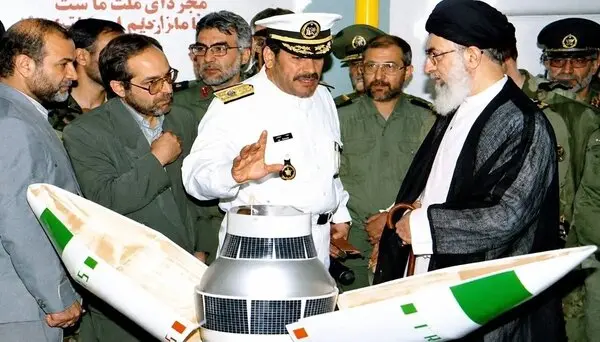
Shamkhani’s role in strengthening Iran’s naval power was not limited to his years in command. His eight-year tenure as Minister of Defense and Armed Forces Logistics provided an opportunity to pursue a broader vision for developing defense capabilities and linking the operational needs of the armed forces with the country's defense industry.
The significance of this period lies in the need to reduce dependence on foreign military equipment and strengthen domestic capabilities. The development of technology, the design and production of military equipment, and improved logistical support were among the key elements of this approach.
Shamkhani also played a role as a defense expert and strategist in drafting the Islamic Republic of Iran’s first naval strategic doctrine. This demonstrates that his vision of maritime power went beyond command and military operations. He sought to establish a link between threat assessment, geopolitical realities, national capabilities, and the country's future defense requirements.
In this regard, remarks by Brigadier General Reza Talaei-Nik, Defense Ministry spokesman, about Shamkhani’s initiatives in advancing Iran’s naval power and introducing a new approach to offensive military equipment further highlight his contribution to shaping the country's defense capabilities.
This assessment sheds further light on his role in connecting military command, defense policymaking, and the development of the country's strategic capabilities.
Shamkhani: Linking Command, Security, and National Power
The significance of Shamkhani’s naval legacy can also be seen in his continued influence across different levels of national decision-making.
His positions in the Navy, the Ministry of Defense, the Supreme National Security Council, and the Defense Council gave him the opportunity to consider the operational, industrial, security, and political dimensions of national power simultaneously.
This experience helped elevate maritime security from a specialized military issue to an integral part of Iran’s national security framework and defense policy.
From this perspective, his legacy cannot be measured solely by a period of command or an official position. Its strategic importance lies in promoting an integrated approach to naval power, strengthening coordination between the Army and the IRGC, recognizing the strategic importance of the Strait of Hormuz, and linking defense doctrine with domestic capabilities.
November 28, alongside honoring the heroes of the Iranian Navy, is also an opportunity to revisit this historical experience.
Sustainable naval power is the product of effective leadership, strategic knowledge, human resources, indigenous technology, and institutional coordination. The martyred Admiral Ali Shamkhani played a lasting role in shaping and strengthening this framework, a legacy that remains relevant to understanding Iran’s maritime security requirements and the need to safeguard national interests in strategic waterways.
Shamkhani’s Legacy Put to the Test: From the 12-Day War to the Ramadan War
The strategic value of the martyred Admiral Ali Shamkhani’s legacy can also be assessed in light of military developments following the 12-Day War, particularly during the Ramadan War, when the intellectual, structural, and defense foundations built over several decades faced a major test.
During the 12-Day War, despite a direct enemy attack on the location where he was present and the severe injuries he sustained, Shamkhani survived the attack. Following the war, he assumed the position of Secretary of the Defense Council. The establishment of the council itself reflected the importance of reorganizing the country's defense decision-making structure in the wake of that conflict.
During the Ramadan War, the significance of this legacy became even more evident.
Shamkhani, who served as Secretary of the Defense Council and political adviser to the martyred Leader of the Islamic Revolution, had been involved in developing battle strategies and establishing defense mechanisms. He was martyred on the first day of the war, on Esfand 9, 1404 (February 28, 2026).
According to Brigadier General Ibn Reza, acting Defense Minister, Shamkhani’s earlier defense preparations and decisions, as well as his work on developing strategies to counter threats, demonstrated their effectiveness during the Ramadan War.
At sea, the continued operational capabilities, combat readiness, and missile and drone capabilities of Iran’s naval forces also highlighted the importance of the defense infrastructure and long-term strategic vision that had been pursued over the years to strengthen the country's naval power.
Reports on the Navy’s performance during the war point to the continuation of its operational capabilities and its ability to maintain a defensive response.
From this perspective, the 12-Day War and the Ramadan War can be seen as two major tests of Shamkhani’s defense legacy. The first tested the country's defense structures and capabilities in the face of direct aggression, while the second tested the decision-making mechanisms and military preparedness developed before the outbreak of war.
Shamkhani’s martyrdom did not mark the end of a commander's presence alone. Rather, it marked the beginning of a historic test of the lasting impact of the ideas and foundations he had helped establish to strengthen the Islamic Republic of Iran’s defense and naval power.