Recent political developments in the United States and the Democrats' victory in the midterm elections have once again brought a key question to the forefront of political and analytical debates: Can a shift in the balance of power in Washington lead to a change in US policy toward Iran? Will the weakening of Donald Trump's domestic political position create an opportunity to ease economic pressure and sanctions, or should Iran expect the confrontation to continue through different tools and methods? Answering this question requires looking beyond partisan rivalries and understanding the strategic continuity of US policy toward Iran.
The Supreme Leader's message on November 4 provides a clear framework for understanding these developments. His emphasis on the mistake of pinning hopes on a change in the conduct of the hegemonic system through shifts in political parties and factions is more than a political or historical position. It is a strategic warning against a miscalculation: the assumption that a change of administration or a shift in the composition of the US Congress will, by itself, alter the nature of Washington's pressure campaign against Iran.
The Continuity of the Pressure Strategy: Beyond Republican-Democrat Rivalry
The experience of the past four decades confirms this reality. The Trump administration's withdrawal from the Joint Comprehensive Plan of Action (JCPOA) and the continuation of a significant portion of the sanctions during Joe Biden's presidency demonstrated that disagreements between Republicans and Democrats over how to deal with Tehran do not necessarily translate into differences over the principle of economic pressure.
The Biden administration not only retained the core structure of Trump's sanctions but also expanded them in some cases. Sanctions, therefore, cannot be viewed merely as the product of the will of a particular president or political party. They have become an integral part of the structural continuity of US foreign policy.
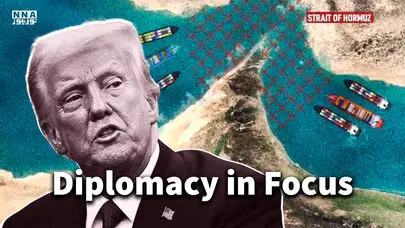
Trump's remarks following the recent elections can also be assessed from this perspective. His threat to make extensive use of his veto power against Democratic legislation, alongside his willingness to negotiate and cooperate with Democratic leaders, demonstrates that political rivalry in Washington does not prevent the two parties from reaching agreements on issues of shared interest. His November 20 remarks about the possibility of reaching agreements with Democrats despite their differences further underscore this reality.
On Iran, too, a distinction must be made between some Democrats' opposition to the costs of war and their opposition to America's strategic objectives. Criticism of a costly war, its economic consequences, or Trump's decision-making does not necessarily mean abandoning the instruments of pressure against Iran. Particularly given that the US political establishment has invested considerable political, economic, and security resources in building and maintaining these instruments, any political force capable of preserving them at a lower cost would naturally have little incentive to relinquish them.
Shifting the Confrontation from the Military Arena to an Economic Blockade
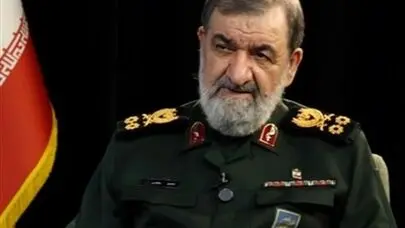
Against this backdrop, the response by Major General Mohsen Rezaei, secretary of Iran's Supreme National Security Council, to Donald Trump's and his team's proposed blockade of Iran is particularly noteworthy.
He described the move as another continuation of Washington's failed calculations, stating: "Trump and his failed team's plans to blockade Iran are just as delusional and futile as their failed war strategy."
Rezaei also stressed Iran's national readiness to confront the policy, adding: "The Iranian people, the armed forces, and all pillars of the state are firmly determined to break this blockade and respond with full force to any new act of aggression."
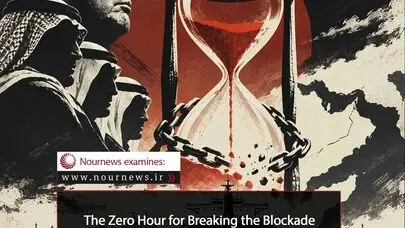
Alongside the need for military preparedness, this position highlights the importance of translating national determination into sustainable economic capabilities. The main priority should not simply be managing the consequences of sanctions or waiting for pressure to ease through political negotiations. Rather, the priority must be reducing the effectiveness of sanctions and dismantling the mechanisms of economic blockade.
Managing sanctions means adapting to existing restrictions, whereas breaking the blockade means changing the conditions that allow the United States to use economic restrictions as a decisive lever in political and security calculations.
Economic Diplomacy: From Adapting to Sanctions to Changing the Equation
Achieving this objective requires a multilayered strategy. Diversifying export and trade routes, expanding economic cooperation with neighboring countries and non-Western powers, establishing independent financial and payment infrastructure, reducing supply-chain dependencies, and strengthening domestic production capacity are all essential components of such a strategy.
Economic diplomacy, too, must move beyond occasional consultations and become an instrument for building lasting economic ties and making other countries' participation in the blockade of Iran increasingly costly.
Alongside these requirements, strengthening domestic cohesion, ensuring stability in economic policymaking, and boosting private-sector confidence are prerequisites for the success of any strategy to counter sanctions. Without these elements, even the country's considerable economic potential cannot be transformed into sustainable leverage against external pressure.
Negotiations also have a role to play within this framework, but they should not become the country's primary strategic pillar. A lasting agreement is possible only when the other side can no longer use economic pressure to impose its will. Otherwise, negotiations will turn into an exhausting cycle in which the sanctioning party retains its leverage while seeking further concessions or attempting to buy time.
Changing the Equation in Tehran, Not Waiting for Washington
The Supreme Leader's November 4 message should be viewed not merely as an assessment of US behavior but as a basis for reassessing the country's strategic calculations. Rivalry between Republicans and Democrats may affect the intensity and form of the confrontation, but Iran cannot tie the fate of its economy and national security to the outcome of that rivalry.
What can change the equation is strengthening national power, reducing economic vulnerabilities, and stripping sanctions of their decisive leverage.
Iran's strategic challenge is not to wait for a change of administration in Washington or even for the war to end. It is to prevent a failed military pressure campaign from turning into a lasting economic blockade.
Iran must reach a point where neither a change of US president nor an agreement between Republicans and Democrats to maintain pressure can leave the country's economic lifelines vulnerable and at the mercy of external forces.
From this perspective, breaking the economic blockade is not a temporary policy choice but a strategic necessity for consolidating deterrence and safeguarding the country's independence.