Developments over the past 12 hours point to a simultaneous escalation in military confrontation, maritime security tensions, and political warfare between Iran and the United States. While Tehran has stressed its readiness to counter threats and maintain control over traffic through the Strait of Hormuz, US and Israeli military movements, coupled with Trump's contradictory remarks, have brought the confrontation into a new phase.
IRGC Warning: Iran's Response Could Extend Beyond the Region
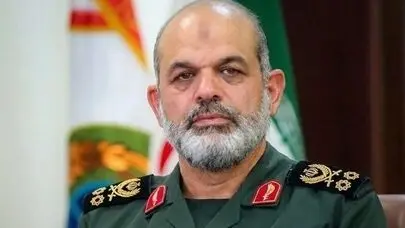
Major General Mostafa Izadi, deputy commander-in-chief of the Islamic Revolutionary Guard Corps (IRGC), said that if enemy activities continue or Iran's infrastructure and technology centers are attacked, the country's response could extend beyond the region and be reciprocal.
He stressed that Iran responds to threats with operations that make its adversaries regret their actions rather than mere warnings, adding that the scope of the war would expand if hostile activities persist.
Explosion South of the Strait of Hormuz: Vessel Violating Maritime Rules Strikes Naval Mine
The IRGC Navy's public relations office announced that a cargo vessel had struck a naval mine and been immobilized after attempting to navigate an unauthorized route north of Khasab Port and south of the Strait of Hormuz, with its navigation and positioning systems switched off.
The explosion triggered a major fire aboard the vessel.
Two US Drones Shot Down Over the Persian Gulf
The Iranian Army's public relations office announced that two US drones, identified as the Lucas and MQ-9, had been destroyed.
According to the statement, the first drone was intercepted west of the Strait of Hormuz and the second east of the waterway. Both were brought down by domestically developed air defense systems operating within Iran's integrated air defense network.
Warning to Commercial Vessels: Unauthorized Routes Will Be Unsafe
The IRGC Navy, stressing the need to comply with maritime regulations, use authorized shipping lanes, and keep navigation systems switched on, warned vessel owners and captains that failure to follow the instructions could endanger crew members and vessel safety.
Iran Will Break the Blockade Through National Resolve, Rezaei Says
Major General Mohsen Rezaei, secretary of Iran's Supreme National Security Council, dismissed the proposed blockade of Iran as futile, stressing that the Iranian people, armed forces, and government institutions were determined to break it.
He warned that any new act of aggression would be met with an all-out Iranian response.
Israeli Emergency Meetings: Operational Plans Against Iran May Be Discussed
The Israeli newspaper Israel Hayom reported that two emergency meetings would be held on Thursday, first by Israel's Security Cabinet and subsequently by the full Cabinet.
According to the report, operational plans against Iran may be discussed at the security meeting before being submitted to the Cabinet for approval.
US Military Deployment in the Occupied Territories
Reports indicate that additional US F-35B fighter jets have been deployed at Ovda Air Base in the south of the occupied territories. The move comes amid growing speculation about a possible escalation of the military confrontation with Iran.
Israeli Chemical Weapons Allegations and Claims of an Assassination Plot
The Israeli war minister claimed that Iran was seeking to acquire chemical weapons and assassinate the Israeli president and members of his family.
Making these allegations, he called for immediate action to ensure what he described as Israel's security.
US Warns Its Citizens in West Asia
The US State Department urged American citizens in West Asia to exercise extreme caution amid rising threats of armed attacks by the Houthis and what it described as Iranian attempts to target US officials and government facilities.
AI Weaponization: Iran Raises Alarm at the United Nations
Gholamhossein Darzi, Iran's ambassador and permanent representative to the United Nations, warned against the weaponization of artificial intelligence and its use to facilitate aggression and intensify conflicts.
He cited the US and Israeli wars against Iran in June 2025 and February 2026 as examples of the concerns surrounding the military use of AI.
Araghchi: US Is Paralyzing the Chemical Weapons Watchdog
Foreign Minister Abbas Araghchi criticized what he described as US obstruction at the Organization for the Prohibition of Chemical Weapons (OPCW), saying Washington was creating obstacles to the body's work and effectively pushing it toward the suspension and curtailment of its core programs.
He said the United States was deliberately putting global peace and security at risk.
Trump's Contradictory Remarks: From War Funding to Regime Change Claims
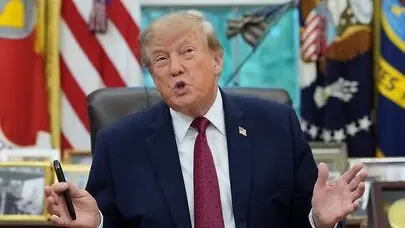
US President Donald Trump claimed that funding for the war with Iran had been secured through January and said his objective was to prevent Iran from acquiring nuclear weapons, not to bring about regime change.
He also suggested that the war could be lost if Democrats brought it to a halt, while claiming that Iran no longer had a navy or air force and that the Strait of Hormuz was open.
Pezeshkian: Iran Cannot Be Forced into Surrender
President Masoud Pezeshkian stressed that Iran's enemies could not force the country to surrender.
He said external pressure was intended to prevent the government from serving the public and addressing the country's problems, adding that Iran must be treated with dignity and respect.
Political and Security Developments in Washington: Breach of US Intelligence System
The Wall Street Journal reported a breach of a shared intelligence system used by the Central Intelligence Agency (CIA) and the Office of the Director of National Intelligence (ODNI).
US officials said investigations into the extent of the security breach and the information that may have been compromised were still underway.
Maritime Restrictions: 26 Tugboats Added to Non-Compliance List
The Persian Gulf Waterway Management Authority announced that 26 tugboats had been added to its non-compliance list for providing services to vessels violating maritime regulations south of the Strait of Hormuz.
The move underscores the importance of the new maritime traffic regulations governing the strategic waterway.
Diplomatic Developments: Regional Consultations and NATO Chief's Meeting with Trump
NATO Secretary General Mark Rutte is visiting the United States for two days, during which he is scheduled to meet with Trump and senior US officials.
Meanwhile, the foreign ministers of Egypt and Jordan held consultations on developments concerning Iran and Palestine and efforts to de-escalate regional tensions.
Bahrain's Crown Prince also held talks with Trump on expanding bilateral cooperation.
Economic and Political Fallout of the War: Costly US Holidays and Merz's Plunging Approval Ratings
Rising travel costs, technical disruptions affecting airlines, and storm threats have disrupted Thanksgiving holiday travel in the United States.
Meanwhile, a Forsa poll shows that 88 percent of Germans are dissatisfied with the performance of Chancellor Friedrich Merz.