Nournews: Ahead of the meeting, Iranian President Masoud Pezeshkian met with officials from Pakistan, Turkey and Saudi Arabia, stressing the importance of strengthening unity and cooperation among Muslim countries.
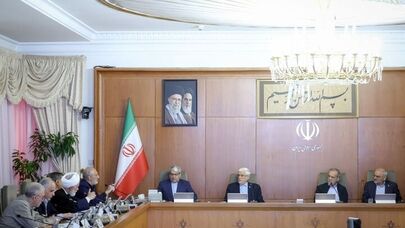
The quadrilateral meeting involving the Islamic Republic of Iran, Pakistan, Turkey and Saudi Arabia opened in Tehran with senior representatives from the four countries in attendance. The meeting was proposed by Pakistan and is being held with Iran’s support and cooperation. Regional security and developments in West Asia are among the main items on the agenda.
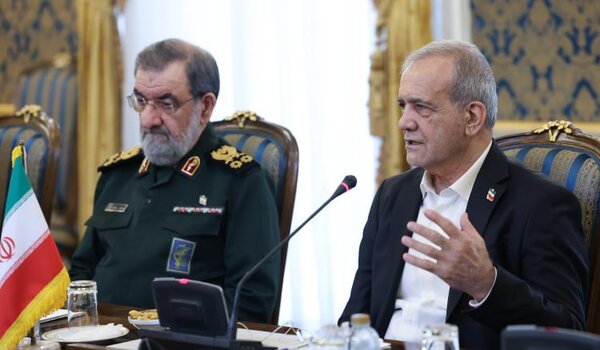
Major General Mohsen Rezaei, secretary of Iran’s Supreme National Security Council, is hosting the meeting. Pakistan’s army chief, General Asim Munir; Saudi Defense Minister Khalid bin Salman; and Turkish intelligence chief Ibrahim Kalin are attending as representatives of the other three countries.
Pezeshkian: Iran Supports Any Agreement That Strengthens Unity Among Muslim Countries
Iranian President Masoud Pezeshkian, during a meeting with Saudi Defense Minister Khalid bin Salman, Pakistan’s army chief General Asim Munir, and Turkish intelligence chief Ibrahim Kalin, emphasized the need to strengthen unity across the Muslim world, expand regional cooperation, and adopt a common approach to addressing security threats.
Referring to the shared religious and cultural ties and common interests of Muslim countries, Pezeshkian said Iran was firmly committed to supporting any agreement that would strengthen unity and cohesion, enhance security, and promote regional development.
Pezeshkian: Muslim Countries Must Manage Their Differences
The Iranian president stressed that Muslim countries must uphold the principles of brotherhood and unity, adding that they should adopt a coordinated position in response to threats targeting the peoples of the region. According to Pezeshkian, focusing on common ground while managing differences of opinion could help pave the way for resolving regional problems.
Referring to regional developments and Israeli actions in Gaza, Lebanon and Iran, Pezeshkian called for stronger cooperation among Muslim countries to counter aggression and insecurity. He also stressed that, despite the losses and pressures imposed on the country, Iran would continue to defend its legitimate rights and interests in accordance with the principles and rules of international law.
In another part of his remarks, the president underscored the need to translate political agreements into tangible results, saying regional cooperation should not be limited to written documents and understandings. He argued that developing transportation and communication routes, facilitating travel, and expanding exchanges among universities, academic institutions, businesspeople and traders in Muslim countries could help build trust and strengthen multilateral ties.
Pezeshkian also identified economic, scientific and cultural cooperation as key factors in strengthening lasting security. He emphasized that closer ties among the peoples of the region would enhance Muslim countries’ capacity to manage challenges and withstand external pressure.
Emphasis on Iran’s Nuclear Rights and Countering Foreign Pressure
The president reiterated Iran’s nuclear policy, stressing that the Islamic Republic has no intention of acquiring nuclear weapons. As a member of the Treaty on the Non-Proliferation of Nuclear Weapons (NPT), Iran seeks to continue its nuclear activities within the framework of its international rights and obligations.
He described attacks on Iran’s nuclear facilities while simultaneously claiming to be ready for negotiations as a contradictory approach, saying such actions undermine trust and deepen mistrust.
Pezehskian also stressed the need for mutual support among Muslim countries in response to what he described as the interventionist and divisive policies of the United States and the Israeli regime. He said economic cooperation and leveraging each other’s capabilities could help countries reduce their vulnerability to external pressure.
The president concluded by reaffirming Iran’s readiness to expand cooperation with Muslim countries. He expressed hope that stronger solidarity and joint action would help pave the way for an end to violence and the establishment of peace, security and justice across the region.
Regional Security and Support for Palestine and Lebanon on the Agenda
According to information released about the meeting, regional security, the consequences of military aggression and the continuation of attacks were among the main topics discussed by the four countries. Assistance to the people of Palestine and Lebanon was also listed among the issues addressed.
The meeting in Tehran provided an opportunity for Iranian, Pakistani, Turkish and Saudi officials to exchange views on regional developments and shared security challenges.
Ali Bagheri, deputy secretary of Iran’s Supreme National Security Council, said earlier on Monday that the idea for the meeting had been proposed during a visit last week by Pakistan’s senior army commander, Asim Munir, to Major General Mohsen Rezaei, secretary of Iran’s Supreme National Security Council.
According to Bagheri, Munir proposed that senior officials from Saudi Arabia, Türkiye and Pakistan travel to Tehran for two purposes: to congratulate Major General Rezaei on his appointment as secretary of Iran’s Supreme National Security Council and to hold consultations on regional security. The proposal led to a joint meeting of officials from the four countries.