In relations between Iran and the United States, the central question for years has been how to reach an agreement that ends the conflict and opens the way to peace. However, the experience of recent confrontations has brought a more difficult question to the forefront: If an agreement cannot prevent war from breaking out again, how much strategic value does ending a war have on its own?
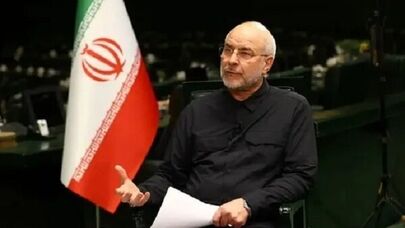
Mohammad Baqer Ghalibaf, Speaker of Iran’s Parliament, offered a different answer to this question in his remarks last night, arguing that the cycle of “war, negotiations and peace” must be transformed into an equation of “war, negotiations and deterrence.” The significance of this formulation lies in its presentation of lasting deterrence not merely as a possible outcome of war or negotiations, but as an objective that both instruments must serve. His remarks can be seen as a more explicit articulation of a shift in Iran’s strategic outlook: from focusing on ending a conflict to seeking to prevent its recurrence.
Why Is Peace No Longer Enough on Its Own?
Under the conventional logic of international relations, wars end to achieve peace, and negotiations provide a means of turning a cessation of hostilities into a political agreement. However, this model works only when an agreement can regulate the parties’ conduct and reduce the likelihood of a return to war. If one party violates its commitments or views an agreement merely as a pause to regroup, signing a document alone will not produce lasting security.
Ghalibaf builds his argument precisely on this premise. He considers the assumption that negotiations and an agreement with the United States would, in themselves, prevent another attack insufficient. At the same time, he rejects the notion that fighting alone and increasing the adversary’s costs will necessarily dissuade it from pursuing its objectives. From his perspective, the solution lies not in choosing between these two paths, but in combining them to establish deterrence.
This is an important distinction. Under this formulation, negotiations are no longer merely an effort to reach an agreement labeled as peace, nor should war become an open-ended war of attrition. Both must help change the other side’s calculations so that the costs of aggression against Iran outweigh its potential benefits.
However, distrust of the United States and doubts about its commitment to agreements do not necessarily mean that diplomacy is ineffective. On the contrary, if an agreement is to form part of a deterrence strategy, it must be designed with commitments, enforcement guarantees and costs for violations sufficient to ensure that the country’s security does not depend solely on the other side’s will and promises. The central issue is not whether to negotiate, but what negotiations deliver for Iran’s long-term security.
From the Battlefield to National Power: Building Lasting Deterrence
Another key aspect of Ghalibaf's remarks is his emphasis on translating military victory into political gains. He interprets the Islamabad memorandum of understanding within this framework, arguing that it has not only consolidated gains on the battlefield but also created an opportunity to strengthen Iran’s national power. Regardless of how fully these objectives have been achieved, the underlying principle has strategic significance: military gains become lasting when they can be translated into political outcomes.
If battlefield superiority does not lead to arrangements that reduce threats, consolidate the country’s position and enhance its defense and economic capabilities, some of its impact may diminish over time. Conversely, negotiations that preserve tangible gains and create opportunities to strengthen national power can complement military efforts.
This logic, however, has one essential condition: not every military victory necessarily produces lasting political gains, and not every agreement amounts to consolidating a victory. Outcomes must be assessed against criteria such as the extent to which threats are reduced, whether commitments can be implemented, and how an agreement affects the country’s defense and economic capabilities.
Another notable aspect of Ghalibaf's remarks is his broader conception of power beyond its military dimensions. Alongside offensive capabilities, air defense, drones, the Axis of Resistance and Iran’s position in the Strait of Hormuz, he cites national cohesion, social and economic resilience, and a clear vision for the future.
This emphasis highlights the connection between deterrence and Iran’s development. Military power without a sustainable economic foundation faces limitations; national cohesion is undermined without public trust; and social resilience cannot be built simply by asking people to endure hardship. The quality of governance, economic stability, hope for the future and citizens’ sense of participation in shaping their country’s destiny all contribute to national capacity to confront threats.
From this perspective, lasting deterrence cannot be defined solely in terms of increased military capabilities. It gains a genuine foundation when military strength is accompanied by a resilient economy, a cohesive society and effective institutions. If security is to be sustainable, it must also create the conditions for development.
Nevertheless, unlike a signed document, deterrence is not a fixed condition that can be achieved once and then maintained indefinitely. It depends on the other side’s ongoing assessment of a country’s capabilities, resolve and the costs of military action. Therefore, even an increase in defensive capabilities alone cannot guarantee that all threats will disappear.
Moreover, lasting deterrence is different from endless war. If a country remains continuously exposed to conflict, economic attrition and social uncertainty, a strategy intended to provide security may ultimately work against its own objective. The success of this approach must be measured not only by the ability to respond to an attack, but also by whether it reduces the likelihood of war, preserves the country’s capabilities and opens a path to development.
New Responsibilities of Diplomacy
In this context, diplomacy has a role that goes beyond buying time. The opportunities created through negotiations must lead to a genuine strengthening of national power, and agreements must be structured to allow commitments to be verified and potential violations to be addressed. Without this connection, the cycle of war and negotiations may simply repeat itself without bringing the country closer to a more stable situation.
Ghalibaf's remarks are noteworthy because they move the debate beyond the binary choice between war and negotiations toward a more fundamental question: How can conditions be created that dissuade the other side from returning to war? His answer is to link military power, diplomacy and the continuous strengthening of the components of national power within a strategy of lasting deterrence.
Under this framework, peace no longer means merely a cessation of hostilities or the signing of an agreement. It is a condition that must rest on a solid foundation and withstand changes in the other side’s calculations. However, deterrence must not become an objective detached from peace and development. Its ultimate value lies in reducing the likelihood of war and enabling the country to focus on its future.
Under this formulation, Iran’s challenge is not simply to end the current war, but to prevent a return to square one. The extent to which this shift in rhetoric translates into a practical change in the country’s security and foreign policies will depend on how it is implemented. The ultimate test is clear: Can linking war, negotiations and national power produce more lasting security and create greater resources and opportunities for Iran’s development?