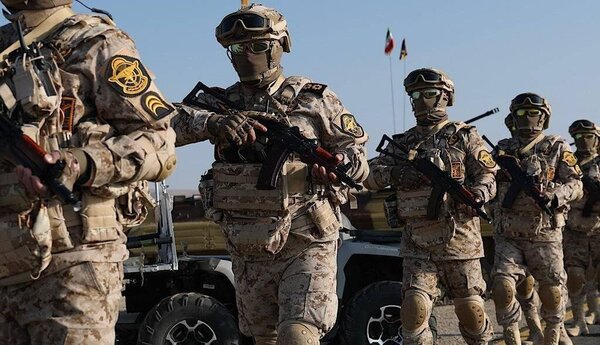
At a time when the US has deployed every dimension of hybrid warfare in an effort to force Iran into submission and isolate it, the participation of the Islamic Revolutionary Guard Corps Ground Forces, representing the country’s Armed Forces, in the joint counterterrorism exercise of Shanghai Cooperation Organization member states in Belarus is an important and meaningful development. On the one hand, the exercise demonstrates Iran’s security-building capabilities, while on the other, it exposes the failure of the scenario aimed at isolating the country. The significance of the exercise becomes even greater as the world moves toward collective security and away from American unilateralism, while Iran has accumulated a wealth of experience from the 12-day war and the Ramadan War. This experience could provide a useful model for independent countries and advocates of indigenous and region-based security.
Linking the Battlefield and Diplomacy; Security as a New Dimension of Convergence
Iran’s participation in the Shanghai military exercise cannot be viewed merely as a military and security development. Rather, it should be assessed within the framework of the link between diplomacy and the battlefield. Interactions among countries are no longer limited to the economic and political spheres, and new dimensions of convergence have paved the way for the formation of regional unions and arrangements. Although the Shanghai Cooperation Organization was initially founded on the basis of economic and political convergence, no sustainable development can be achieved without a security component.
At the same time, the anarchic and chaotic world left behind by American unilateralism has turned security convergence among countries from an option into an unavoidable necessity. The hegemonic system is seeking to destabilize the Shanghai sphere through sowing discord, supporting terrorism and direct attacks. The war in Ukraine against Russia, the US-Israeli aggression against Iran and efforts to provoke Taiwan against China are examples of this trend. Under such circumstances, security convergence among Shanghai members is an undeniable necessity.
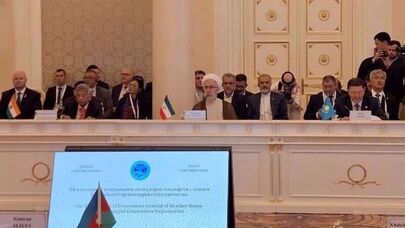
Iran’s Armed Forces have also always been one of the country’s main pillars of capacity-building alongside diplomacy. Iran’s participation in this exercise, particularly following the Shanghai summit attended by the President of the Islamic Republic of Iran in Kyrgyzstan, should be understood within this framework.
Collapse of the Claim of Iran’s Isolation; Trust in Action
Iran’s participation in the Shanghai exercise comes at a time when Iranophobia and sanctions are being pursued with the aim of isolating the country on the global stage. While adversaries and some Western and European countries are seeking to reduce Iran’s ties with regional countries, Iran’s participation in the exercise demonstrates the continuation of its strategic interactions with members of the Shanghai Cooperation Organization.
This participation is a sign of confidence in Iran and its constructive role in establishing security. The complementary links in this process include the active participation of the President of the Islamic Republic of Iran in the Shanghai summit in Kyrgyzstan, the BRICS summit in India, the summit of the Commonwealth of Independent States in Belarus, and the global welcome for Iran’s participation in the annual United Nations General Assembly session. Taken together, these developments show that the project to isolate Iran politically, economically and militarily is less a reality than a political perception that is ultimately destined to fail for its architects. The existing trust is precisely what led Iran to host the Shanghai exercise last year as well.
Experience of Three Wars; Iran’s Experience for Indigenous Security
The particular significance of this year’s exercise lies in the experience Iran has accumulated from the 12-day war and the 40-day war, alongside the experience of the eight-year Sacred Defense. These experiences can turn Iran into an effective model for other countries and members of the Shanghai Cooperation Organization. During the Ramadan War, drawing on indigenous capabilities, asymmetric warfare and comprehensive resilience, and relying on the battlefield, diplomacy and the people, Iran demonstrated a new model of steadfastness and resistance in the face of nuclear powers.
Iran not only refused to surrender to the US and the Israeli regime, but also, through its missile and military capabilities, the resilience of its diplomacy and people, and particularly by maintaining control over the Strait of Hormuz, took control of determining the course of the equations. Today, the boomerang of war-making against Iran is returning toward the American and Israeli warmongers. Iran, which has previously served as an effective model for joint exercises with various countries through its experience in combating terrorism, can now, with its accumulated new experiences, become a model for the security structures of independent countries in confronting US domination. From this perspective, Iran’s participation this year could serve to transfer some of the experiences of the 40-day war to members of the pact.
Localizing Security; The Path Toward a New Multilateral Order
One of the most important lessons of the Ramadan War is the necessity of localizing security, because the US demonstrated, on the one hand, that its security umbrella cannot be trusted, while on the other, US-Israeli unilateralism continues to operate along a path of killing and crime. Therefore, political, economic and security convergence has become an undeniable necessity for independent groupings such as the Shanghai Cooperation Organization and BRICS.
Iran has also consistently emphasized the localization of security and has put forward initiatives such as the Hormuz Peace Initiative, the expulsion of the US from the region, unified action against the Israeli regime, and establishing security among the Caspian neighbors without foreign intervention. The Belarus exercise can be viewed as a positive step toward this security-building process, a path that, alongside ending foreign intervention, can create shared and sustainable gains for the countries of the region.
Today, disillusioned with American unilateralism, the world is moving toward a new multilateral order, one that cannot be achieved solely through political, economic and cultural components and in which collective security also requires military and defense interactions. Experience has shown that without power, it is impossible to stand up to the hegemonic system. The Shanghai exercise, alongside the expansion of defense relations among its members, is a symbol of the emergence of consensus against American unilateralism and an affirmation of the legitimacy of Iran’s positions in responding to aggressors. It is a path on which Iran, relying on its indigenous capabilities and numerous initiatives, has demonstrated its readiness to play a comprehensive role.