
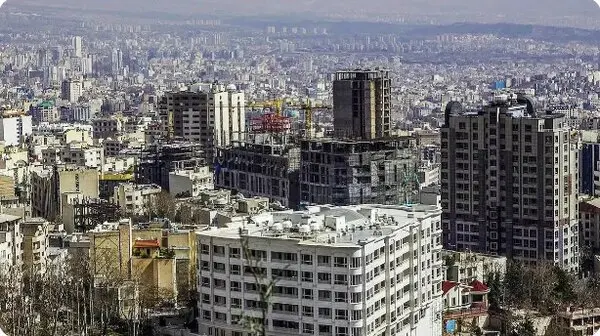
Housing accounted for 41.7% of urban household expenditure across Iran in 2025, but the figure exceeded 56% in Tehran. Combined with rising rents and declining purchasing power, these figures point to mounting financial pressure on families in the capital.
Housing has once again become one of the most pressing economic challenges facing Iranian households. The latest data released by the Statistical Center of Iran show that, although housing's share of urban household expenditure edged down in 2025 compared with the previous year, it still accounts for more than two-fifths of city dwellers' living costs.
A closer look at the figures reveals that the situation is considerably more difficult in Tehran, where housing costs accounted for 56.7% of total expenditure among urban households in Tehran province. In other words, more than half of the recorded spending by households in the capital went toward securing a place to live.
How Did Housing Become the Largest Household Expense?
A review of historical data from the Statistical Center of Iran shows that housing accounted for around 31.9% of urban household expenditure at the beginning of the 2000s. The figure fell to about 29.5% in 2006 and stood at approximately 34.1% in 2016.
Conditions began to change in the second half of the 2010s. Housing's share of urban household expenditure, which stood at around 33.9% in 2018, rose to 36.4% in 2019 and 37% in 2020. The upward trend continued, despite some fluctuations, reaching 42.4% in 2023 and 43.7% in 2024.
In 2025, the figure declined to 41.7%. However, comparison with figures from a decade earlier shows that housing continues to consume a substantially larger share of household financial resources than it did in the past.
Rising land prices, construction materials and labor costs, along with general inflation and economic fluctuations, have all contributed to this trend. Higher property purchase prices have also made homeownership increasingly difficult for some prospective buyers, pushing more people into the rental market.
Under these conditions, renting is no longer a temporary arrangement for many families but has become a long-term reality. Tehran's mayor has also put the share of tenant households in the capital at 51%, underscoring the importance of developments in the rental market to residents' livelihoods.
Tehran Faces the Heaviest Housing Cost Burden as Rents Continue to Rise
Provincial statistics also reveal the extent of disparities in housing costs. According to 2025 data, Tehran ranked first among the country's provinces, with housing accounting for 56.7% of urban household expenditure. Gilan followed at 46.5%, Alborz at 41.6% and Fars at 41.5%. At the other end of the scale, Bushehr recorded the lowest ratio, at 21%.
Meanwhile, data from the 2025 Household Income and Expenditure Survey show that the average annual income of urban households in Tehran province was around 721 million tomans, while their average annual expenditure stood at approximately 577.6 million tomans. Based on housing's 56.7% share of expenditure, annual housing costs are estimated at around 327.5 million tomans, equivalent to approximately 45.4% of annual household income.
The latest available rental data, for October 2026, show that year-on-year housing rent inflation reached 33.4%, while annual inflation stood at 32.2%. Although these figures indicate that rent increases have slowed compared with some previous periods, they do not mean that rents have become cheaper. Rather, rental prices remain substantially higher than they were a year earlier.
Another important issue is the gap between household income and expenditure growth. In 2025, annual expenditure among urban households nationwide rose by 45.4%, while their annual income increased by 41.2%. This difference shows that even the rise in nominal incomes has not been sufficient to keep pace fully with the growing cost of living.
From a policy perspective, the decline in housing's share of household expenditure in 2025 should not, on its own, be taken as evidence of an improving housing market. Households may have cut spending in various areas to compensate for increases in other costs. A proper assessment of conditions in the housing market therefore requires examining real incomes, property purchase prices, rents and households' ability to save at the same time.
Housing market experts also believe that increasing the supply of residential units alone will not be enough to resolve the crisis. Shortening construction times, adopting modern technologies, reducing production costs, developing infrastructure in new cities and creating employment opportunities outside major metropolitan areas must all be pursued alongside policies to support tenants.
Ultimately, the available figures offer a clear picture of housing's place in the household economy: securing a place to live has become one of the largest demands on family income, with the resulting pressure spilling over into other areas of life, from food and education to healthcare and savings. The central issue is no longer simply increasing the number of housing units, but ensuring that households can access homes that are within their financial means.