Following the October 2024 parliamentary elections, the KDP won 39 seats and the PUK 23, but the two parties failed to reach an agreement on forming a new cabinet. Disagreements over the speakership of parliament and key ministries further intensified tensions. In November 2026, the PUK announced its withdrawal from the regional government, raising the possibility of the emergence of two separate administrative structures. Power cuts and disruptions to public services have also heightened concerns about the consequences of the crisis.
The continuation of this situation could affect people’s daily lives, economic activity, municipal services and public confidence in the regional government. Meanwhile, Masoud Barzani has called for negotiations with the PUK, and the KDP spokesman has also announced the party’s readiness for dialogue.
The central issue is that political disagreements between the two parties must not come at the expense of the people. The disputes between the Kurdistan Democratic Party of Iraq, led by the Barzani family, and the Patriotic Union of Kurdistan, led by the Talabani family, have deep historical and structural roots and are not limited to temporary disagreements over power. Over the past several decades, these two parties, which are key players in the political dynamics of Iraq’s Kurdistan Region, have had serious differences over political power-sharing, the management of government institutions, economic resources, oil revenues and the way they engage with Iraq’s central government. Although efforts were made to share power and establish a joint administrative structure following the civil war of the 1990s and subsequent political agreements, rivalry between the two factions has continued.
The KDP has traditionally held greater influence in Erbil and Duhok, while the PUK has a strong traditional base in Sulaymaniyah. This geographical division of influence has, at certain times, led to a form of duality in the region’s political and security administration. In recent years, disagreements between the two parties have intensified over the election of Iraq’s president, the formation of the Kurdistan Regional Government, the management of the Peshmerga forces and the distribution of political and economic authority. Each side accuses the other of monopolizing power and disregarding political agreements. Alongside the region’s disputes with Baghdad, economic difficulties and challenges related to paying public-sector salaries and providing public services, this situation has placed additional pressure on the people of Iraqi Kurdistan.
An important point is that the continuation of these disputes could create opportunities for foreign powers and intelligence services to exert influence and exploit the situation. This is particularly significant given the Kurdistan Region’s geopolitical position and its proximity to Iran, Türkiye and other sensitive areas of the Middle East, which gives it strategic importance.
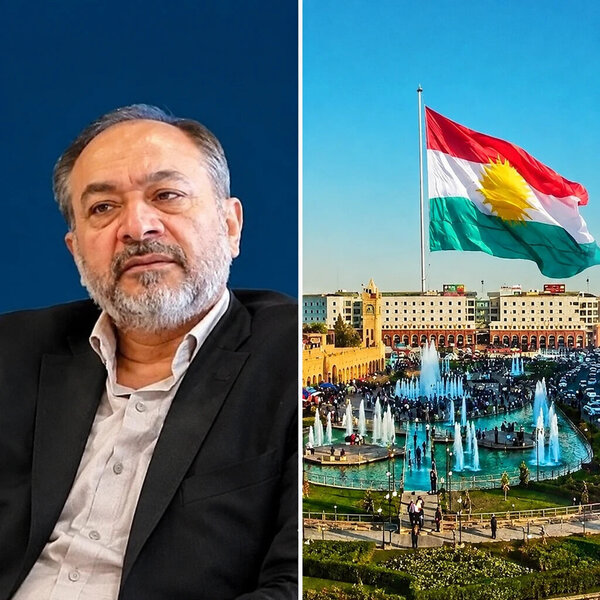
Under these circumstances, the region’s future depends more than ever on the extent of agreement and cooperation between its two main parties. A return to joint administration, avoiding unilateralism, strengthening relations with Iraq’s central government and prioritizing the public interest could prevent the crisis from escalating. Otherwise, continued party rivalries will affect not only the region’s stability but also regional security and geopolitical dynamics. Against this backdrop, Nournews spoke with Seyed Reza Sadr al-Hosseini, a West Asia affairs expert, to examine the major developments in the Kurdistan Region.
What has been the main common ground among political parties in Iraqi Kurdistan in recent years, and what consequences have the recent disagreements among the parties had for the people of the region?
The common ground among political parties in Iraqi Kurdistan in recent years has been the preservation of security, welfare and well-being for the people of Iraq’s Kurdish areas. Unfortunately, however, in the recent period, growing demands and political disagreements, particularly on the part of the Kurdistan Democratic Party of Iraq, have led to increased tensions and divisions among the region’s political factions. These disputes gradually spread into various areas of administration and politics, to the point that even in regional parliamentary elections and decisions on the region’s senior administrative appointments, we witnessed a degree of unilateralism. Unfortunately, some officials were unwilling to tolerate criticism, and constructive engagement with other political parties was also insufficient.
In recent weeks, disagreements among Kurdish political factions, together with problems in relations between the Kurdistan Region and Iraq’s central government in Baghdad, have created difficult conditions for the people of the region. Today, disputes over regional administration, the use of armed forces, and political and economic issues are directly affecting people’s lives. Some areas have even experienced problems such as power outages. In my view, one of the most important factors behind the current disorder is unilateralism, political dominance and the absence of genuine engagement among the different parties and political factions in Iraqi Kurdistan.
How have internal developments and disagreements in Iraq’s Kurdistan Region affected Kurds in Iran and Iran’s Kurdish areas?
It should be noted that developments surrounding the issue of independence for Iraq’s Kurdistan Region in recent years have had an impact on some Kurdish groups and factions. However, these developments have never been able to exert a direct influence on the national identity and attachment to Iran of the Kurdish people in Iran.
Even during periods when the US was exerting extensive pressure on the Islamic Republic of Iran, efforts were made to recruit some young people and influence the social environment in Kurdish areas. However, the Kurds of Iran have never been willing to trade their Iranian identity and their attachment to their country. Today, it appears that the Kurdish people of Iran are more committed than ever to their Iranian identity. The important point is that all Iranian ethnic groups must feel that they enjoy equal rights within the country’s political, social and economic structures. Strengthening national unity, addressing the demands of people in Kurdish areas and creating equal opportunities for all ethnic groups can prevent foreign-backed factions from exploiting the situation.
What role does the Zionist regime play in developments in Iraq’s Kurdistan Region, and what objectives is it pursuing there?
To examine this issue, we must consider the history of regional developments. Over the years, the Zionist regime has paid particular attention to Iraq’s Kurdish areas and has sought to exploit certain factions and political divisions in the region to advance its objectives. Over the past two decades, the issue of separation and independence for Iraq’s Kurdistan Region has been raised in certain political circles and by factions said to have links with the Zionist regime. We also witnessed developments and positions with regional and international dimensions surrounding the referendum on the independence of Iraq’s Kurdistan Region.
It is therefore important to ensure that internal disputes among Kurdish parties and problems between the Kurdistan Region and Iraq’s central government do not become a platform for the infiltration and intervention of foreign intelligence services. Of course, a distinction must be made between the people of Iraqi Kurdistan and factions that may come under the influence of foreign powers. Above all, the people of the region are seeking security, stability and prosperity.
In light of internal disagreements among Kurdish parties, tensions between the Kurdistan Region and Baghdad, and the activities of foreign actors, how do you assess the region’s future?
It appears that, in the future, Iraq’s central government will play a greater role in managing major affairs of the country and the Kurdistan Region. On the other hand, given the existing internal disagreements and administrative problems, there is also a possibility that intelligence services and foreign powers will exploit the situation in the region. Nevertheless, my assessment is that, ultimately, political, economic and security necessities will lead to stronger ties between Iraq’s Kurdish areas and the central government structure than in the past.
The reality is that the people of the Kurdistan Region, like other Iraqis, seek security, peace, economic development and access to public services. Meeting these demands depends on reducing political disagreements, fostering engagement among the parties and maintaining constructive cooperation with the central government in Baghdad. Ultimately, the stronger internal unity, political stability and cooperation among the various factions become, the more limited the opportunities for foreign powers to interfere will be.