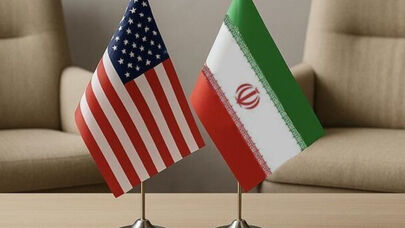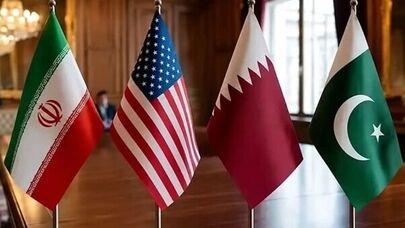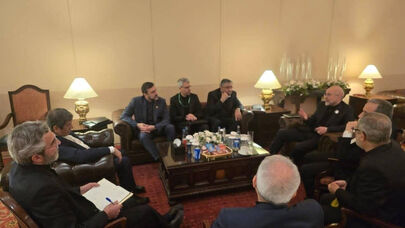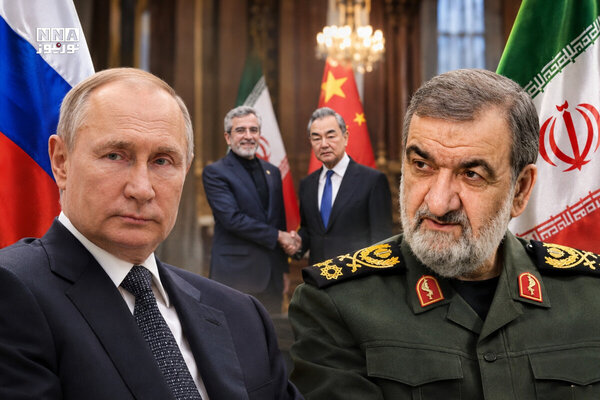
Recent diplomatic activity involving Iran, the US and Qatari and Pakistani mediators, alongside increased consultations between Tehran, Moscow and Beijing, points to the emergence of a multifaceted diplomatic effort in regional and international affairs. The meeting in Beijing between Ali Bagheri, deputy secretary of Iran’s Supreme National Security Council, and Chinese Foreign Minister Wang Yi, as well as reports that a trilateral meeting involving China, Oman and Iran may be held, are among the latest developments. In the same context, Mohsen Rezaei, secretary of Iran’s Supreme National Security Council, held a telephone conversation with Russian President Vladimir Putin focusing on regional and global developments, during which both sides stressed the continuation of strategic cooperation. Following a meeting between Russian Foreign Ministry officials and Mohammad Alibek, director general for Persian Gulf affairs at Iran’s Foreign Ministry, the Russian Foreign Ministry also stressed Moscow’s readiness to help establish lasting stability in the Persian Gulf.
Taken together, these developments, alongside the mediators’ efforts, demonstrate a determination to accelerate the emergence of a multilateral order and strengthen the role of China and Russia in easing tensions in West Asia. Their involvement could help prevent the outbreak of another large-scale war between Iran and the US. However, expanding diplomatic engagement does not mean Iran will relinquish its legitimate rights, including those concerning the Strait of Hormuz. Rather, the ultimate goal is to achieve indigenous security through greater convergence among regional countries, a path whose foundations were laid at the four-party meeting in Tehran.
Moscow, Beijing and Tehran Converge to Accelerate a Multilateral Order
Consultations among Iran, Russia and China should be viewed in the context of continued engagement and convergence among influential actors in the emerging world order, a necessity made all the more important by the region’s and the world’s sensitive circumstances. Meetings between the leaders of the three countries at the Shanghai Cooperation Organization, BRICS, Commonwealth of Independent States and Moscow Gas Forum summits point to shared views on the need to strengthen multilateralism in response to the far-reaching consequences of American unilateralism. The timing of Iranian officials’ visits to China and Russia, coinciding with the visit to China by Valentina Matviyenko, chairwoman of Russia’s Federation Council, further underscores the importance of these interactions. The three countries’ shared capabilities and common ground could pave the way for significant developments in their strategic relations and international affairs.
Breaking “Neither War nor Peace” Deadlock Through Initiative
The activation of the Secretariat of the Supreme National Security Council in the field of foreign policy, alongside intensive consultations by the diplomatic apparatus with Qatari and Pakistani mediators, not only demonstrates the coordination and synergy among the institutions responsible for safeguarding national interests but can also be viewed in the context of implementing the Leader of the Islamic Revolution’s directive during his meeting with the secretary of the Supreme National Security Council. He called for initiatives to be developed to move beyond the “neither war nor peace” situation.
This situation serves US interests, allowing Washington to weaken Iran’s resilience by intensifying economic pressure while keeping the threat of military action hanging over the country, and to push it towards domestic unrest and insecurity or force its officials to surrender to external pressure. Expanding the scope of consultations and the more active involvement of the Council’s secretariat in this arena could therefore create new capacity to counter this scenario and break the deadlock imposed by the US.
Diplomatic Sincerity Without Surrendering National Rights
US conduct, including its military aggression in the middle of negotiations and repeated breaches of commitments, which have even extended to Trump’s own acknowledgment that the Islamabad memorandum was not implemented, has created deep mistrust in Tehran. Iran has also made clear that it will not negotiate with the US until the seven announced conditions are implemented, and that the Strait of Hormuz will not be reopened. Nevertheless, Tehran is continuing, in good faith, to give mediators another opportunity. Its acceptance and consideration of mediation proposals from Pakistan and Qatar, along with consultations with China and Russia, are clear expressions of this approach. This sincerity does not stem from weakness; rather, it is grounded in a discursive logic, self-confidence and a belief in the ability to achieve national objectives through the integration of the field, diplomacy and popular support.
The fundamental point is that expanding diplomatic relations does not alter Iran’s principles or its underlying strategic calculations. Tehran will not relinquish its legitimate rights or its seven conditions. The Strait of Hormuz can be reopened only after Iran’s conditions have been met and on the basis of a new agreed arrangement with Oman. At the same time, Iran’s central principle remains the establishment of indigenous security with the participation of regional countries and without interference by foreign powers.
The role of China and Russia should also be understood within this framework. Russian Foreign Minister Sergey Lavrov, in a meeting with members of the Gulf Cooperation Council, stressed the convergence of Arab countries and Iran as a means of achieving region-based security. Wang Yi, during a meeting with Saudi Arabia’s national security adviser in Beijing, had also called on regional countries to work towards establishing a new security architecture. Tehran’s engagement with Moscow and Beijing is therefore not intended to replace one form of dominance with another, but to build capacity for regional convergence. This approach stands in contrast to the US and European policy of imposing their own order and interests on West Asia.
Defense Readiness: Unchanging Foundation of Diplomacy
The final point is that expanding consultations and allowing diplomacy an opportunity to proceed in no way means any change in Iran’s level of defense readiness. Even as these diplomatic efforts continue, vessels found in violation of regulations are still being targeted, while US drones violating Iranian airspace are being brought down by the integrated air defense system of Iran’s Armed Forces. Iran is now better prepared than ever and will respond to any threat without geographical limitations. As the Leader of the Islamic Revolution stressed during a meeting with military commanders, Iran will determine the outcome of any war. Within this framework, in addition to developing a new target bank comprising US interests, the scope of any potential war will extend beyond the geographical boundaries of the region, while the Resistance Front will complement this strategy through coordinated action.
Ultimately, the field and diplomacy, backed by popular support, are Iran’s two complementary instruments for advancing its interests and safeguarding national security. These are not competing paths but inseparable components of a unified approach, each pursuing its own mission in the service of national objectives.