The possibility of resuming negotiations between Iran and the US has once again become one of the most significant issues shaping political developments in the region. Although the two countries continue to face serious differences, there are signs of diplomatic efforts and mediation by regional countries. These developments could point to a new opening for diplomacy. However, a distinction must be made between “readiness to negotiate” and “agreement to negotiate”. Diplomatic contacts do not necessarily mean that either side has definitively changed its position. Rather, they may indicate that continuing the current confrontational situation carries heavy costs for all parties.
Despite these diplomatic efforts, serious obstacles remain. The first is the deep mistrust between Tehran and Washington. The experience of the JCPOA and developments since then have made Iran cautious about US commitments. The second is the disagreement over Iran’s nuclear program. The Trump administration insists on guarantees that Iran will not acquire nuclear weapons, while Iran maintains its nuclear rights and declared positions. The third is the role of Israel and Netanyahu’s government in regional developments. Any potential agreement between Iran and the US could face Israeli opposition or political pressure. The fourth is the regional security situation. Recent military warnings from Tehran and Washington show that the risk of escalating tensions remains, even as diplomatic efforts continue.
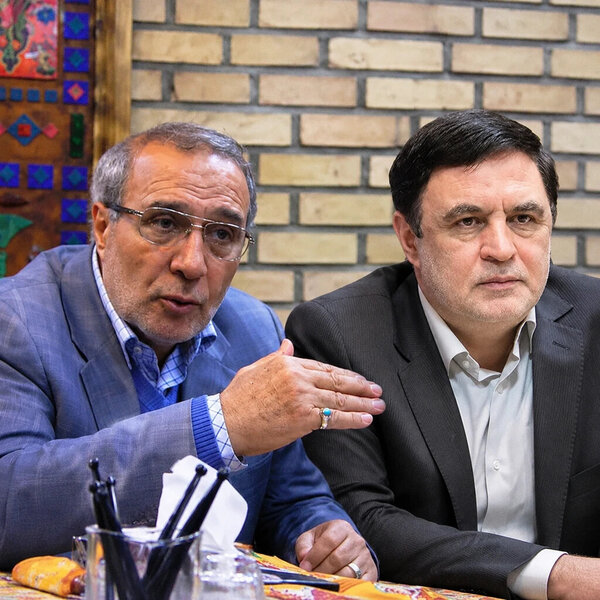
As part of its analysis of regional developments amid recent exchanges of letters and mediation efforts between Iran and the US, Nournews sought the views of two experts in political and international affairs. Javid Ghorban-Oghli, Iran’s former ambassador to South Africa, and Nasser Imani, a political analyst, shared their assessments of the latest developments in relations between Tehran and Washington. Both experts agreed that the renewed opportunity for diplomacy should be used, but warned that the United States and Israel should not be underestimated in this regard.
Negotiations with US Offer an Opportunity to Secure Real Concessions
In an interview with Nournews, Javid Ghorban-Oghli, Iran’s former ambassador, addressed remarks suggesting that Iran was changing its approach to negotiations.
“The claim that the situation is moving towards negotiations does not necessarily mean that Iran has changed its approach. In my view, statements by Iranian officials indicate that there has not yet been any fundamental change in the country’s position. In fact, Iran continues to insist on the same positions it had previously put forward. The important point is that Trump has repeatedly claimed that he has destroyed all of Iran’s nuclear capabilities. If we take that claim as our starting point, we must naturally acknowledge that, under the current circumstances, Iran’s ability to continue its nuclear activities has also been subject to certain limitations.”
The international affairs expert continued: “What I have heard is that Iran has agreed not to enrich uranium beyond a specified level, namely roughly the level envisaged under the JCPOA. If this is true, I would not regard it as a strategic shift, but rather as a tactical adjustment aimed at securing greater concessions in negotiations. The main objective is for Iran to obtain the concessions it needs from the US and Western countries in exchange for accepting restrictions on its nuclear activities, restrictions that are not new. Iran’s most important demand should be the complete lifting of sanctions, as envisaged under the JCPOA. Under the agreement, Iran had agreed to limit its enrichment level in return for the lifting of sanctions. The issue of UN Security Council resolutions and the lifting of both primary and secondary US sanctions have also been among Iran’s fundamental demands.”
He added: “Of course, if the Americans conclude that they cannot achieve their objectives through other means, negotiations could be the more rational option. In my view, the message recently conveyed by Mr. Mohsen Rezaei also carries something of this meaning: that the other side has realised it cannot achieve its objectives through means other than negotiations. In fact, they have tried various approaches over the past few months but have failed to achieve the results they wanted. They will probably reach the conclusion that negotiations are the more appropriate way forward. For this to happen, however, the US must reconsider its policies, particularly its alignment with Netanyahu and Israel’s strategy.”
He explained: “The important point is that one of the demands Trump has repeated most frequently in his statements concerns restrictions on Iran’s nuclear capabilities. In my view, this could serve as the starting point for negotiations. In other words, the two sides could reach a mutual agreement on nuclear restrictions in exchange for the complete lifting of sanctions. Overall, I believe this opportunity for negotiations should be used, and I hope the Supreme National Security Council and Mr. Mohsen Rezaei will not ignore this message. However, if the other side is answered in the same harsh and confrontational tone, the situation could become even more complicated and difficult than it is now.”
Ghorban-Oghli concluded: “Negotiations can benefit the country only if every restriction and commitment is matched by a real and tangible concession, particularly in the form of sanctions relief.”
Negotiations with US Do Not Mean Moving Away from War; We Are Seeking Lasting Peace
Asked whether recent diplomatic activity meant that Iran and the US were moving further away from the possibility of war, Nasser Imani, a conservative political activist, said: “That interpretation is fundamentally incorrect. The existence of negotiations and talks does not necessarily mean that an agreement will be reached or that the prospect of war is receding. If we look at the experience of the two previous wars, including the 12-day war and the Ramadan War, we see that military conflict broke out during both periods even as negotiations were continuing.”
The expert said: “Even if we look at the foreign minister’s statements in the day or two before those wars, we can see that he was expressing hope about progress in the negotiations and their positive results. Yet war ultimately broke out. Therefore, the other side may use the negotiating process to catch Iran off guard. We should not rule out the possibility of a confrontation simply because talks are under way.”
Referring to the upcoming US congressional elections, he added: “The US midterm elections are extremely important to the administration and the Republican Party. The Trump administration may even use negotiations that have produced no concrete results as a propaganda achievement in the American media. Therefore, diplomatic exchanges and news about negotiations should not, by themselves, be taken as signs that an agreement is approaching. This does not mean opposing negotiations or arguing that talks should not be pursued. Rather, experience has shown that these developments must be viewed realistically. Moreover, based on the information published about JD Vance’s letter and the course of the negotiations, there is still a considerable gap between the two sides’ demands. The main problem is the deep mistrust that has taken hold in relations between Iran and the US.”
Referring to the public’s economic and livelihood difficulties and concerns about a renewed war, and responding to a question about the Islamic Republic’s approach to US policies, he explained: “People’s problems and economic pressures are undeniable realities. However, we must examine whether making concessions to the US would actually resolve these problems. Recent experiences, including the Islamabad agreement, have shown that we cannot simply trust the other side’s promises, because it may later backtrack on its commitments.”
The expert stressed: “We are not seeking a temporary ceasefire. Our goal must be to achieve lasting peace. Reaching such a situation requires the other side to conclude that the cost of military confrontation with Iran would be extremely high and even unpredictable.”
Imani concluded: “The US and the Israeli regime will not readily accept the existence of a powerful Iran in the region. However, if Iran can achieve a level of deterrence and balance that makes continued confrontation too costly for the other side, the conditions for preventing war will be in place. This balance does not necessarily mean that Iran’s military power must equal that of the US. Rather, we must reach a point at which the cost of starting and continuing a war is so high for the other side that bringing it to an end becomes difficult.”