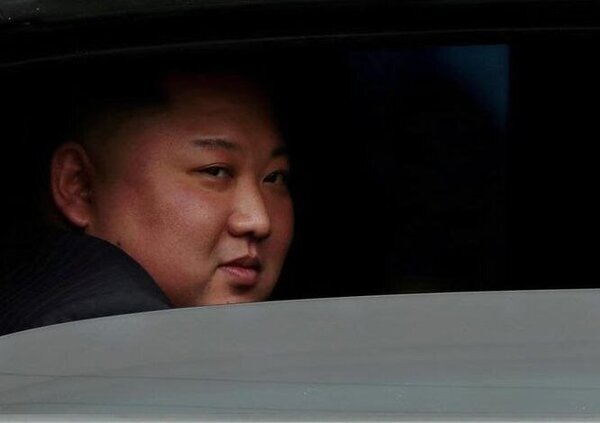
Rumors about the death of North Korean leader Kim Jong Un have once again shown how an unverified claim can quickly become one of the most widely viewed topics on social media. Claims that his health had deteriorated and that he might have died triggered a wave of speculation across social platforms, even though no credible evidence was presented to substantiate them and official reports indicated that he had appeared in public.
But the more important question is this: Why do reports about North Korea’s leader attract so much public attention? Why does a figure who is neither a music, sports nor movie star, and who does not seek direct engagement with a global audience in the way many celebrities do, sometimes experience a level of attention on social media similar to that enjoyed by highly popular celebrities?
The answer lies in the intersection of three factors: political secrecy, celebrity culture and the attention economy of social media.
Secrecy: Engine of Curiosity
Kim Jong Un leads a country where independent information about the power structure, his personal life, his health and the inner workings of the government is severely limited. In such an environment, even a few days of his absence from public view can become an international issue. Every image, speech or indication of his physical condition creates an opportunity for speculation about his health, possible divisions within the power structure and the country’s political future.
There is an interesting paradox here: the less reliable information is available, the more room there is for unofficial narratives to emerge. Audiences encounter a figure they have heard a great deal about but know little about directly in terms of his life and decisions. This gap between fame and actual knowledge makes him all the more intriguing.
The significance of the issue, however, goes beyond curiosity about one individual’s life. The possible death of North Korea’s leader could raise serious questions about succession, the cohesion of the power structure, control of nuclear weapons and Pyongyang’s relations with the US, China, South Korea and Japan. For this reason, reports about him can be entertaining to the general public while also carrying considerable importance for political and security observers.
Fame Without Popularity: The Frightening, Enigmatic Celebrity
In social media culture, fame does not necessarily mean popularity in the sense of being liked. A figure can simultaneously be mocked, hated, feared and viewed with curiosity, yet still attract millions of views. What matters is the ability to provoke reactions and become a subject of discussion.
From this perspective, Kim Jong Un is a distinctive figure: he is easily recognizable, his public image is shaped by behavior perceived as unconventional, he wields extensive political power, and much of his life remains shrouded in mystery. These characteristics make him a suitable subject for memes, humorous videos, manipulated images and satirical narratives.
As a result, his image has moved beyond the realm of political news and entered digital popular culture. Users may create content about him out of an interest in politics, for entertainment, as a form of criticism or simply to join a wider online trend. All these motivations ultimately contribute to his increased visibility.
The term “political celebrity” is therefore not entirely misplaced when applied to Kim. This does not mean that he is popular with the public, but rather that he has become a figure who is constantly present in the cycle of public attention.
Rumor Economy: When Possibility Replaces Reality
Social media platforms reward content that captures attention quickly. News of a leader’s death, the fall of a government or the exposure of a political secret naturally has significant potential to be shared, particularly when it has not yet been confirmed and audiences feel they may be witnessing a historic development.
Under such circumstances, a rumor can develop its own momentum before it is verified: one account makes a claim, users share it, and media outlets report on how widely the rumor is spreading. That extensive coverage may then be mistakenly interpreted as evidence that the claim is true.
In the latest case, the appeal of the claim that Kim had died was not simply a matter of its content. Uncertainty surrounding his condition, the potential consequences of his death and the possibility of a major political upheaval all helped the rumor spread more quickly. In this way, what began as nothing more than an unverified claim became a media event.
This mechanism also shows how closed political systems may inadvertently create conditions in which rumors spread by restricting access to independent information. The harder it becomes to establish the facts, the more opportunities alternative narratives have to attract attention.
From a Rumor to a Media Reality
The case of Kim Jong Un offers a clear picture of today’s media culture, in which the boundaries between politics and entertainment, news and rumor, and political figures and celebrities are becoming increasingly blurred. Kim attracts attention because he is both an enigmatic figure and a symbol of opaque power, as well as an actor in geopolitical calculations in which any change at the top could have international consequences.
Perhaps this is the most important point: in the age of social media, fame is no longer necessarily a reward for popularity. Sometimes, a combination of mystery, power, fear and the potential to become a viral narrative is enough to create a figure with global visibility.
However, a story’s ability to attract widespread attention should not be confused with its credibility. Extensive sharing, user reactions and even the appearance of a claim in several media outlets cannot replace independent evidence. In the case of Kim Jong Un, the distance between an unsupported claim and a global news wave serves as a reminder that, in the attention economy, what circulates more widely than the facts is sometimes merely the possibility that something has happened.