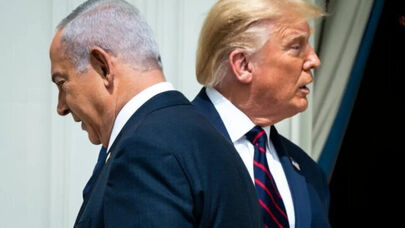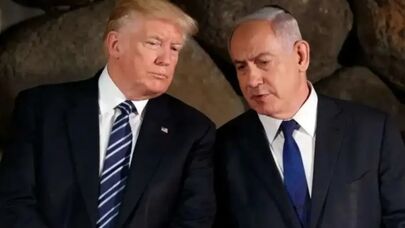
As military tensions between Iran, the United States, and Israel escalate and the prospect of a new round of conflict grows, understanding the decision-making logic of the leaders on both sides, particularly Benjamin Netanyahu and Donald Trump, is crucial to assessing future developments.
An examination of their political behavior suggests that their potential decisions cannot be analyzed solely through conventional political calculations. Electoral considerations, personal interests, the costs of military action, and assessments of Iran’s deterrent capabilities are all decisive variables in this equation. It is also important to distinguish between the short-term outlook for the Iran-Israel conflict and longer-term historical trends, as the factors driving the current crisis will not necessarily determine the future course of relations between the two sides.
Developments before and after October 7, 2023, suggest that conventional political assumptions do not necessarily hold when it comes to Israeli Prime Minister Benjamin Netanyahu. In other words, established analytical frameworks commonly used in politics cannot be applied without taking his behavioral characteristics into account. Netanyahu’s actions, like Trump’s, follow a distinct logic that may not align with the usual expectations of political decision-makers. Analyzing his behavior therefore requires simultaneous consideration of his political objectives, personal interests, and assessment of the potential consequences of military decisions.
If Netanyahu concludes that he can secure Trump’s green light for an attack on Iran, or that such an operation would significantly improve his electoral prospects, the possibility of an attack cannot be ruled out. This scenario must be taken seriously when assessing future developments. I am confident that Iran’s military commanders are also aware of this reality and have factored the possibility of military action by Netanyahu into their calculations. However, having an incentive to launch an attack does not mean that a decision to carry it out is inevitable. Calculations of potential benefits are only one part of the decision-making process; assessments of the costs of a retaliatory response also play a significant role.
Netanyahu must, in fact, factor into his calculations the consequences of Iranian retaliation and a counterattack against Israel. Such a response could impose greater costs on him than refraining from an attack in the first place. The central question, therefore, is whether military action against Iran would ultimately benefit his political and electoral position or whether its consequences would overshadow any potential gains.
Iran’s response could raise the political costs of Netanyahu’s decision and leave him in a situation where the expected benefits of an attack are outweighed by its unintended and costly consequences. From this perspective, Iran’s deterrent capabilities and Israel’s assessment of the scope and intensity of Tehran’s potential response are among the factors influencing Netanyahu’s decision-making.
An analysis of Trump’s behavior must also take into account how his approach differs from that of Joe Biden and even Kamala Harris. Unlike them, Trump does not approach international and domestic US affairs from an ideological perspective. While Biden, much of the Democratic Party, and even many Republicans view Israel through an ideological lens and assess US-Israeli relations in the context of America’s position as the leader of the international system, Trump does not share this outlook.
For Trump, personal interests come first, followed by US national interests. The relative priority he assigns to these interests can shift as circumstances change and from one period to another.
Accordingly, the relationship between Trump and Netanyahu cannot be regarded as an ideological alliance. It is shaped primarily by circumstances and developments at any given moment, with each side seeking to exploit them to advance its own interests. The nature of their personal relationship also depends on the interests Trump is pursuing at a particular time.
Their personal closeness, therefore, does not necessarily translate into lasting alignment on strategic decisions. Nor can US support for a potential Israeli military operation against Iran be predicted solely on the basis of the personal ties between the two leaders. Assessing Washington’s likely behavior requires close attention to Trump’s changing calculations and priorities under different circumstances.
Overall, the possibility of an escalation must be assessed by taking into account the behavioral characteristics of the leaders involved, electoral considerations, and the costs associated with deterrence. Netanyahu’s potential incentives to attack do not make military action inevitable, just as his close relationship with Trump does not guarantee unconditional US support. What matters is continuously assessing changes in the calculations of both sides and the impact Iran’s potential response could have on the costs and benefits of their decisions.
Professor and Director of the Center for International and Regional Studies (CIRS) at Georgetown University in Qatar.