Nournews: For years, the United States has relied on its military might and massive defense spending to establish itself as one of the world’s leading powers. But a country’s true strength cannot be measured solely by the number of its weapons, the reach of its military bases or its ability to intervene in other countries. The safety of its citizens and families’ ability to make ends meet are also essential measures of any government’s performance.
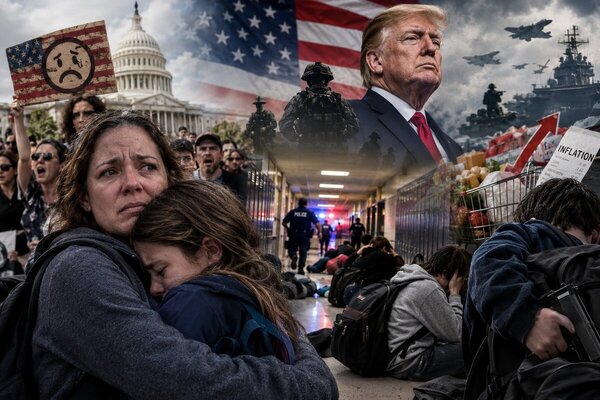
According to CNN, 52 shootings had been recorded at educational institutions across the United States between the beginning of 2026 and October 15, leaving 32 people dead and 50 injured. Of these incidents, 16 occurred at universities and 36 at schools ranging from preschool to high school. The figures raise serious questions about the safety of educational environments and the peace of mind of American families.
Schools and universities should be places of learning, personal growth and preparation for the future—not environments that students and their families view with fear of violence. Real security means something only when people experience it in their daily lives, rather than hearing about it solely in political speeches and displays of military power.
Massive Military Spending: Where Does Public Safety Stand?
According to the Stockholm International Peace Research Institute (SIPRI), US military expenditure reached approximately $954 billion in 2025, making the country the world’s largest military spender. Yet the persistence of shootings at educational institutions, despite this enormous military capacity, demonstrates that military power alone cannot address every aspect of domestic security.
When vast amounts of public money are spent on maintaining military superiority and an overseas presence, citizens have every right to ask what priority the government gives to protecting their children in schools and easing the anxieties they face in everyday life.
Trump and the Cost of War-Driven Policies
Donald Trump campaigned on the promise of putting American citizens’ interests first under the “America First” slogan. However, the expanded use of military force abroad, US and Israeli attacks on Iran, and the continuation of military confrontation have raised questions about how compatible these policies are with his pledge to avoid costly foreign entanglements.
War does not generate costs only on the battlefield. Its consequences can spread to energy markets, transportation, supply chains and, ultimately, household budgets. The prolonged confrontation with Iran and its repercussions have heightened uncertainty over the security of energy transit routes, while putting pressure on fuel prices and the broader economy. Reuters has reported that the US-Israeli war with Iran and the Trump administration’s tariff policies have been among the factors contributing to mounting inflationary pressures in the United States.
Inflation and Rising Prices: The Cost of War Lands on Household Budgets
According to Reuters, annual inflation in the United States reached 3.7 percent in September 2026, up from 3.4 percent in August. Gasoline prices also rose by 9.1 percent in September compared with the previous month. Higher fuel costs can drive up the cost of transporting goods and delivering services, placing additional strain on family budgets.
When foreign policy is accompanied by escalating conflict while the cost of living continues to rise, the government must be held accountable for the consequences of its decisions for ordinary citizens.
America First: Putting People First or Projecting Power Abroad?
The true meaning of “America First” should be measured by the safety of schoolchildren, the peace of mind of families and people’s ability to afford their everyday needs. Dozens of shootings at educational institutions and mounting economic pressures are two pressing concerns that cannot be swept aside with nationalist slogans or displays of military might.
If American citizens genuinely come first, protecting their lives, reducing violence, curbing the rising cost of living and avoiding costly conflicts must be central priorities in practice. A country’s power is valuable to its citizens only when they can feel its benefits at home, at school and in the workplace. Otherwise, the gap between political promises and people’s lived realities will persist—a situation Americans are now facing as a result of Trump’s misguided and war-driven policies.