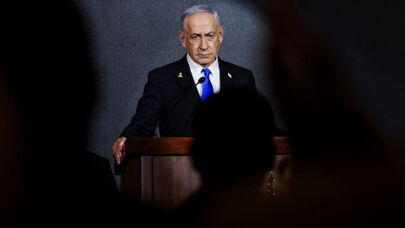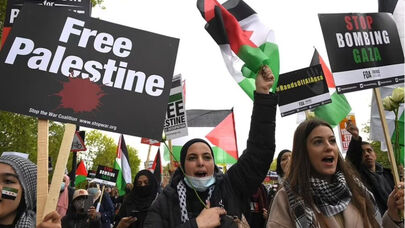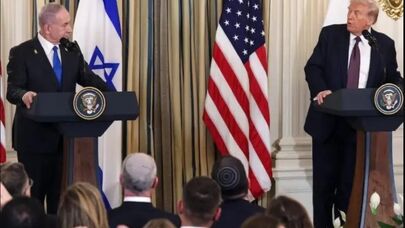
What is confronting Benjamin Netanyahu on the international stage today is not merely a dispute over Israel’s military policies. The issue is the accumulation of accounts, testimonies and legal proceedings concerning his undeniable crimes in Gaza, a process that has extended from diplomatic corridors to judicial circles and now into Israel’s own military and intelligence establishment. In this context, “Naza” should be viewed as more than a cinematic work. Drawing on testimony from Israeli military personnel, the documentary raises serious questions about the conduct of the war and the responsibility of those who made the decisions.
From The Hague to New York: Pressure on Netanyahu
The case against Netanyahu at the International Criminal Court is one of the most significant dimensions of this situation. On November 21, 2024, the ICC issued arrest warrants for the Israeli prime minister and Yoav Gallant, the country’s defense minister at the time. The charges against Netanyahu include the war crime of using starvation as a method of warfare and crimes against humanity, including murder, persecution and other inhumane acts. The decision demonstrates that allegations concerning the war in Gaza have moved beyond political protest and entered a serious phase of international judicial proceedings.
On the diplomatic front, Netanyahu’s image has also faced widespread condemnation. The departure of 77 national delegations during his address to the UN General Assembly was a symbolic illustration of the divide between the Israeli government and significant parts of the international community. The incident shows that the continuation of the war in Gaza and its humanitarian consequences have imposed a heavy cost on Netanyahu personally and on the Israeli regime.
Against this backdrop, the significance of the latest revelations lies in the fact that discussion of the war in Gaza is no longer confined to government positions, reports by international organizations or testimony from victims. Accounts from within Israel’s military establishment have now entered the dispute as well.
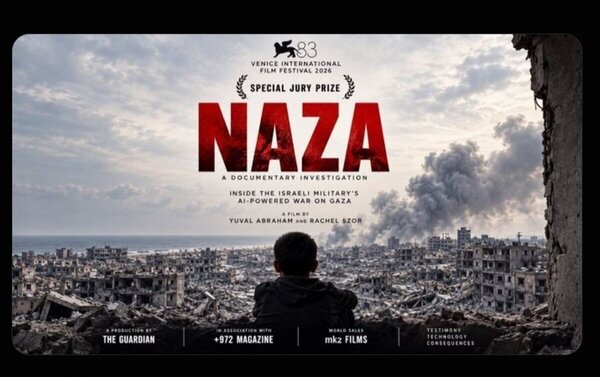
The documentary “Naza,” made by Yuval Abraham and Rahel Zur with the Guardian’s participation in its production, is based on testimony from 24 Israeli intelligence and military officers. They discuss how targets in Gaza were identified, how intelligence systems and artificial intelligence were used, and how civilian casualties were calculated. Some testimonies describe the approval of attacks despite prior assessments that large numbers of civilians were likely to be killed. The Israeli military denies these allegations.
The documentary’s significance lies in the fact that it brings scrutiny of the Israeli military’s conduct inside the regime’s own military establishment. When people who have participated in intelligence and operational processes testify about how the war was conducted, the entire debate can no longer be reduced to a confrontation between the Palestinian narrative and Israel’s official account.
“Naza’s” success at film festivals and its international reception have added a new dimension to the situation. Its screening at the Venice International Film Festival and its receipt of a special jury prize, alongside the attention it has received from international media, have taken the accounts presented in the film beyond the confines of a domestic dispute and placed them before a much wider audience. As a result, testimonies emerging from within Israel’s military establishment have become part of a global debate about the war in Gaza, military responsibility and political accountability.
Netanyahu’s response has heightened the sensitivity surrounding the case. On October 11, he called for the identification of and criminal investigations into the military personnel and officers featured in the film, raising allegations such as the disclosure of classified information and the publication of defamatory material. This request does not, in itself, establish that the interviewees committed any wrongdoing. It does, however, raise an important question: Why has identifying and pursuing the film’s sources become one of the prime minister’s priorities, alongside denying its allegations?
A Battle Over the Narrative: From Public Opinion to the World’s Conscience
Alongside the ICC case in The Hague and the revelations in “Naza,” the reaction of national delegations at the UN General Assembly forms part of the broader picture of Netanyahu’s diplomatic isolation. Reuters reported that dozens of delegates walked out as he began his address on September 24, 2026.
The walkout can be seen as a sign of opposition to the Israeli government’s policies. Together with legal and media pressure, it increases the political cost to Tel Aviv of continuing the war in Gaza.
Although these events differ in nature, they converge on one point: the growing difficulty of maintaining a monopoly over the narrative of the war through the Israeli government’s official account. The ICC arrest warrant, the diplomatic protest at the United Nations and the testimonies presented in “Naza” each bring the question of accountability for the war in Gaza into focus from a different direction.
Netanyahu can deny the allegations raised in the documentary and call for an investigation into the origins of the information. But targeting whistleblowers does not answer substantive questions about the conduct of the war, civilian casualties or the responsibility of decision-makers. The more these questions are supported by independent documents and evidence, the greater the scope for a closer examination of the responsibility of the individuals and institutions involved.
The main issue for Netanyahu is not simply the release of a documentary. It is his confrontation with a collection of accounts and legal proceedings, each of which could bring new dimensions of the war in Gaza before public opinion. “Naza” is not a court ruling, and the walkout at the United Nations does not constitute a judicial verdict. Taken together, however, these developments show that the dispute over the war in Gaza has moved beyond the battlefield into the realms of political credibility, legal accountability and global public judgment.
The reason for Netanyahu’s strong reaction may lie precisely here: he knows that when accounts of crimes attributed to his policies are translated into the language of art, particularly from within Israeli society and on the basis of testimony from people who served in the regime’s military and intelligence establishment, he is no longer dealing with just a news report or a political statement. Such a narrative can cross geographical borders, political divisions and even the limitations of judicial proceedings, becoming embedded in the world’s collective memory.
The legal process of establishing the allegations may be complex, and each case requires evidence, judicial standards and independent review. Public judgment, however, does not necessarily follow the same timetable or operate within the same framework. If the testimonies in “Naza” are corroborated by other credible evidence, the documentary could help strengthen the global demand for accountability over the war in Gaza.
Ultimately, even if no court succeeds in convicting Netanyahu, the court of the world’s conscience may condemn him more forcefully than before, drawing on testimonies, images and accounts that have emerged from within Israeli society. Such a symbolic verdict cannot be erased by applying judicial pressure to whistleblowers, nor can it be escaped through denial and silence.