The US Treasury market may not be the place to determine whether a war has been definitively “won” or “lost,” but its behavior can reveal important signals that are less visible in political speeches. Recent warnings from Steve Hanke and Goldman Sachs about the long-term Treasury market are significant precisely from this perspective: the US government is facing a market that demands considerably more compensation for taking on risk over longer maturities.
The key issue in the US Treasury market today is not whether there are buyers, but the price they are willing to pay — or, more precisely, the yield they demand. Investors want higher returns to hold long-term US debt. This may seem like a subtle distinction, but it carries much greater economic significance.
American economist Steve Hanke has long warned about the return of “bond vigilantes” — investors who are sensitive to government fiscal policies. Goldman Sachs has also pointed in recent analyses to pressure on long-term bond yields and the persistence of fiscal risks. Put simply, these warnings suggest that the market is no longer willing to accept the long-term risks facing the US economy without demanding greater compensation.
This is where the war becomes important.
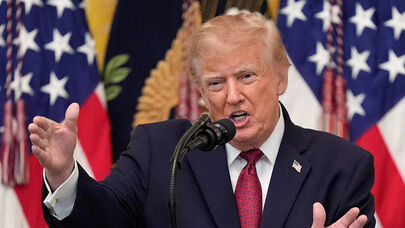
In his official narrative, Trump has consistently presented a very different picture. He has repeatedly spoken of US strength, strong economic performance and victory in the war, while portraying Iran as being on the verge of destruction. In this narrative, the US is winning while the other side is collapsing. But the bond market does not have to pay the bill for political messaging. Instead, it prices assets based on current conditions and expectations for the future.
Financial markets are not driven by presidential speeches. Investors look at how much debt the government is likely to accumulate in the coming years, where inflation is headed, what path interest rates will take and how much the government will have to pay to finance such a large volume of debt.
Economic indicators are shaped by assessments based on such factors, not by Trump’s upbeat political statements.
That is why there is often little correlation between market behavior and Trump’s statements, and why the two can sometimes move in opposite directions.
The war can complicate the situation precisely through these channels. Higher risks to energy supplies, oil and transportation, upward pressure on commodity prices and increased military spending can create two problems simultaneously: inflationary pressure and higher government financing costs.
If inflation remains elevated, it becomes harder to cut interest rates quickly. If interest rates remain high, financing government debt becomes more expensive. And as interest costs rise, a larger share of government resources will go toward servicing previously accumulated debt.
This can create an important contradiction: Washington may speak of “victory,” while the market demands a higher price to finance the same government.
The bond market is not an arbiter of war, but it can clearly reveal the economic costs of government decisions. If the war is short and relatively inexpensive, its fiscal impact may be more manageable. But if the conflict becomes prolonged and disruptions to energy and trade continue, the costs can spread from the battlefield to fuel, transportation, inflation, interest rates, the budget d