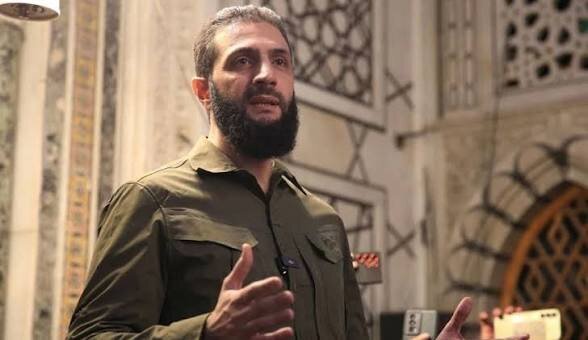
Nournews: It has not been long since Ahmed al-Sharaa, the self-proclaimed ruler of Damascus, returned from the United Nations General Assembly before a new case was opened against Hezbollah in southern Syria. Syria’s interim government security agencies claim that, in a preemptive operation in the Yarmouk Basin in western Daraa, they identified and arrested a three-member network linked to Hezbollah and destroyed missile launch platforms. Hezbollah has categorically denied the allegation, saying it has no security or military presence or activity in Syria.
Regardless of whether Damascus’s claim is true — a matter that requires independent and verifiable evidence — the timing and political implications of the allegation are particularly significant. At a time when southern Syria remains the scene of Israeli incursions and military activity, highlighting an alleged threat attributed to Hezbollah could divert public attention from the central issue of occupation and shift Damascus’s security priorities toward confronting the resistance. This is where the concept of a “false flag” enters political discourse: attributing an action or threat to another party in order to create the conditions for a political or security objective. However, labeling the Yarmouk Basin incident a false-flag operation as a matter of fact would require independent evidence.
Accusations as a Pretext for Repression and Diverting Public Attention
At the beginning of his rise to power, Jolani presented a different vision of the future to parts of Syrian society, particularly through promises to restore security and improve economic conditions. But the continuation of internal conflicts, protests, and numerous reports of security crackdowns has seriously challenged that image. Under such circumstances, creating or highlighting an “external enemy” can become a tool for securitizing the domestic environment and justifying action against opponents.
If Damascus fails to substantiate its claim that the individuals were linked to Hezbollah, the more important question will be why the resistance must become the first suspect in every security crisis in Syria, while the south of the country is simultaneously facing Israeli military activity and incursions. Recent reports have pointed to dozens of cases of Israeli incursions and troop movements in Quneitra, Daraa, and areas around the Yarmouk Basin. Therefore, prioritizing a case whose alleged connection to Hezbollah is disputed, while the issue of occupation and aggression remains visible, becomes a political question in its own right.
Damascus’s Reliance on Washington’s Support
To consolidate his position, Jolani is primarily seeking Washington’s approval, a relationship that has shown clearer signs of rapprochement in recent months. The United States has also taken steps toward normalizing relations with Syria’s new government and has even modified restrictions on arms exports to Syria. In this context, aligning Damascus with the security priorities of Washington and Tel Aviv could offer short-term gains for Syria’s new authorities, but the cost could be the transfer of regional conflicts into Syria itself.
One of these priorities is portraying Hezbollah as a central security threat in Lebanon and Syria — an effort that is not limited to Damascus and has been accompanied by political pressure, sanctions, and attempts to restrict the resistance’s capabilities. But Syria is not in a position to enter into a broad confrontation with Hezbollah. As a result, security cases, accusations, and psychological warfare could be used as substitutes for direct confrontation — an approach that could ultimately place Damascus even more firmly on a playing field shaped by others.
The Ramadan War: A Warning to Those Betting on an American Mirage
The first lesson from the developments of the Ramadan War is that the resistance cannot be eliminated through political and security schemes. The experience of recent decades has also shown that the United States and Israel primarily pursue their own interests in their regional calculations, while their allies and partners remain valuable only as long as they operate within the framework of those interests.
From this perspective, Damascus’s reliance on external promises to consolidate its power, without taking Syria’s social and security realities into account, could prove costly. Israel continues to occupy parts of Syrian territory, while Ahmed al-Sharaa himself criticized the occupation of the Golan Heights and Israeli attacks in his recent address to the United Nations. The contradiction becomes more apparent when Damascus, instead of making the issue of occupation its top priority, devotes a significant portion of its political and security capacity to the Hezbollah file.
Even plans for alternative energy routes and efforts to turn Syria into a transit hub cannot alter the geopolitical realities of West Asia. Recent developments have shown that alternative routes can help ease some short-term pressures, but they cannot remove the strategic importance of the Strait of Hormuz from the global energy equation.
Therefore, if Damascus believes that confronting Iran and the resistance while aligning itself with the United States and Israel can bring security, legitimacy, and lasting stability, it may sooner or later discover that relying on external powers, rather than guaranteeing independence, can come at the cost of losing it.