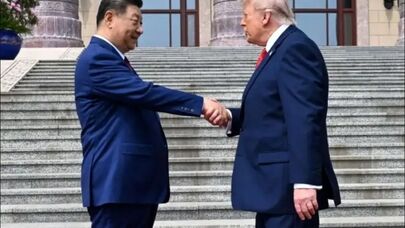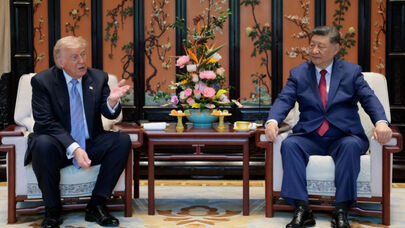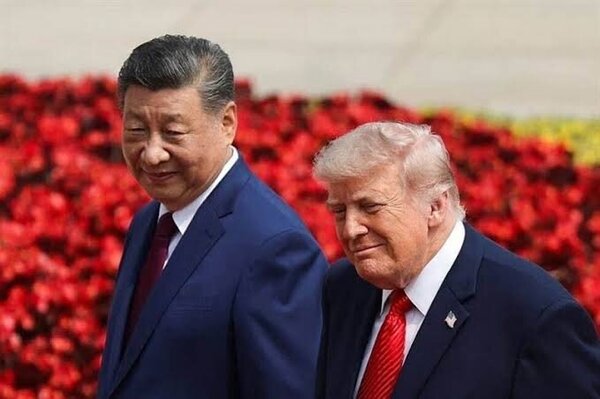
Nournews: Chinese President Xi Jinping’s visit to Washington and his meeting with Donald Trump presented, on the surface, a different picture of relations between the world’s two major powers. The image was reinforced by Trump’s unusually warm reception of Xi at Joint Base Andrews, an official ceremony, a state dinner and symbolic events at the U.S. National Archives. Trump, for his part, described the meeting as highly positive.
Yet behind the diplomatic pageantry, fundamental differences between the two countries over trade, technology, Taiwan, artificial intelligence and Iran remain unresolved. Various sources have also stressed that the meeting produced no major breakthrough on the key issues separating the two sides.
From this perspective, Xi’s visit appears less to signal that Washington and Beijing are moving beyond their structural rivalry than an effort to contain the costs of that rivalry and prevent it from turning into direct confrontation. The extension of the trade truce and the agreement to continue talks, along with plans for further meetings between the two leaders, point in the same direction: competition continues, but both sides are seeking to manage its scope and intensity.
Trump’s Unusually Warm Welcome: A Shift in Beijing or a Need in Washington?
Trump’s personal reception of Xi at the airport, the official ceremony and the display of military power surrounding the event carried a dual message: on the one hand, diplomatic respect for a major rival, and on the other, a reminder of U.S. power. The flyover by bombers and advanced fighter jets during the welcoming ceremony further underscored that Washington does not set aside the power element even when projecting warmth and cordiality.
But the reason for Trump’s change in tone cannot be explained solely by a shift in China’s behavior. The economy and trade — particularly America’s dependence on critical minerals within its supply chains — are an important part of the equation. China’s dominance over the mining and refining of rare earth elements has given Beijing significant leverage in economic and technology negotiations, with analytical reports identifying it as one of the factors behind Washington’s greater caution in dealing with Beijing.
Under these circumstances, Trump needs investment, market stability and relief from economic pressures, while China is seeking to use the negotiating environment to consolidate its economic and geopolitical position without giving up its key sources of leverage. The warm reception, therefore, can be seen above all as a product of the intertwined needs of the two powers.
No Real Convergence: Rivalry Has Shifted to Managing Tensions
Despite the positive atmosphere surrounding the meeting, strategic differences between Washington and Beijing remain deep. No final agreement has been reached on tariffs, and the continuation of the trade truce does not mean that structural disputes have been resolved. Taiwan, advanced technologies, artificial intelligence, strategic minerals and the policies of the two countries toward Iran remain areas of disagreement. The Associated Press has likewise described the meeting as part of efforts by both sides to stabilize relations and prevent their rivalry from deteriorating further.
From this perspective, Washington and Beijing appear to be seeking not to end their rivalry but to establish rules for managing it. The competition does not necessarily have to lead to military confrontation. This reality makes future meetings between the two leaders at international summits all the more important. The central objective is to keep channels of communication open and prevent economic and security disputes from escalating into an uncontrollable crisis.
Iran and Russia: A Test of China’s Future Policy Model
Against this backdrop, Iran and Russia are particularly important in assessing the limits of China’s cooperation with the United States. Beijing has so far shown no sign of backing away from its relations with Tehran. In the days leading up to Xi’s visit, China reiterated its support for Iran’s legitimate rights and interests, respect for the sovereignty and security of regional countries, and the return of Tehran and Washington to the Islamabad understanding. China’s Foreign Ministry has also called for the reopening of the Strait of Hormuz and for efforts to prevent the crisis from spreading to Yemen and the Red Sea.
These positions indicate that Beijing is not simply following Washington’s lead when it comes to Iran, although it is simultaneously seeking to prevent a further escalation of the crisis and disruptions to energy security. The importance of the Strait of Hormuz to the global economy and China’s energy security has given the issue implications that go beyond bilateral Iranian-American relations.
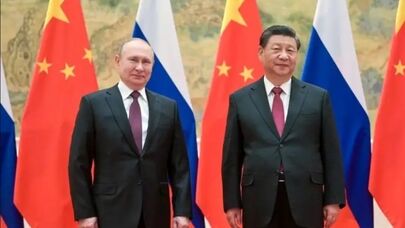
With regard to Russia, China continues to emphasize dialogue and a political solution to the Ukraine crisis. Xi’s visit to Washington can therefore be viewed as an effort to recalibrate relations with the United States rather than an acceptance of unilateral U.S. dominance.
China is testing a model in which economic cooperation with Washington, the preservation of strategic ties with its partners and support for multilateralism can move forward simultaneously. The evolution of this model could have a significant impact on the future of U.S.-China rivalry and the shape of the international order.