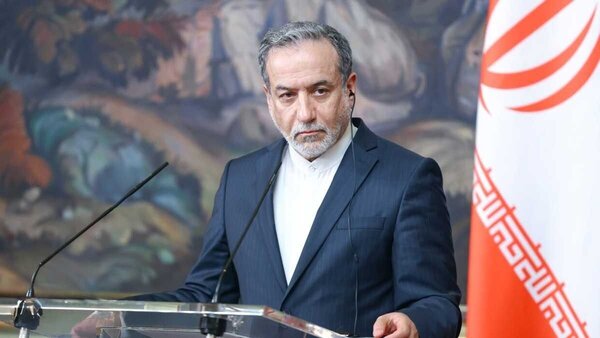
Speaking at a stakeout at the United Nations headquarters in New York on Friday, Araghchi said that the seven-day period begins once the US accepts the plan. “If this happens tomorrow, the implementation of the plan will begin from that same time.”
“If the necessary measures are taken, we believe that we can complete the process within four or five days in a way that the Strait of Hormuz is opened on the sixth day, and the United States enters for a final agreement on the seventh day,” the foreign minister explained.
The United States has already been informed of the measures it should take, Araghchi said, adding that the measures are within the framework of the Memorandum of Understanding signed in mid-June this year.
“If the US is seriously enough, this will happen and the Strait of Hormuz will be -re-opened,” he stressed.
The top diplomat also read a statement outlining on Iran’s position regarding the ongoing situation, including in and around the Strait of Hormuz. The following is the full text of the statement at the UN stakeout.
-
First: On US aggression and its ongoing unlawful measures
The Islamic Republic of Iran reiterates its steadfast commitment to international law, the UN Charter, and diplomacy. This commitment was demonstrated through the negotiations that concluded in the Joint Comprehensive Plan of Action (JCPOA), its implementation, and Iran’s continued efforts to pursue diplomacy over the past two years, even while facing US-Israeli acts of aggression.
The United States chose the opposite path: aggression, threats, assassination, economic warfare, and a blatant disregard for international law and the UN Charter.
During the US-Israeli aggression against Iran, more than five thousand people have been killed, including hundreds of women and children. They committed a grave crime and a flagrant violation of international law by assassinating Iran’s Leader, along with other senior political and military officials.
Residential areas, schools, hospitals, energy facilities, sports facilities, cultural sites, transport infrastructure, and other civilian objects have been struck. The massacre of more than 168 students and teachers in Minab, the cluster-munition attack on Lamerd stadium, the bombing of residential homes in Qeshm with 2,000-pound bombs, and the missile attack on a wedding ceremony in Kuhestak, Sirik, are only some of the documented examples.
Yet, from the podium of the General Assembly, the US president, along with the criminal prime minister of Israel, attempted to distort the facts and reverse the roles of victim and aggressor. The United States and the Israeli regime cannot whitewash their criminal acts against the people of Iran.
The United States is now weaponizing economic deprivation as an instrument of collective punishment and political coercion. It is deliberately inflicting grave and foreseeable harm on the Iranian people and directly violating their fundamental rights, including the rights to life, health, medicine, and food. This is not diplomacy. It is coercion and economic terrorism. This constitutes a flagrant and direct violation of the binding provisional measures ordered by the International Court of Justice (ICJ) on 3 October 2018.
-
Second: On Iran's peaceful nuclear program
The renewed allegations concerning Iran’s peaceful nuclear program are political, not a substitute for technical and legal assessment. The allegation that Iran is on the verge of acquiring a nuclear weapon is a big lie first concocted by Israel in 2003, and the United States and European countries have been parroting it ever since. Iran has been a faithful party to the Nuclear Non-proliferation Treaty (NPT) since 1970 and has been subject to extensive IAEA monitoring for decades.
The United States cannot credibly claim to defend non-proliferation while attacking IAEA-safeguarded peaceful nuclear facilities in clear violation of its international obligations.
-
Third: On Situation in and around Strait of Hormuz
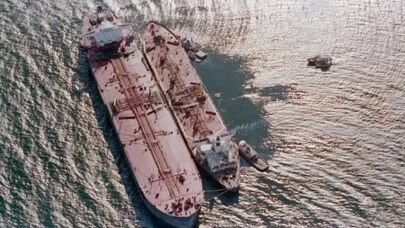
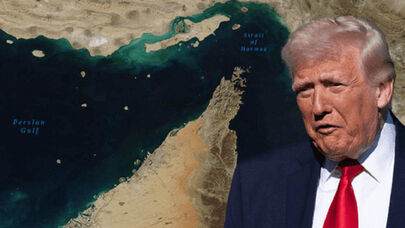
Iran remains committed to safe and secure navigation. But maritime security cannot be restored through further military actions, threats, blockade, or economic coercion.
Until 28 February 2026, the Strait was open. The insecurity prevailing in the Strait of Hormuz and the disruption of maritime navigation are the direct result of the aggressive actions of the United States and the Israeli regime.
You cannot bomb a country, threaten its annihilation, impose a maritime blockade and coercive measures, and expect automatic restoration of security and navigation.
Responsibility also rests squarely with those regional States that, in flagrant disregard of the principle of good-neighborliness and in violation of their international obligations under the UN Charter, enabled and facilitated the aggression by opening their territory, military bases, airspace, and logistical and intelligence infrastructure to the aggressors.
-
Fourth: On MoU and way forward
Following the good offices of Pakistan and the support of Qatar, Iran and the United States signed the Islamabad Memorandum of Understanding (MoU) on June 17. Under paragraph 5, Iran undertook to make the necessary arrangements to facilitate the safe movement of vessels.
Iran immediately began technical discussions with the Sultanate of Oman aimed at implementing that commitment and restoring maritime traffic to its pre-war level. Within two weeks of the MoU implementation, maritime traffic had recovered to approximately 60 percent of its pre-war level.
However, subsequent unilateral US measures and its military action violated and blocked the implementation of the Memorandum. Instead of using the dispute-resolution mechanisms envisaged in the Memorandum, the United States resorted to military aggression. Iran has kept the door to diplomacy open. Over the past two years, Iran has engaged in negotiations in good faith continuously.
Yet on each occasion, the United States responded in bad faith, resorting to military aggression rather than diplomacy. These experiences have created deep distrust about renewed negotiations without credible assurances against a repetition of such actions.
Iran has therefore made its position clear. Iran has conveyed to the United States, through Qatar, a concrete seven-day plan. If the necessary conditions are met, the Strait can be reopened, and normal maritime passage restored within seven days.
The choice now rests with the United States. Iran does not accept coercion, threat, or intimidation. And Iran will not surrender its sovereign rights under pressure. The United Nations was created to prevent the replacement of the rule of international law by the law of the wolf. The Charter is not optional. Sovereignty is not conditional. Diplomacy is not surrender. And peace cannot be built through threats of annihilation.