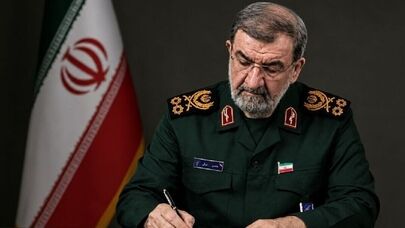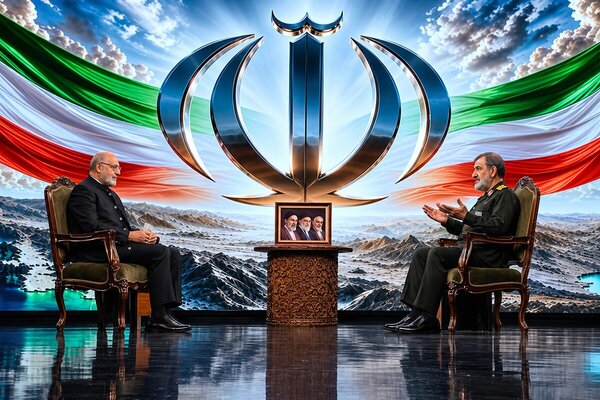
Mohsen Rezaei, secretary of Iran’s Supreme National Security Council, told Lebanon’s Al Mayadeen television that any new US military attack would prompt a response extending beyond nearby bases. Distant US military positions, including some bases located in European countries, could also be placed on the list of targets.
Referring to changes in Iran’s defensive and offensive strategy, Rezaei said that if the US attacked Iran again, Tehran would not confine itself to targeting nearby bases and would also consider bases that had not previously been targeted.
He explained that even islands believed to be beyond the range of Iranian missiles, as well as US military bases in European countries, could be targeted, particularly if American aircraft took off from those bases to attack Iran...
The full interview follows:
Interviewer: In recent days, particularly over the past two days, we have been confronted with a flood of reports and contradictory news about negotiations. Yesterday, it seemed as though we had reached a final agreement with Trump on the nuclear deal, the blockade and the Strait of Hormuz. But yesterday, you surprised the world by declaring, “Put an end to this nonsense” and “Put an end to these illusions.” I would like to ask what the reality of the negotiations is. Where do things stand between negotiations and the military option?
Rezaei: About three years ago, the Zionist regime, that is, illegitimate Israel, started a war in the region and attacked Gaza, Lebanon, Syria and Iran. For more than a year and a half, the Americans have also been involved in this war against Iran. Before that, they supported Israel, and then they entered the confrontation themselves.
With the United States and Israel entering the war against Iran, we witnessed a major international event. Had they been able to topple Iran in the early days, this incident would not have reached the scale at which it is now affecting the entire world. Today, there is no family in the US or Europe that has not been affected by the American attack on Iran, and no economic institution anywhere in the world, whether belonging to major or small investors, has remained unaffected by this attack. Even European leaders are speaking about the issue.
The reason behind all of this is the exceptional resistance of the Iranian people. The people of Iran demonstrated unprecedented steadfastness, revealed new capabilities, astonished the world and thwarted and disrupted all the calculations of the United States and Israel. The Iranian people proved that the US and Israel had made major historic mistakes, mistakes that will be recorded in American history for centuries.
I can say that in this war, we inflicted a heavy defeat on the enemy that attacked Iran in the military, diplomatic, political and economic arenas. If an opportunity arises during this interview, I will explain the various dimensions of the achievements we have made. Our nation has proudly and honorably recorded a series of major victories, and we remain prepared to continue these victories in the future across all military, economic, political and diplomatic fields, God willing.
Interviewer: Where do things stand with the negotiations? For example, Qatar’s prime minister went to meet Trump, and the media began reporting that an agreement had been reached on the nuclear issue, the Strait of Hormuz and the blockade. What is the reality?
Rezaei: As I mentioned, we are active on four fronts of the war: the military, diplomatic, economic and political fronts, and we are making progress on them. One of the most important areas we have planned and managed over the past year and a half has been the diplomatic front.
We have achieved major victories in this area. We held three major rounds of diplomacy with the Americans: the first before the 12-day war, the second before the 40-day war, and the third in Islamabad. In all three rounds, we demonstrated that we did not want war and that it was the United States that wanted war. It was very important for us to show world public opinion that America was the party seeking war.
In the first round, the Americans derailed the negotiations and then went to war. In the second round, in Geneva, they abandoned the negotiations and launched an attack. In Islamabad, however, despite reaching an agreement signed by both sides, the Americans went back on their signature. It is rare in history for the leader of a country to sign an agreement and then tear it up and set it aside less than a month later. Nevertheless, we are continuing along the diplomatic path and dealing with this issue seriously. We have set seven conditions, and if the Americans implement them, we will reopen the Strait of Hormuz.
The Americans gave us responses that involved deception, and we rejected them. In fact, the Americans must provide a clear and explicit response to our seven conditions. Mediators such as Pakistan and Qatar have been more active in this regard, although other countries have also conveyed messages to us from people close to Trump. For example, we have occasionally received messages from Iraq, the UAE and other parties. None of these messages, however, has been consistent with the conditions we have announced.
At present, the nuclear issue is not under discussion. We have announced specific conditions on this matter. First, we will not remove even the smallest amount of enriched material from Iran. We have also told our Russian friends that all enriched material will remain inside Iran and that we will use it ourselves, because it has various applications.
We are even designing nuclear-powered ships and nuclear submarines, which is why we need our enriched material. At some point, we may also want to produce small modular reactors, or SMRs, so we need these materials. Why, then, should we transfer them abroad? Not even the smallest amount of enriched material, however insignificant, will be taken out of Iran. All of it will remain in our own hands.
The second issue concerns the rights we are entitled to under the Treaty on the Non-Proliferation of Nuclear Weapons (NPT). All countries have rights under this treaty, and we have 22 rights within its framework. As long as we remain a member of the NPT, we are entitled to exercise all our rights and, in return, fulfill all our obligations. But past experience has shown that we fulfilled all our obligations, yet war broke out. We neither secured all our rights nor benefited from the nuclear rights provided for under the NPT. That is why we have changed our diplomatic approach and model.
What is our objective? Our objective is to achieve security. We are dealing with an aggressive and criminal system. Should we allow this system to escape punishment and the Americans to leave the region without our rights being secured? If that happens, what will prevent other countries from concluding that attacking Iran carries no cost? A country might launch an attack; if it succeeds, that is fine, and if it fails, it will still pay no price.
We want to impose a cost on the Americans that makes aggression against Iran costly and serves as a deterrent. What is that cost? Securing our rights. Therefore, Iran’s negotiations and diplomacy, whether with other countries or with the Americans, are based on the principle of deterrence and the establishment of regional security.
This war has demonstrated that reliance on the United States brings nothing but insecurity. Before the war, everyone assumed that America provided security. But who in the region can now say that the US is not a source of insecurity? Therefore, we must continue along the diplomatic path in a way that establishes security in West Asia.
Why does Israel attack Gaza? You must have seen the news about the humanitarian catastrophe caused by the recent rainfall and the conditions endured by people living under tents. What does Israel want in southern Lebanon, where it is demolishing residents’ homes with bulldozers? What does it want in southern Syria? We must establish comprehensive security in this region so that all Islamic countries can grow, develop and make progress.
For this reason, the first item on our diplomatic agenda with the United States is an end to the war on all fronts, particularly in Lebanon. Is this condition not in the interests of all countries? Does it not help establish security in all the countries of West Asia? We want to put an end, once and for all, to the state of insecurity both in our own country and in our surrounding region.
Interviewer: General, what is your overall assessment of these wars? Now, after all this time and all these years, following the 12-day war, the 40-day war and then another attack, how do you, as a general, assess these wars? And how were you able to resist and confront them in Iran in this way?
Rezaei: Yes, that is a good question. This war has provided very important lessons for national security, both for our country and for the other countries in the region. Before the war, everyone assumed that spending billions of dollars on purchasing F-35 aircraft, AWACS systems and other equipment would be enough to ensure security. But the confrontation demonstrated that faith takes precedence over technology.
When our combatants take up positions alongside missiles, while drones fly overhead and fire at them, they continue to take cover behind the missiles and keep firing. Where can such faith be found in the US Army? Where can it be found in the Israeli army? Israeli soldiers now refuse to approach Hezbollah’s lines any closer than 20 kilometers. They do not even come within 10 kilometers. The situation is the same in their confrontation with Hamas.
It has therefore become clear that national security must be built on new principles, and Iran has been able to convey this lesson to the entire world. The second lesson is that, using our own resources, weapons and missiles that we manufactured ourselves, and our own equipment, we defeated the US and Israel and prevented them from achieving their objectives. In this war, we targeted F-35 and AWACS aircraft and shot down nearly 200 advanced drones. We also targeted F-15, F-16 and F-18 aircraft.
We have recently achieved a major breakthrough, to the point that we have been able to take control of American drones in the sky and bring them down. We have now captured seven drones intact. Taking control of a drone is different from capturing a tank on a battlefield. In the war against Saddam Hussein, we captured many tanks, but those tanks were on the ground. For an army or military force to be able to bring drones down from the sky and capture them is an entirely different achievement. We have now reached this level of capability in electronic warfare.
We have also captured two highly advanced submarines so far, capable of descending to a depth of 6,000 meters in the ocean. In this way, we have been able to confront advanced equipment by relying on our own capabilities and without depending on international powers.
The third issue is Iranian management. We demonstrated that Iran’s defense management is far more capable than the management of American generals. The inexperienced Hegseth was genuinely unable to match the Iranian generals, and we demonstrated our superiority in defense management against the US and Israel, particularly in managing defensive operations on the battlefield. This was itself one of the major achievements revealed by the war. It could take a long time to discuss the extent of the damage inflicted on them and the costs they have incurred. Overall, however, our defensive victory at the operational and technical levels was a very significant one, and the world has acknowledged it.
Interviewer: Given the naval blockade and the fact that a land blockade is now also on the way, what is your plan for the Strait of Hormuz? Specifically, what is your plan for the Strait of Hormuz, and what is your final decision? You are now facing a confrontation in the strait: Trump wants it reopened, while you insist that it remain closed. If you want to reach a solution and an agreement with the US, what are your plans and decisions?
Rezaei: In my view, the political capacity of Trump and Netanyahu to continue the war has been exhausted. They no longer have the political cover necessary to continue the military campaign, whether at the international and legal levels or inside the United States and the Zionist regime. Therefore, if they want to launch a new attack against Iran, by their own calculations, the war will not last more than three to five days. They are now trying to identify an important objective that they can achieve within those three or five days, but so far they have been unable to find one.
Before the elections, they wanted to carry out a show operation that would help them win the elections. But we managed the battlefield well and brought the fronts fully under control. As a result, they were unable to launch an attack before the elections and exploit its military impact in the electoral process.
Now, however, after the elections, they do not have the capacity to enter a war of medium duration, even if it lasts 10 or 12 days. The most they have in mind is a three-to-five-day operation. What objective could they achieve? They say they want to bomb a mountain, claiming that a nuclear facility is located inside it. The mountain is about 500 meters high, and they might drop a bomb on it. Such a theatrical action would be meaningless for them.
Nevertheless, if the Americans act foolishly and launch a new attack, what will our policy and plan be? If the Americans make the mistake of attacking us, we will not limit ourselves to targeting nearby bases. We will target all nearby bases and also strike distant American bases.
I am referring to US military bases in distant areas that we have not attacked so far. We may also target some islands that they believe our missiles cannot reach. We may even target some US military bases in European countries. If American aircraft take off from a distant military base and come to bomb Iran, we will target that base as well. Our defensive and offensive capabilities are now far greater than they were on the first day of the war.
Interviewer: So, you will indeed once again target American, Israeli and other interests in neighboring areas?
Rezaei: Yes. We must defend ourselves. During the 12-day war, we imposed certain limitations on our right to self-defense. Our attacks at that time were confined to Israel, and we did not target American bases in regional countries. But during the 40-day war, after we saw that they would not stop, that they had launched an intense war, martyred the Leader of the Revolution and targeted civilians, we removed those restrictions. We therefore lifted those limitations, and if they launch another attack, we will remove even more of them. In other words, in addition to the bases we have already targeted, we will also strike distant US and Israeli military bases.
For this reason, I advise all countries that host US military bases on their soil not to cooperate with any American military attack against Iran. We are making this clear now so that they will have no excuses tomorrow. We will regard any location from which American aircraft take off as a threat against us. This is our right, a natural right that falls within the rights we are entitled to under international law and the Charter of the United Nations.
Interviewer: General, some time ago you referred to Lebanon, Gaza and other issues. What is the current situation of what you call the Resistance Front? And, in relation to the negotiations, what place does Lebanon have among your fundamental conditions for ending this war?
Rezaei: In my view, the Resistance Front is a heroic yet oppressed force in the Islamic world. Had there been no resistance, had the Resistance Front and Iran not defended themselves, and had they not prevented what is called “Greater Israel” from taking shape, the United States would have achieved all its objectives in the region. In that case, all the countries of West Asia would today be under the occupation of the United States and the Israeli army.
It is the Resistance Front that has played a role in preserving Syria, Lebanon, Saudi Arabia and Iraq. Had this front not existed, Israel would have taken control of all these countries. Even now, Israel is threatening Türkiye and, despite Türkiye being a major country, is insulting and threatening Mr. Erdoğan. What prevented Türkiye, Saudi Arabia, Jordan and Iraq from coming under Israeli occupation? The Resistance Front and Iran. The sacrifices made by Iran and the Resistance Front to protect the Islamic countries of the region are unprecedented in history.
The Resistance Front continues to bear the costs and make sacrifices to this day. Look at what is happening in Gaza. What kind of situation is this? What is the scale of the genocide and crimes against humanity taking place there? The situation in Lebanon is the same.
In southern Syria, despite the fact that the current Syrian government is an ally of the United States, Israel has moved much closer to Damascus since Mr. Bashar al-Assad left. Why has it moved closer? Why does it not withdraw? The combatants of the Resistance Front are sacrificing their lives to defend all Islamic countries.
Interviewer: Do you still insist on your condition that there will be no ceasefire, peace or agreement without a complete end to the war in Lebanon?
Rezaei: This is one of our fundamental conditions for ending the war on all fronts in West Asia, because the countries of West Asia are like communicating vessels. If insecurity arises in one country, its consequences spread to other countries as well.
The borders of these countries are very close to one another, their economies are interconnected, and a large share of their trade takes place through the Persian Gulf and the Strait of Hormuz. In general, we are interconnected. It is not possible for insecurity to prevail in one country while other countries remain secure.
Moreover, the enemy is one and the same: the United States and Israel are hostile forces in the region. When this hostility leads to insecurity and instability in one country, other countries also become concerned that, under the “Greater Israel” plan, they may be next in the future. Therefore, when we say that the war must end throughout the region, including in Lebanon, we mean restoring security to all countries so that they can develop, make progress and continue on their path.
Interviewer: Some time ago, you mentioned Russia. You recently traveled to Russia and met President Putin at the Kremlin. General, could you share with us some details of that meeting, including the behind-the-scenes aspects of your talks with President Putin that you have not disclosed so far? Yes, you said that you had delivered a message from Mr. Mojtaba. Could you explain the main points of that message? What took place between you and President Putin?
Rezaei: In my view, this was an important visit. I was carrying a message from the Leader of the Islamic Revolution to President Putin, and the Russian president received it with great warmth and respect. I handed him the message. He stood up, personally took it from the table and showed it great respect. During our conversation, he also asked me twice to convey his greetings and regards to the Leader of the Revolution.
For the most part, the message concerned the continuation of our previous cooperation, meaning the continuation of activities and areas of cooperation established with Russia during the time of our martyred Imam. The Leader of the Revolution emphasized that we would continue this cooperation in the future as well. I spoke with President Putin about communications and trade corridors, particularly the North-South Corridor, which is of great strategic importance.
We also discussed gas transfers, particularly since Russian gas is no longer being exported to Europe. We discussed the possibility of transferring Russian gas to Iran so that, on the one hand, we could meet our own gas needs and, on the other, resell it to neighboring countries. We also discussed the Tehran quadrilateral meeting, in which three other countries participated. We are currently working to establish a new framework for regional cooperation in the field of security arrangements.
Interviewer: Do you mean the Makkah Pact?
Rezaei: Türkiye, Pakistan and Saudi Arabia took part in a meeting held in Iran. President Putin also expressed his support for this approach and said he agreed that the countries of the region should take responsibility for providing their own security. Before that, my deputy had traveled to China, which also announced its support for this course and emphasized its belief that the countries of the region should safeguard regional security themselves.
We discussed collective cooperation among the countries of the region, and President Putin also expressed his agreement and support for it. We also discussed some economic issues in general. Overall, I believe the visit was positive.
Interviewer: Did President Putin speak to you about his assessment and views on how the Islamic Republic of Iran defended itself against the most powerful military force in the history of the world’s empires, namely the United States? Did he say anything about this?
Rezaei: We did not speak much about the United States, because that was not essentially the focus of our visit. However, we discussed how the absence of regional security arrangements would perpetuate the state of insecurity we have witnessed so far. President Putin greatly praised the courage of the Iranian people and said that perceptions of Iran in the region had changed. Everyone now understands that ensuring security in the region is impossible without Iran’s participation. Security cannot be established through any regional agreement in which Iran does not participate. But if regional cooperation takes shape and Iran is part of it, then security can be established.
Another point I raised with him was that the Islamic Republic does not depend on individuals. The Islamic Republic has become a strong and firmly rooted tree. Despite the martyrdom of our beloved Leader, the country’s new Leader was elected immediately, and the system continued to carry out its duties. President Putin said that he had spoken with the Americans about this issue and had emphasized to them that the Islamic Republic is not a system that can be toppled.
Interviewer: General, you have consistently spoken with strength, firmness, warnings and threats against any party that commits aggression against you. You have even warned and threatened any location from which aggression is launched. At the same time, however, I have always noticed your emphasis on security arrangements. You continually speak about the diplomatic path and insist on pursuing it. Third, it is clear that the Islamic Republic of Iran seeks comprehensive regional security, including with the countries of the Persian Gulf. Should I understand from your remarks that your strategic outlook towards the Persian Gulf countries and Arab countries in the next phase is based on cooperation and serious security, economic and people-to-people arrangements among them?
Rezaei: Yes. We are genuinely determined to establish a Gulf Union comprising the countries surrounding the Persian Gulf: Oman, the UAE, Saudi Arabia, Qatar, Bahrain, Kuwait, Iraq and Iran. In other words, the eight littoral states of the Persian Gulf.
We want this union to encompass cooperation in two areas, economic and security, and for us to work together across various fields.
You and our dear viewers saw that when we targeted the United States, we struck only American military bases and caused no harm to citizens of Arab countries. This is usually difficult, because mistakes can happen during a war. But we targeted only American military bases in the region. Our arms remain open, and we are ready to cooperate with our brotherly and friendly Arab countries, to unite and work together, and to establish extensive cooperation in both the economic and security spheres.
Interviewer: General, how is Mr. Seyed Mojtaba’s health and condition? How do you assess his ability to govern and lead the country?
Rezaei: I would like to talk about my most recent meeting with him. When I went to meet him and prayed behind him, given the current security situation, I wondered whether he was fully informed about all the developments in the country. But I realized that his knowledge was even more extensive than mine and that he was fully aware of the country’s situation.
It is true that he is young, but he spent more than 30 years alongside our martyred Leader, following the country’s various affairs. He even advised the martyred Leader of the Revolution. Therefore, today he has a comprehensive grasp of the country’s affairs. He understands military matters very well, has strong leadership abilities and regularly issues instructions to the commanders of the Armed Forces. He is also highly capable in political and diplomatic affairs. He knows many world leaders well, is familiar with their characteristics and behavior, and even understands how they make decisions. In my view, what happened was a divine miracle for Iran, because there was not even a moment of a leadership vacuum.
Interviewer: General, you were the commander of the Islamic Revolutionary Guard Corps (IRGC). In fact, I was here when you decided to step down from the IRGC command, because some people mistakenly say that you were removed. I was here, and I know that you resigned and that you yourself wanted to step down at the time. But since then, for about 30 years, you had not worn this military uniform. Why are you wearing it now? You have worn it since the war began and even during your visit to Russia. What is your message? Is it a personal attachment to the military uniform, or does wearing it convey a message?
Rezaei: Yes. Since I was 17, I have considered myself a soldier serving the people of Iran. During the struggle against the Shah’s regime, we established the Mansouroun group, which operated in several provinces to resist the Shah’s regime. After the Revolution, many of my friends entered politics, but I put on this green IRGC uniform and stayed away from politics for 17 or 18 years.
I made a pledge to Aba Abdillah al-Hussein that I would wear this green IRGC uniform and dedicate myself to defending the people of Iran, remaining ready to do so until the end. There was a period when I was certain that no war would break out in the near future, and it took more than 30 years for war to begin again. Since I believed that the battlefield of the future in Iran would be the economic arena, I turned to political and economic activities. But as soon as the war began, I put the IRGC uniform back on from the very first day. Now, in the current wartime conditions, I ask you to pray for me so that Almighty God may grant me the honor of martyrdom while I am wearing this uniform, God willing.
Interviewer: You assumed command of the IRGC when you were only 27 years old. What is known about you is that when Imam Khomeini appointed you as IRGC commander at the age of 27, the appointment was not simply because of your record of struggle and revolutionary activities or your courage in battle. Based on what I have read about you, it was also because you had exceptional strategic thinking and very strong management capabilities. Perhaps this is why you have now returned to lead this battle, this time as secretary of the Supreme National Security Council, the highest body in Iran responsible for making political, strategic and military decisions?
Rezaei: I would like to make one point. Given the large volume of statements and reports about negotiations between the Iranians and the Americans, I want to emphasize that we are currently holding no negotiations with the Americans. There are no negotiations between us and the United States. We have presented our seven conditions and are waiting for an American response, but their first response was not sufficient in our view.
The Americans keep saying that they are negotiating with Iran and, for example, that they have held a meeting in Qatar, or that Iranian officials are going to travel to Qatar in the future to meet American officials. All of this is lies and slander, intended to ease economic pressure and bring down oil prices. We have conveyed our conditions to the Americans and are waiting for a clear and explicit response from them.
Interviewer: Is there no plan for you to meet with Vice President Vance?
Rezaei: Absolutely not. This report is entirely untrue.
Interviewer: General, please explain what exactly you are waiting for when you repeatedly say that you are awaiting a response from the United States.
Rezaei: We have announced our seven conditions, which are the rights of the Iranian people. The Strait of Hormuz will not be reopened until these conditions are implemented. The response we received from the Americans was deceptive and contained considerable ambiguity and confusion. We asked them to provide a clear and explicit response to our conditions, but they have not done so to this day, although they may provide one in the future.