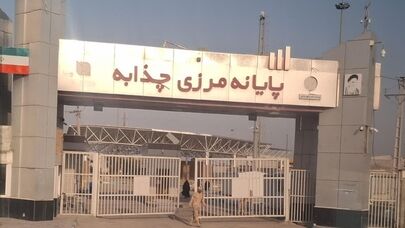
The Iranian national football team's trip to Iraq for the four-nation tournament in Basra was overshadowed by a controversy even before the competition began—one that went beyond a simple change in flight arrangements. Although the Iraqi Football Association, as the organizer of the tournament, had invited Iran, Lebanon and Palestine to take part, permission was not granted for the aircraft carrying the Iranian squad to fly directly to Basra. As a result, the delegation was forced to fly first to Abadan and then travel overland from the Shalamcheh border crossing to Basra. The tournament is scheduled to take place in Basra from November 13 to 17.
Regardless of the reasons and restrictions that may have influenced the Iraqi authorities' decision, the incident raises serious questions about the way Iran's national team was hosted and the respect shown to it. When a country officially invites a national team to participate in a tournament, it is only natural to expect the host to make the necessary arrangements to facilitate its participation as much as possible. Forcing a change in travel plans on the eve of a competition, particularly after a direct flight had been arranged, is not something that can simply be brushed aside.
An Official Invitation Without Proper Travel Arrangements
What makes the incident particularly noteworthy is that Iraq was not merely the destination of the Iranian team's trip; it was the host of a tournament organized specifically with the participation of several national teams. Under such circumstances, the necessary arrangements for the arrival of the Iranian delegation should have been made well in advance, allowing the players to reach the competition venue without complications and under suitable conditions.
Reports have suggested that US sanctions and restrictions imposed on Iranian flights may have played a role in the decision. Without knowing the details of the negotiations and logistical obstacles, however, it would be unfair to place the entire responsibility on the organizers. Nevertheless, the central question remains: why was no alternative solution found to the direct-flight issue after Iran had received an official invitation?
Under these circumstances, requiring a national team participating in an international competition to travel overland from Abadan to Basra cannot be considered an ideal arrangement. At the very least, the incident called for a serious response and follow-up to safeguard the standing and reputation of Iranian football.
Should Iran Have Withdrawn from the Tournament?
The main question concerns the decision made by the Iranian Football Federation. In light of what happened, would it not have been better for Iranian football officials to make participation in the tournament conditional on appropriate travel arrangements? Even if the Iraqi authorities ultimately refused to change their decision, withdrawing from the competition could have sent a clear message about the importance of respecting Iran's national team.
There is no doubt that participating in friendly tournaments and gaining opportunities to play against other national teams are important for preparation. However, this does not mean that every set of conditions should be accepted. Friendly matches are valuable when they are organized through proper planning and with due respect for the participating teams.
In fact, the federation could have raised the issue firmly with the organizers before dispatching the delegation and considered withdrawing if the problem remained unresolved. At the very least, such an incident should have prompted an official and unequivocal protest, rather than creating the impression that playing a few friendly matches takes priority over protecting the national team's reputation.
Sanctions and the Difficulty of Finding Friendly Opponents
At the same time, the restrictions facing Iranian football when arranging friendly matches cannot be overlooked. The impact of sanctions and the difficulties arising from them have made it extremely challenging to invite foreign national teams to play in Iran. Many teams face various restrictions when considering travel to the country, and even when they are willing to play a friendly match, political and logistical obstacles may prevent them from making the trip.
On the other hand, if Iran wants to face certain foreign opponents, it has no choice but to play in a third country, an arrangement that entails additional financial, logistical and planning costs. Finding suitable opponents for the national team under current circumstances is therefore far from easy, and this reality should be taken into account when assessing the federation's decisions.
Nevertheless, the difficulty of finding friendly opponents does not mean that every available opportunity should be accepted regardless of the circumstances and other considerations. The federation must strike a balance between the national team's technical need for matches and the necessity of preserving its standing and reputation.
Playing Against Domestic Teams: An Alternative Worth Revisiting
Iranian football has previously arranged friendly matches between the national team and domestic clubs or select sides. Although such games cannot fully replace matches against foreign national teams, they can help meet some of the coaching staff's technical requirements when opportunities for international fixtures are limited.
In particular, when finding foreign opponents becomes difficult, organizing domestic matches and making use of the resources available within the country's clubs could be an option worth considering. At the very least, this approach would prevent the national team from having to accept arrangements that are difficult to justify in terms of its sporting status and reputation simply to play a few friendly matches.
Ultimately, the national team's trip to Iraq is about more than a change in flight arrangements. It is also a test of how the Iranian Football Federation defends the interests and standing of the country's football. Sanctions have created genuine and serious obstacles, and it cannot be expected that the national team will always find foreign opponents easily. But these very difficulties make careful planning and decisive decision-making all the more important.
Participation in the Basra tournament may offer Iran a useful opportunity from a technical standpoint. However, following the denial of permission for a direct flight, withdrawal from the competition could also have been a serious option for the federation—one that would have demonstrated that playing a few friendly matches at any cost does not take precedence over protecting the respect and reputation of Iran's national football team.