Despite the British leadership’s continued overt and covert arms supplies to the Israeli regime and its support for US crimes, including Washington’s warmongering against Iran, the findings of a new poll in the UK reveal a very different picture of public opinion. According to the survey, 78 percent of Britons consider the Israeli regime a serious threat to world peace, up from 48 percent two decades ago.
The shift in British public opinion is particularly significant. Following the outbreak of the Gaza war, public concern over the Israeli regime’s role in threatening global peace increased, reaching around three-quarters of respondents in autumn 2024. Although the figure subsequently fell to approximately two-thirds, it rose again following the attack on Iran, reaching 78 percent. Meanwhile, 74 percent of Britons also view the United States as a serious threat to world peace, compared with just 35 percent in 2024.
These figures represent more than a statistical shift; they reflect a profound change in public attitudes toward US and Israeli policies. Coinciding with electoral developments in the United States and the occupied territories, this trend points, on the one hand, to the impact of resistance and steadfastness in confronting US-Israeli aggression and, on the other, to the failure of Trump's and Netanyahu's Middle East strategy and growing global support for a new, multilateral world order. It also reinforces Iran's position on the need to build an international consensus around indigenous security arrangements and confront the centers of warmongering and instability.
Resistance: The Force That Awakened the World's Conscience
The British polls, along with similar findings in the United States and other European countries, cannot be attributed solely to diplomatic developments, conciliatory policies, or the actions of international organizations and self-proclaimed human rights advocates. The roots of this shift lie in decades of popular resistance to occupation and domination, stretching from Palestine and Lebanon to Syria, Iraq, and Iran. Over time, this resistance has helped expose the true nature of US and Israeli policies to global public opinion.
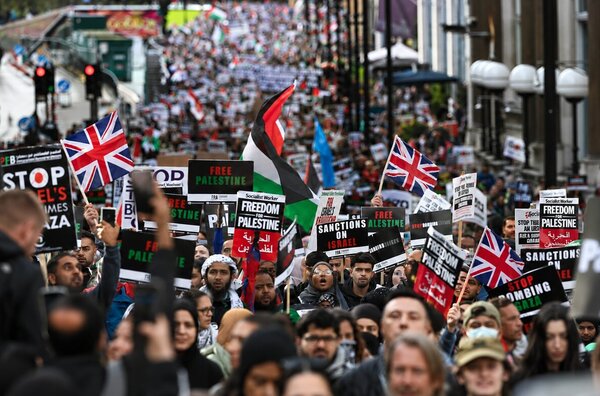
The culmination of this process can be seen in the 2023 Operation Al-Aqsa Flood and the widespread resistance of the people of Gaza against genocide, occupation, and the Israeli regime's apartheid policies. These developments brought the Palestinian issue out of the margins of political calculations and placed it at the center of global public debate. The killing of tens of thousands of people, including thousands of children, the reported death toll of more than 74,000, the displacement of around two million people, and the imposition of famine, starvation, and relentless suffering on Gaza's population triggered a massive wave of public outrage against the Israeli regime. This outrage was clearly reflected in mass demonstrations across European countries and major cities throughout the United States.
Subsequent Israeli aggression in Lebanon and Syria, along with direct US warmongering, particularly during the 12-day war and the Ramadan war, further deepened this global awakening. Atrocities such as the attack on the Minab school and the assassination of the Leader of the Islamic Revolution also drew greater public attention to the true nature of these acts of aggression. Today, resistance is no longer merely a reality on the battlefield; it has become a decisive factor shaping global perceptions of the sources of security and political threats.
The Heavy Cost of 'Israel First': From Allies' Security to the Global Economy
The White House leadership launched its war against Iran under the banner of the "Israel First" principle, the consequences of which have extended far beyond Iran and West Asia, affecting global security and even the security of US allies. In this context, Arab countries have also acknowledged that the presence of US military bases on their soil, rather than guaranteeing their security, can expose them to threats and the consequences of war.
Meanwhile, the economic and security costs of this approach, particularly in the energy sector, have been felt across the world. Fuel crises in Europe and the United States, along with mounting pressure on energy-dependent economies, illustrate the consequences of a policy that places the interests of the Israeli regime above global security and stability. The Ramadan war was therefore not merely a military confrontation between Iran and the aggressors; it also became a test of the credibility of the US-led security order.
The repercussions of the war have prompted governments to reconsider their relations with Washington and Tel Aviv. Some European leaders have been compelled to criticize the Israeli regime in order to protect their political standing and electoral prospects, while the European Union has also raised the possibility of imposing sanctions on the regime. Public attitudes have shifted as well, with opposition to Israeli policies and distancing oneself from Trump increasingly becoming influential factors in electoral contests.
The major setbacks suffered by Trump and the Republicans in the congressional midterm elections, along with the success of candidates critical of his policies and those of the Israeli regime, can be seen as evidence of this shift. Trump's and Vance's remarks about the impact of public revulsion toward the Israeli regime and opposition to the US administration's warmongering on the Republicans' defeat further underscore the significance of this factor. The same trend is evident in Europe, where opposition to Tel Aviv's policies and distancing from Washington have become prominent themes in electoral campaigns, including France's presidential race.
The Collapse of Propaganda Narratives: Distinguishing Judaism from Zionism
As global opposition to the United States and the Israeli regime continues to grow, some Western leaders are still attempting to suppress public demands through tired and recycled rhetoric and to justify their support for the illegitimate and apartheid nature of the Israeli regime. At the heart of this propaganda strategy is the political exploitation of the concept of antisemitism and the attempt to equate opposition to Zionism with hostility toward Jewish people.
German Chancellor Friedrich Merz's remarks about the spread of antisemitism and Germany facing a historic test in protecting its Jewish community, made amid widespread protests against Berlin's cooperation with the Israeli regime, are one example of this approach. Similar practices can also be observed in Britain and France. Yet developments within the occupied territories, together with international legal and judicial positions on the Israeli regime's policies, demonstrate why all opposition to the regime cannot simply be dismissed as antisemitism.
On the one hand, reports point to an increase in the number of Jews leaving the occupied territories, while, on the other, Netanyahu's weakening political position, electoral defeat, and growing public demands for his removal and prosecution reflect the depth of the legitimacy crisis within the regime's political establishment.
The reality is that global protests are directed not against Jewish people, but against a regime that exploits Jewish identity and religious beliefs as political tools to pursue its expansionist objectives and serve the interests of Western powers in the region. The participation of Jewish people in numerous demonstrations against the Israeli regime is further evidence of the distinction between Judaism and Zionism, a distinction that official Western propaganda seeks to obscure.
Indigenous Security: A Path Beyond the US-Imposed Order
The latest polls and the spread of global protests against the United States and the Israeli regime once again highlight the need to build an international consensus in support of Palestine and the establishment of indigenous security arrangements. Recent developments have demonstrated that the presence of US forces does not guarantee the security of regional countries. Dependence on extra-regional powers not only fails to prevent war and instability but can also turn nations and governments into collateral victims of military adventurism.
In this context, Iran's move to close the Strait of Hormuz, its insistence that any negotiations be conditional on the fulfillment of its seven-point demands, and its proposals, including the Tehran quadrilateral meeting aimed at establishing a region-based security mechanism, can all be viewed within this broader approach. These initiatives underscore the need to place responsibility for regional security in the hands of regional countries, support the rights of the Palestinian people, and end America's interventionist military presence.
Regional countries' cooperation with the capacities Iran has made available for establishing collective security could accelerate the emergence of a new global and regional order. Such a multilateral order would be based not on the dominance of foreign powers, but on cooperation among regional countries, respect for national sovereignty, and opposition to aggression.
The United States and the Israeli regime, which once spoke of wiping Iran off the map, are now facing a very different reality: growing global opposition to their policies and increasing acceptance of Iran's position on the roots of crisis and insecurity in West Asia. This shift is reflected in public opinion polls, street protests, and electoral developments. It demonstrates that resistance has not only changed the balance of power on the ground but has also reshaped the dynamics of global public opinion, raising the political cost of continuing warmongering policies for those who support them.