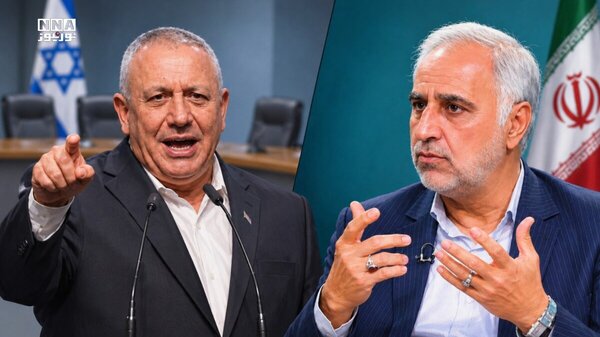
Gadi Eisenkot’s appointment to form Israel’s new government can be regarded as one of the major political developments in the regime, reflecting primarily Netanyahu’s weakened position and the increased likelihood of an end to his premiership. Under Israel’s political system, the candidate who secures sufficient support to form a government is tasked by the president with assembling a cabinet and given a limited period to win the backing of political parties and parliamentary factions. Nevertheless, Eisenkot’s appointment does not automatically mean Netanyahu has been definitively defeated. The outcome ultimately depends on Eisenkot’s ability to build a coalition and secure the necessary parliamentary support.
An important point is that Eisenkot should not be regarded as a moderate politician or an opponent of war simply because he opposes Netanyahu. He is a veteran Israeli military commander with a long record of military operations against Palestinians and in Lebanon. The military doctrine attributed to him, known as the Dahiya Doctrine, also emphasizes inflicting extensive damage on the infrastructure and populated areas of an adversary in the event of war.
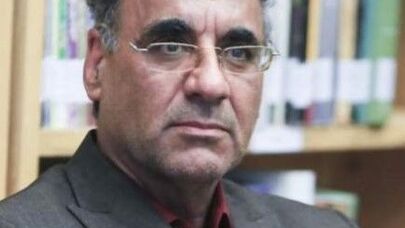
Eisenkot’s differences with Netanyahu, therefore, do not necessarily stem from opposition to war, but rather from their differing political and security calculations and approaches. Eisenkot has been a critic of Netanyahu, arguing that military decisions should not serve the prime minister’s personal interests or political survival. In this regard, Dr. Masoud Asadollahi, a West Asia strategic affairs analyst, discussed Israel’s political situation and the prospects for a potential Eisenkot government in an interview with Nour News.
Does Eisenkot’s mandate to form Israel’s new government mean Netanyahu has been definitively defeated and his premiership is over?
Under the electoral laws of the Israeli regime, once election results are finalized, the president consults with various political parties and parliamentary factions to determine which candidate has the greatest support for forming a government. Following these consultations, the candidate considered most likely to form a government is given the mandate to do so.
The candidate is generally given 28 days to form a cabinet. If unsuccessful within that period, the mandate may be extended or the president may assign another candidate to form the government. Therefore, the appointment of Netanyahu’s rival does not mean his defeat is final, but it is a significant political development and an indication that his chances of returning to power have diminished.
Does Netanyahu still have an opportunity to use political maneuvering to prevent the formation of a new government?
Netanyahu is a highly shrewd politician and a skilled negotiator. He has repeatedly demonstrated his ability to change political equations through political promises, concessions and efforts to win over smaller parties. However, the circumstances are more difficult for him this time.
If the government formation process drags on, Netanyahu’s room for political maneuvering may become more limited, while his rival could succeed in forming a new government more quickly. In fact, time could work against Netanyahu at this stage.
Can Eisenkot be considered a moderate politician opposed to Israel’s warmongering policies?
No. His political differences with Netanyahu should not lead us to assume that he is a peace-loving or moderate politician. He is a well-known former Israeli military commander with an extensive military record. During his military career, he also took part in various operations against Palestinians.
Following the 2006 Lebanon War, in which Israel was defeated by Hezbollah, Eisenkot, then serving as commander of the Israeli military’s Northern Command, introduced a military doctrine that became known as the Dahiya Doctrine. Under this approach, in the event of war, the adversary’s residential areas and infrastructure would be subjected to extensive attacks and destruction in order to impose a heavy cost on it.
Therefore, he cannot be regarded as a pacifist.
What is the main difference between Eisenkot and Netanyahu?
The main difference between the two lies more in their political and strategic outlook and calculations than in any fundamental opposition to war.
Netanyahu has faced serious accusations that he has fueled ongoing security crises and conflicts to preserve his political position and avoid the consequences of his legal cases. Eisenkot, however, believes decisions about war should be based on strategic calculations and Israel’s security interests, rather than the prime minister’s personal interests.
He has even criticized Netanyahu, arguing that the latter knew Iran had not yet acquired nuclear weapons but used the issue of Iran’s nuclear program to justify war and perpetuate a state of heightened security tensions.
Would Eisenkot adopt a different policy toward Iran if he became prime minister?
It is still too early to make a definitive assessment. So far, Eisenkot has not articulated a clear position on his future policy toward Iran in his campaign statements or recent remarks. Instead, he has focused primarily on issues such as confronting Hamas and changing Israel’s security approach.
It is therefore necessary to wait and see whether the formation of a new government will bring any changes to Israel’s military and security policies toward Iran.
Could Netanyahu’s departure reduce the likelihood of another war against Iran?
That possibility exists, but it should not be taken for granted. One of the main criticisms of Netanyahu has been that he has pursued war and regional crises in line with his personal and political interests.
Although Eisenkot disagrees with some of Netanyahu’s decisions, his military background indicates that he does not necessarily advocate a more restrained approach to the use of military force. Therefore, a change of prime minister alone would not necessarily bring about a fundamental shift in Israel’s policy toward Iran.
What role could political developments in the United States play in this equation?
Developments in U.S. politics could also influence Israel’s calculations. In the recent period, political and security coordination between Trump and Netanyahu has been one of the factors behind the escalation of military threats against Iran.
If the political climate in the United States has changed and the administration in Washington is less willing to become involved in another military confrontation, the decision-making environment for Israel’s next government would naturally be different as well.