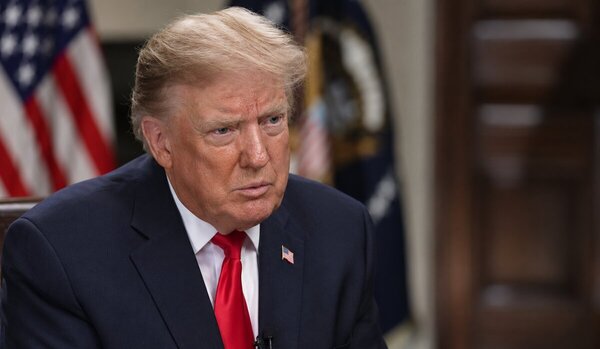
Donald Trump’s first extensive interview with CBS’s 60 Minutes following the midterm elections was an attempt to consolidate the White House narrative about the war with Iran. In this narrative, the U.S. president continues to insist that America has achieved a military victory, while at the same time facing questions about the costs of the war, the Republicans’ electoral defeat, the situation in the Strait of Hormuz, and the need for an agreement with Tehran.
The significance of the interview lies in the gap between declaring victory and actually achieving it. Trump is seeking to turn the military damage inflicted on Iran into a political and strategic achievement, but the available evidence does not support the conclusion that this objective has been accomplished.
Acknowledging the Electoral Cost of the War Without Abandoning the Victory Claim
In the interview, Trump claimed that the election results would have been different had his name appeared on the ballot. However, when responding to Vice President JD Vance’s remarks about the role of the war with Iran in the Republicans’ defeat, Trump did not reject his assessment. He also acknowledged that the war and rising gasoline prices had contributed to voter dissatisfaction.
Nevertheless, Trump continued to defend the decision to attack Iran, saying he would make the same decision again if faced with the same circumstances, because, as he claimed, allowing Iran to acquire nuclear weapons was unacceptable. This contradictory position suggests that he is willing to acknowledge the political cost of the war but refuses to regard it as evidence of a strategic failure by the United States.
The American Voters’ Verdict: A Gap Between the Victory Narrative and Public Perception
The outcome of the midterm elections poses a serious obstacle to Trump's efforts to consolidate his victory narrative. Democrats managed to take control of both chambers of Congress, while an Associated Press election poll showed that roughly three-quarters of voters were dissatisfied with or angry about the direction of the country. In addition, according to an ABC News voter poll, 34 percent of respondents said the war with Iran was a decisive factor in their voting decisions.
Vance’s remarks, along with Trump’s partial acknowledgment of his assessment, further underscore the war’s significance in the Republicans’ defeat. In effect, voters did not translate the administration’s victory narrative into political capital for the Republican Party. When the costs of war are felt in people's everyday lives, simply declaring victory is not enough to persuade public opinion.
Damage to Iran Does Not Necessarily Mean Victory for the United States
There is little doubt that the United States has inflicted significant military damage on Iran through its airpower, missile capabilities, and intelligence assets. However, the destruction of infrastructure and military equipment is not, in itself, a measure of victory. The primary criterion is the extent to which Washington has achieved its political and strategic objectives.
If the objectives were to force Iran into submission, change its political structure, eliminate its ability to retaliate, and impose American terms, the outcome must be assessed against those very benchmarks. Iran continues to stand by its positions and has not accepted Washington's demands simply as a result of military pressure. Moreover, Iran's armed forces have also inflicted significant blows on the United States and the Israeli regime. Military damage to Iran, therefore, cannot be equated with political control over the country.
The Costs the United States Has Also Had to Bear
According to an estimate by U.S. Central Command published by CBS on October 27, the military cost of the war had reached at least $47.1 billion by mid-October. The figure includes the cost of replacing munitions and lost equipment, as well as military operations, but does not cover all the damage to U.S. bases across the region.
The cost of the war is not confined to the Pentagon's budget. Rising fuel prices, transportation costs, maritime insurance premiums, and import expenses have shifted the burden onto American households and businesses. Disruptions to energy markets and supply chains have also generated additional costs.
If a country sets its neighbor's house on fire, only to see the flames spread to its own home and cause extensive damage, it cannot claim victory simply by pointing to the destruction next door. Military superiority, without accounting for economic and political costs, does not provide a complete picture of the outcome of a war.
The Strait of Hormuz: The Gap Between Claims of Openness and Conditions on the Ground
Trump insisted during the interview that the Strait of Hormuz was open. However, the interviewer pointed out that vessels passing through the waterway were operating under extensive U.S. military protection. According to a Reuters report dated November 9 and data from Kpler, only five cargo-carrying vessels transited the strait on Saturday, while no crossings were recorded on Sunday. Before the war, more than 130 vessels passed through the waterway each day.
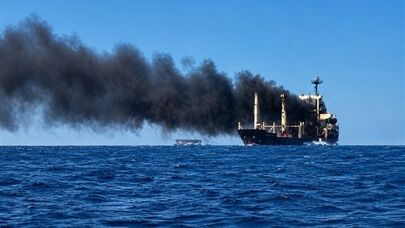
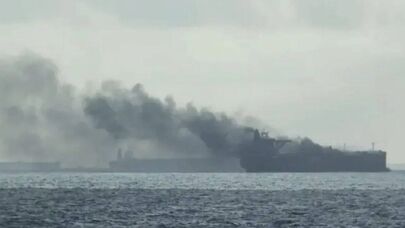
Reuters reports on November 1 and 4 referred to tankers striking mines, while a report on October 30 described limpet mines attached to a tanker’s hull and the fire that subsequently broke out.
Although Brent crude prices fell to around $100 on November 9, maritime security risks continue to weigh on the market.
The passage of a handful of vessels on isolated occasions does not mean that security and freedom of navigation have been restored. The real measure is sustained, safe, and predictable traffic, not the passage of vessels that require military protection.
A Political Agreement: The Missing Piece in Trump's Victory Narrative
During the interview, Trump said he had no desire to escalate the war and saw no need to do so. He also claimed that an agreement with Iran had been very close before the elections and that the election results had given Tehran hope of securing further concessions.
These remarks indicate that the Iran issue remains unresolved for Washington. The questions of nuclear material, the Strait of Hormuz, and regional security arrangements remain unsettled and require a political agreement.
Trump wants to turn military gains into an agreement that he can present as the culmination of his victory. However, such an agreement cannot be reached without taking Iran's interests and demands into account. The differences between Trump's and Vance's positions could also affect internal Republican Party rivalries and the political calculations surrounding the post-Trump era.
Iron Gate: A Shift From Military Warfare to a War of Attrition Through Blockade?
At the same time that Trump is emphasizing his reluctance to launch large-scale attacks, the establishment of Task Force Iron Gate points to the possibility of continued pressure on Iran.
According to a Reuters report dated November 8, the initiative is designed to restrict the movement of advanced weapons and sanctioned goods into and out of Iran through land borders and the Caspian Sea route.
The move does not amount to an announcement of a comprehensive land blockade. However, it can be viewed as an attempt to complete the chain of economic and logistical pressure, alongside maritime restrictions and the blockade of Iranian ports.
Washington appears to be considering intensified blockade measures and restrictions on vital supply routes as a means of forcing Iran to accept its terms, rather than repeating large-scale military attacks and bearing their costs.
Such a strategy, however, is neither cost-free nor without risks. Tehran will naturally view pressure on Iran's economic and social resilience as a continuation of the war through indirect means and an attempt to impose Washington's political will.
Consequently, rather than paving the way for an agreement, a war of attrition through blockade could create the conditions for renewed confrontation, particularly as the Strait of Hormuz, the nuclear issue, and Iran's demands remain unresolved.
A Victory Has Been Declared, but It Has Yet to Be Proven
The 60 Minutes interview shows that Trump needs to consolidate his victory narrative more than ever. He must explain why a war with such enormous costs has failed to produce an outcome commensurate with its original objectives, why the Strait of Hormuz continues to face disruptions, and why resolving the Iran issue still requires a political agreement.
The central issue is not the extent of the damage the United States has inflicted on Iran, but whether that damage can be translated into a change in the political and security equation. Trump has declared victory, but declaring victory is not the same as achieving it. Efforts to redefine military gains, shift the costs onto allies, and intensify a war of attrition have so far failed to bridge that gap.
The reality is that none of America's main objectives has been achieved in the manner Washington intended. Iran has not submitted to U.S. demands, regional dynamics have not shifted in accordance with Trump's wishes, security and normal maritime traffic have not been restored in the Strait of Hormuz, and the nuclear issue remains unresolved. Meanwhile, the enormous costs of the war have failed to translate into tangible gains for American society and have instead become a liability for Republicans in the midterm elections.
Under these circumstances, Trump's insistence on victory appears less a reflection of realities on the battlefield than a propaganda exercise designed to conceal the gap between the war's declared objectives and its actual outcome. Remarks by Vance and some of Trump's political allies also suggest that this narrative is not convincing even within the president's inner political circle.
Trump is now less focused on proving that he has won than on concealing the failure to achieve the war's strategic objectives behind a carefully constructed narrative of victory.