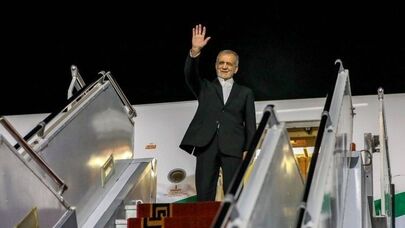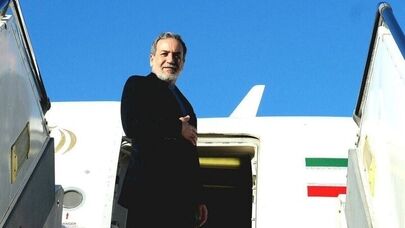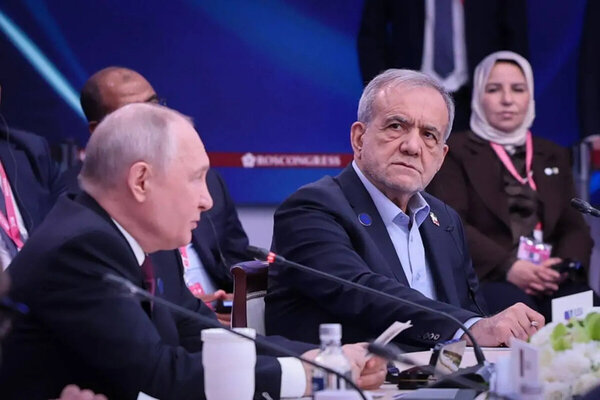
Nournews: The presence of Masoud Pezeshkian, President of the Islamic Republic of Iran, at the eighth summit of the Gas Exporting Countries Forum (GECF) in Moscow and his meeting with Russian President Vladimir Putin went beyond a diplomatic event, carrying messages about Iran’s position in global political and energy equations. The two presidents’ emphasis on expanding cooperation, resolving regional issues without reliance on the United States, and opposing unilateralism, alongside the final summit declaration’s positions on sanctions and energy security, underscored the significance of the event.
The Failure of Efforts to Drive a Wedge Between Tehran and Moscow
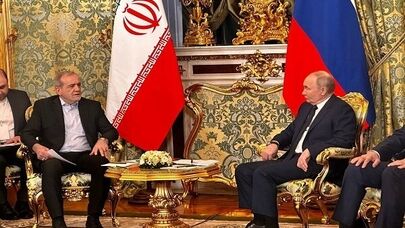
Pezeshkian’s meeting with Putin on the sidelines of the Moscow summit demonstrated the continuity of strategic relations between the two countries, following earlier remarks by US President Donald Trump about driving a wedge between Tehran and Moscow. Emphasizing the two countries’ shared border and common interests, Putin said bilateral trade between Iran and Russia had increased by 10.4 percent in the first eight months of 2026 compared with the same period last year. He added that joint projects, including the construction of the Bushehr nuclear power plant, were continuing.
Pezeshkian, for his part, expressed appreciation for Russia’s political and economic support, stressing the need to move toward a multipolar world. He said regional countries could resolve their own issues without relying on the United States. Putin also pointed to the two countries’ shared concerns over regional developments, emphasizing the pursuit of common interests and the need to steer the situation in a positive direction.
These remarks, together with previous statements by Russian officials affirming the continuation of cooperation with Iran, indicate that Tehran-Moscow relations retain considerable potential for further development. Cooperation in the oil and gas sectors could also pave the way for joint investment, stronger economic ties, and reduced impacts from sanctions.
Iran’s Capacity to Promote Security: From the Battlefield to Energy
In his address to the summit, Pezeshkian described US military interventions in the Persian Gulf as a threat to the stability of global energy markets. He warned that such actions could trigger fresh shocks, disrupt energy pricing, supply and transportation, and jeopardize global economic growth. His remarks highlighted the direct link between regional security and global economic and energy security.
Drawing on its indigenous capabilities, resistance to US and Israeli domination, and its strategic position in the Strait of Hormuz, Iran plays an influential role in regional security and energy equations. In this context, strengthening regional convergence and developing self-reliant security arrangements have also been central to Iran’s policy. The Tehran meeting, attended by senior officials from Pakistan, Türkiye, and Saudi Arabia, was one manifestation of this approach.
In today’s world, security is no longer solely a military concept; it also encompasses economic, political, and environmental dimensions. Conflict in West Asia, disruptions to energy transit routes, and growing uncertainty in global markets have underscored this reality. As one of the world’s largest holders of oil and gas reserves, Iran has the potential to contribute to meeting global energy needs through infrastructure development, expanded energy transit, and cooperation with consumer countries. Iran’s proposals within the frameworks of BRICS, the Shanghai Cooperation Organisation, and the Commonwealth of Independent States can also be viewed in this context.
Summit Outcomes: Opposition to Sanctions and Stronger Energy Security
The final declaration of the Moscow summit reflected the member states’ shared positions on sovereignty over gas resources, security of supply, and opposition to unilateral pressure. The leaders reaffirmed their sovereign rights over natural gas resources and firmly opposed unilateral coercive measures and sanctions not authorized by the United Nations.
The declaration also emphasized the need to develop long-term contracts, diversify trade and logistics routes, strengthen technical cooperation and investment, and establish mechanisms for responding to crises in gas markets. Safeguarding freedom of navigation, maintaining supply chains, and protecting critical gas infrastructure were also among its key priorities. With its core members holding approximately 70 percent of the world’s proven natural gas reserves, the forum has considerable capacity to coordinate producer policies.
Following the conclusion of his visit, Pezeshkian described the summit as constructive and fruitful. He also reported agreements reached during meetings with Putin and the Emir of Qatar in areas including agriculture, oil and gas, road construction, security issues, and bilateral cooperation.
These understandings point to potential areas for cooperation, although their implementation will depend on subsequent executive agreements and follow-up efforts.
The Ramadan War: A Test Case for a Multipolar Order
The Ramadan War once again demonstrated that military conflicts in West Asia have consequences extending far beyond the region, affecting global energy security. On the one hand, US military actions and unilateral pressure have raised serious questions about respect for national sovereignty and international law. On the other, developments in the Strait of Hormuz and disruptions to energy transit routes have highlighted Iran’s importance in shaping future geopolitical and energy equations.
Under these circumstances, efforts to dominate energy resources and use them as instruments of pressure stand in contrast to the need for cooperation and the pursuit of shared interests. The Moscow summit showed that opposition to unilateral sanctions, stronger cooperation among producers, and the protection of security of supply form part of the common agenda of gas-exporting countries.
With its extensive energy resources, geopolitical position, and security capabilities, Iran can play a role in shaping sustainable cooperation. The summit’s main achievements will materialize only if shared positions on multilateralism and energy security translate into investment, practical cooperation, and lasting mechanisms.
Recent crises have brought new challenges to global energy equations, making Iran’s position within them more important than ever and warranting closer attention and careful assessment.