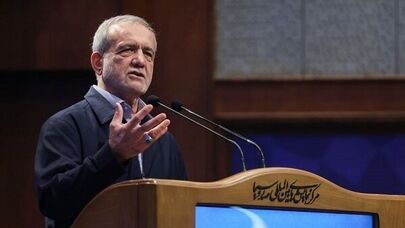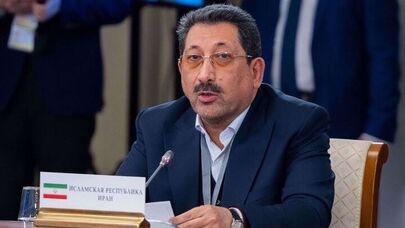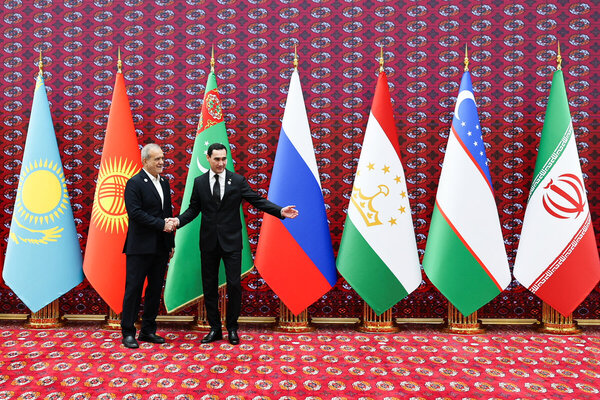
Iranian President Masoud Pezeshkian has traveled to Turkmenistan on an official visit to attend the Caspian Sea environmental summit and the summit of heads of state of the Commonwealth of Independent States (CIS), while seeking to lay the groundwork for expanding bilateral and multilateral relations with participating countries. The visit not only highlights Iran’s regional capabilities but also once again exposes the illusory nature of a maritime blockade and the ineffectiveness of sanctions. Iran’s position also demonstrates that Tehran, while emphasizing the principle of negotiations, will not yield to the threats and excessive demands of a unipolar system. In its pursuit of its rights, Iran remains one of the key actors shaping the emerging global order.
One of the key components of the visit is the Caspian Sea environmental summit, which focuses on a body of water that links the shared geography and interests of neighboring countries. Keeping the Caspian Sea demilitarized and preventing foreign interference are imperatives repeatedly emphasized by the littoral states. Addressing water scarcity and environmental pollution is equally essential to preserving the sea’s geopolitical and economic potential. Cooperation in this area can extend beyond each country’s national interests, creating a platform for political convergence, economic development, and a security framework rooted in regional cooperation.
Active Diplomacy: Iran’s Invitation and the Unraveling of the Isolation Scenario
Iran’s participation as the only non-member country at the CIS summit is one of the most significant aspects of the visit. Established in 1991, the organization has gradually expanded its regional capabilities. Iran’s geopolitical position and domestic capacities have also prompted members of organizations such as the Shanghai Cooperation Organization (SCO), BRICS, and the Eurasian Economic Union (EAEU) to stress the need for greater engagement and convergence with Tehran.
The event takes on added significance at a time when the United States, particularly in recent weeks, has claimed that a maritime blockade and intensified sanctions will force Iran to surrender. At the same time, efforts have been made to portray Iran as a defeated country on the verge of collapse. Hosting Iran as the only non-member challenges the narrative of Tehran’s isolation while highlighting the country’s regional and international potential. No major regional organization makes decisions solely on the basis of a narrative portraying a country as defeated. Iran’s invitation should therefore be viewed as a meaningful indication of its standing and as a challenge to claims that the country is isolated and on the verge of collapse. The president’s bilateral meetings with participating officials further reinforce this diplomatic engagement.
The Ramadan War: A Demonstration of Power and a Foundation for Diplomacy
Iran’s diplomatic engagement, from regional summits and the United Nations to consultations by its foreign policy establishment, rests on an important reality: the capabilities developed through the military arena, particularly since the Ramadan War.
According to the principles of realism in international relations, a country’s global power derives from a combination of political, economic, cultural, security, scientific, and technological factors.
The United States and Israel sought to weaken Iran and remove it from global calculations through the Ramadan War. However, Iran’s defensive and military capabilities, backed by popular support, challenged those calculations. Iran’s use of its geopolitical position around the Strait of Hormuz and its impact on the global economy, alongside the exposure of US military and economic vulnerabilities, have further underscored Tehran’s strategic importance. These capabilities create conditions for greater convergence among regional countries and organizations. Under these circumstances, military power and diplomacy serve as two complementary pillars of foreign policy, and their interaction can strengthen Iran’s national interests and global standing.
Assertive Negotiations and Iran’s Initiatives for a Multipolar Order
A key message of Pezeshkian’s visit is Iran’s approach to negotiations in the face of US inaction and failure to honor its commitments. The president’s emphasis during his meeting with Russian President Vladimir Putin on Iran’s willingness to remain at the negotiating table while rejecting submission to force, together with his remarks at the CIS summit about two acts of aggression by the United States and Israel during negotiations, clarifies the framework of this approach.
Iran supports dialogue as a means of achieving lasting peace and stability. However, negotiations can only be meaningful when based on mutual respect, reciprocal commitments, and the abandonment of threats. Negotiations under the shadow of force are not dialogue; they are imposition and coercion. This position preserves Iran’s diplomatic initiative while underscoring its readiness to respond to any act of aggression.
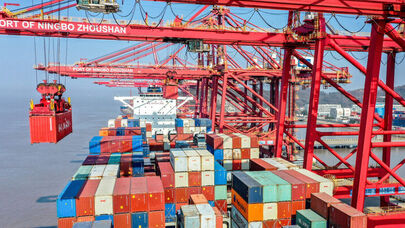
In regional cooperation, Iran has put forward new proposals by drawing on its transit capabilities. Iran is a natural corridor connecting Central Asia and Eurasia to open waters, while its southern ports, particularly Chabahar, provide links between these regions and South Asia, Africa, and Europe. Developing transport corridors across the Caspian Sea and establishing a “CIS Plus Iran” framework could also expand cooperation in transit, energy, trade, mining, investment, technology, water, the environment, tourism, and scientific and cultural exchanges.
The region needs independent actors and locally driven cooperation more than ever as it moves toward a multipolar order. Countering what Iran views as destabilizing US initiatives in the Caucasus, strengthening regional security, mitigating the effects of sanctions through mutually reinforcing regional economies, and coordinating positions on global developments—from US military interventions to the question of Palestine—could help advance this process.
As Pezeshkian has emphasized, the future should be built on connectivity rather than fragmentation, cooperation rather than debilitating competition, interdependence rather than one-sided dependence, and trust and shared interests rather than security based on threats.