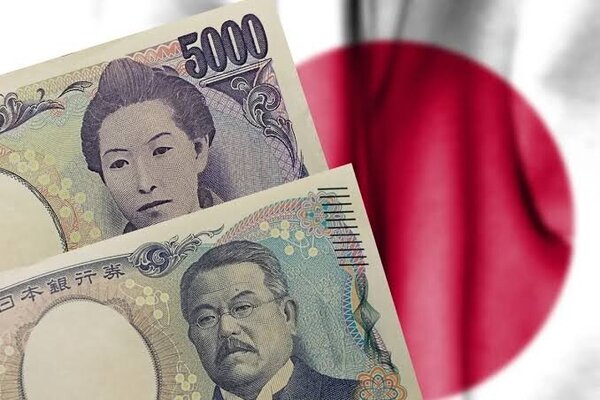
Japan has reached a critical juncture in its monetary policy, where curbing inflation, defending the value of its currency and managing the government’s heavy debt burden are no longer necessarily aligned. Raising interest rates could ease inflationary pressures and make holding yen more attractive, but it would also increase borrowing costs for the government and private sector. If interest rates rise while the yen continues to weaken, policymakers will face an even more difficult situation: monetary policy alone may not be enough, while foreign exchange intervention may not produce lasting results.
Kazuo Ueda, governor of the Bank of Japan, has stressed the need to address inflationary pressures, while Japanese Finance Minister Satsuki Katayama has said Tokyo is prepared to take decisive action in the foreign exchange market. These statements signal that Japanese officials do not intend to let the yen’s depreciation go unanswered. However, there is a gap between declaring readiness to intervene and having the ability to change the market’s direction. The success of such a policy depends on the resources available, coordination between monetary and foreign exchange measures, and investor expectations.
Carry Trades: Japan’s Link to Global Markets
One of the main channels through which a potential crisis in Japan could spread to the global economy is carry trading. Under this strategy, investors borrow yen at low cost and use the proceeds to purchase higher-yielding assets, ranging from stocks and bonds to other financial instruments. The appeal of these trades depends largely on the gap between Japanese interest rates and those in other economies, as well as relative exchange rate stability.
If the Bank of Japan raises interest rates while the yen strengthens, investors engaged in these trades will find it more difficult to repay their yen-denominated debt. Under such circumstances, some investors may sell assets across different markets to settle their liabilities. This process could intensify selling pressure, heighten market volatility and lead to simultaneous declines in some riskier assets.
However, a widespread collapse of carry trades is not inevitable. The scale of the impact will depend on leverage levels, asset composition, the speed of exchange rate movements and central banks’ responses. Japan’s importance lies in the fact that changes in financing conditions there can affect investment positions far beyond its borders.
War Against Iran: Geopolitical Dimension of Japan’s Financial Crisis
The US and Israeli regime’s war against Iran and disruptions to traffic through the Strait of Hormuz have brought the geopolitical dimension of this economic equation into sharper focus. Japan relies heavily on imported energy, with most of its imported oil supplied by countries in West Asia. As a result, rising oil prices and disruptions to energy transit routes could put pressure on its economy.
If disruptions in the Strait of Hormuz persist, continued restrictions on oil supplies and higher shipping and insurance costs could further increase Japan’s energy import bill. This could drive up production, transportation and consumer goods costs, intensifying inflationary pressures. In these circumstances, the Bank of Japan would face a difficult trade-off: raising interest rates to contain inflation would increase borrowing costs, while refraining from a rate hike could put further downward pressure on the yen if inflation persists.
From this perspective, the war and the Strait of Hormuz crisis are not necessarily the primary causes of Japan’s monetary and debt problems, but they could exacerbate them. The combination of an energy shock, a possible interest rate hike and changing investor expectations could increase risks in carry trades and volatility in global markets. Developments in West Asia should therefore be viewed as one of the factors influencing Japan’s economic outlook, rather than as an independent explanation for all its problems.
Foreign Exchange Intervention: A Temporary Fix or a Change in Direction?
At one point, the US Treasury Department took steps to manage pressure on the yen and supported a mechanism based on providing dollars for foreign exchange intervention. Under this approach, selling dollars and buying yen can help strengthen demand for the Japanese currency. However, the effectiveness of such measures depends on underlying economic conditions and market expectations.
If investors continue to expect the yen to weaken, intervention may provide only a short-term opportunity to reduce volatility. A return to previous exchange rate levels, if confirmed by market data, could indicate the limited impact of temporary measures. A precise assessment, however, requires details about the timing, scale and nature of the interventions.
Meanwhile, remarks by US Treasury Secretary Scott Bessent about the limits of the ability to control the bond market, including his observation that “the house doesn’t win every hand,” underscore the complexity of managing financial markets. These remarks alone, however, do not prove that Washington has taken control of Japan’s monetary policy or that US interventions have ended.
Heavy Debt: Additional Pressure on Tokyo
An estimate cited in the report suggests that Japan will need to set aside around 100 billion yen, equivalent to $630 million, each day to cover interest expenses and repayments of maturing debt in the next fiscal year. If confirmed, this would amount to approximately 36.5 trillion yen, or $229.95 billion, annually. However, repayment of principal and interest payments are two distinct components, and the entire amount should not be treated as interest expense.
Higher interest rates could gradually increase the government’s borrowing costs, although how quickly this feeds through to the budget will depend on debt maturities and the terms of new borrowing. In such circumstances, selling foreign assets, including US Treasury securities, could be one possible option for managing liquidity. However, such sales cannot be inferred from debt pressures alone.
Reports that Sumitomo Mitsui DS Asset Management sold all its French government bonds, if confirmed, would provide an example of how decisions by major investors can affect bond markets. However, extrapolating from this event to conclude that France’s debt market is collapsing or that Japan is broadly selling off its assets would require further evidence.
Ultimately, the convergence of several pressures is at issue: a potential increase in the cost of borrowing in Japan, the vulnerability of trades based on cheap borrowing, constraints on debt management, and the possible consequences of the war against Iran and disruptions in the Strait of Hormuz. Together, these factors could deliver a shock to global capital flows, energy costs and investors’ willingness to take risks, potentially reshaping market dynamics.