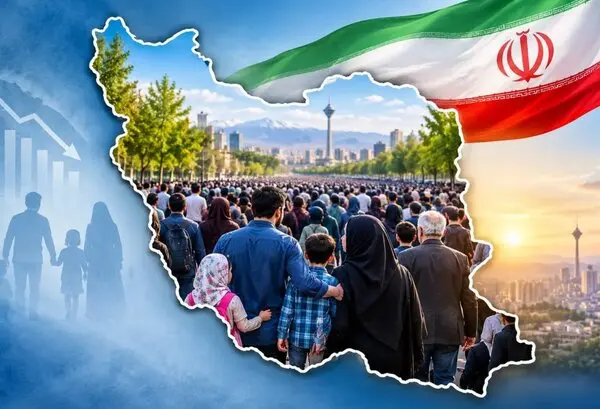
is not merely a statistical issue in Iran; it is directly linked to the country’s economic, social, cultural, and public health future. Declining fertility, fewer marriages, delays in starting families, and a growing share of older people are signs of a demographic shift that requires long-term planning and simultaneous attention to the various dimensions of family life.
The importance of this issue was also emphasized in the Leader of the Islamic Revolution’s message to the fourth National Population Youth Award event. The message described increasing Iran’s future population while preserving its quantitative and qualitative dimensions as one of the most important foundations of national strength and progress, and identified the policy of “population growth centered on the family” as a strategic and decisive priority.
Part of the message states: “Among the factors contributing to strength, progress, and the achievement of an ever-stronger Iran, increasing the future population of our beloved Iran, while preserving all desirable quantitative and qualitative aspects, is of the utmost importance.”
This emphasis comes as figures presented at the 24th International Congress of the Iranian Scientific Association of Fertility and Infertility indicate that the country’s fertility rate continues to decline. According to Dr. Marzieh Vahid-Dastjerdi, Secretary of the National Population Headquarters, Iran’s total fertility rate fell from 1.54 births per woman in 1402 to 1.44 in 1403 and 1.34 in 1404. This figure is significantly below the population replacement level of 2.1 births per woman. According to Dr. Alireza Raeisi, Deputy Health Minister, 29 of the country’s 31 provinces are also below that level.
The number of births has likewise fallen from more than 1.57 million in 1394 to approximately 892,000 in 1404. The decline in births, combined with the growing share of older people, is gradually affecting the population’s age structure and the country’s workforce capacity.
Marriage and Family: Starting Point for Reversing Demographic Decline
When examining the causes of declining fertility, it is important to distinguish between the total fertility rate and the fertility rate among married couples. According to the Deputy Health Minister, the marital fertility rate is approximately 2.54 births, while the total fertility rate stands at 1.34. This gap indicates that declining marriage rates and delays in starting families also play a significant role in falling fertility.
According to the figures presented, the average age at marriage for women is approximately 24, while the average age at which women give birth to their first child is around 27. The number of marriages also declined by approximately 23% between 1399 and 1404. These trends show that population policies should not focus solely on encouraging existing families to have more children; they must also create conditions that facilitate marriage among young people and the birth of a first child. This issue was also highlighted in the Leader’s message. He identified “serious, broad-based attention to facilitating marriage at a young age” as one of the effective measures for making Iran stronger. The message also stressed the need to strengthen the infrastructure that supports and reinforces the family.
Housing costs and inflation, concerns about future economic conditions, the difficulty of covering the costs of raising children, and challenges in balancing employment with family responsibilities are among the obstacles that can delay couples’ decisions to have children. Accordingly, support for young families, job security, easier access to housing, and childcare services should be considered alongside incentives for childbearing. In this regard, the Leader’s message also emphasized “promoting a family-centered culture and presenting successful examples in this regard,” as well as properly explaining these issues to the public, particularly young people.
Another key aspect of the message is attention to individual health and support for childbearing. It identifies safeguarding individual health, alongside facilitating marriage and strengthening families, as effective measures for improving the country’s demographic situation. Expanding reproductive health services, reducing the cost of infertility treatment, providing pre-pregnancy counseling, and improving maternal and child care can help remove some of the barriers to having children. In this context, the implementation of the “Mother’s Hope Card” program, a proposal for full insurance coverage of infertility treatment, and expanded counseling on having children have also been cited as part of the support measures. These initiatives, however, will be effective only if they are integrated with economic, social, and cultural policies and implemented consistently.
Addressing Past Shortcomings: Need for Sustained Policy
Alongside the decline in births, the share of older people in the population has increased. According to figures provided by the Deputy Health Minister, the proportion of people aged 60 and older rose from approximately 9% in 1395 to around 12% in 1405. The natural population growth rate also declined from approximately 1.3% in 1390 to around 0.5% in 1404.
Under these circumstances, population policy must address the needs of the older generation in addition to reversing the decline in fertility. Dr. Mohammad Taghi Joghatai, an adviser to the Health Minister on rehabilitation affairs, has emphasized the importance of prevention, physical activity, proper nutrition, and maintaining brain health from middle age onward. Expanding rehabilitation services and long-term care is also among the important needs of an aging society.
Therefore, increasing the young population should not mean overlooking the needs of older people. Preserving the health, independence, and dignity of all generations must remain a priority in population policymaking.
The Leader’s message explicitly addresses the need to make up for shortcomings in past population policies. One passage states: “I deeply hope that, by addressing the shortcomings resulting from certain past population policies and earnestly pursuing the correct and strategic policy of increasing the young population and placing the family at the center of this issue, our beloved homeland will safely navigate the critical juncture and decisive stage at which it now stands.”
This emphasis makes clear that reversing demographic decline cannot be achieved through isolated or short-term measures. It requires coordinated policymaking, sustained support for families, and continuous evaluation of results.
What is clear is that Iran’s demographic window of opportunity to benefit from its young population and working-age population is limited. Declining fertility, fewer marriages, and population aging underscore the need to address family formation, childbearing, health, and social support simultaneously. As emphasized in the Leader’s message, population growth centered on the family must be pursued as a strategic policy. Achieving this goal requires not only support measures but also removing the economic and social barriers to marriage and childbearing and ensuring healthy, high-quality living conditions for all generations.