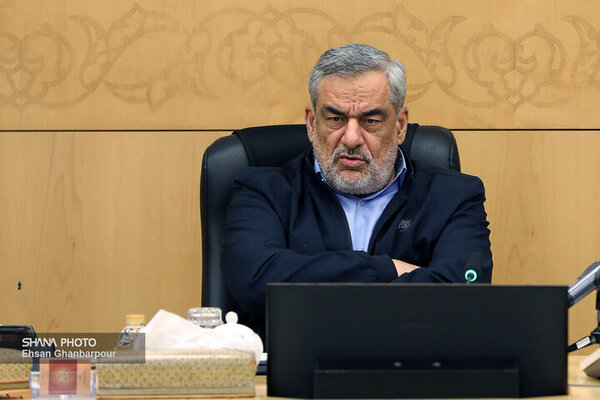
Hamid Bovard will also take part in the group's 28th ministerial meeting, scheduled for Monday, a day before the leaders' summit, oil ministry's news service reported.
Preparatory sessions began Sunday. An extraordinary meeting of the forum's Executive Board, chaired by Ali-Mohammad Mousavi, the Oil Ministry's deputy for international affairs and trade, and a meeting of a high-level ad hoc panel were held to review and finalize key documents, including the summit's final statement.
The forum is an intergovernmental body for dialogue and coordination among natural gas producers and exporters. Its summits and ministerial meetings focus on gas market developments, supply and demand outlooks, energy security and the role of natural gas in the global energy mix. Members also discuss gas market development, trends in liquefied natural gas and the investment needed to meet future demand.
Leaders' summits are held every two years. The first took place in Doha, Qatar, in 2011, followed by Moscow in 2013, Tehran in 2015, Santa Cruz, Bolivia, in 2017, Malabo, Equatorial Guinea, in 2019, Doha in 2022 and Algiers in 2024. The forum has held 27 ministerial meetings since its founding.
It has 12 full members: Algeria, Bolivia, Egypt, Equatorial Guinea, Iran, Libya, Nigeria, Qatar, Russia, Trinidad and Tobago, the United Arab Emirates and Venezuela. Angola, Azerbaijan, Iraq, Malaysia, Mauritania, Mozambique, Peru and Senegal are observers.
According to figures cited by the forum, members together hold about 70% of the world's proven natural gas reserves, 38% of commercial gas production and 42% of gas exports. Their share of global LNG exports is estimated at about 47%.